1 week ago
Chess Prodigy Urges Humans To Stay In Charge Of AI
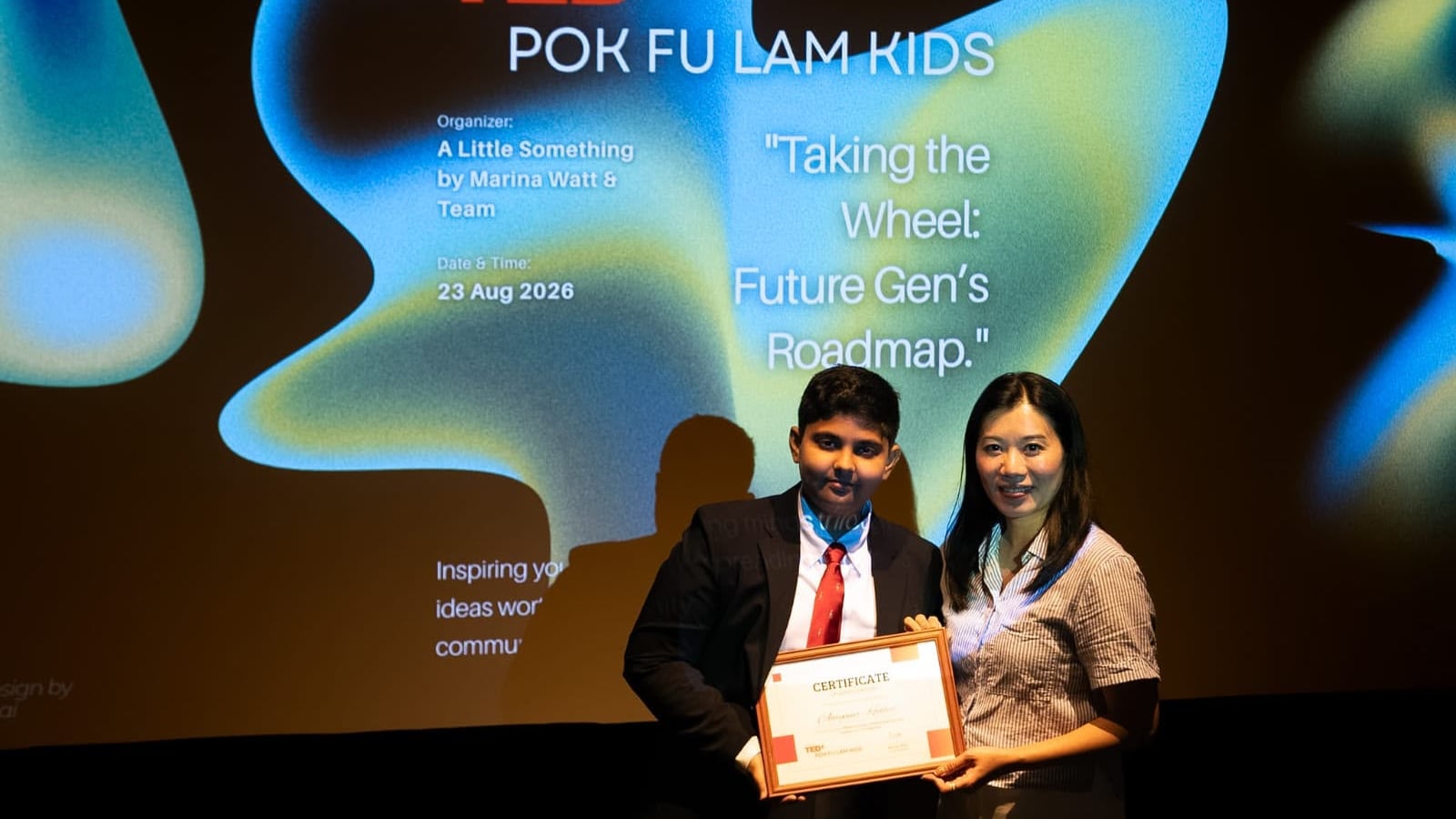
Aaryaveer Kochhar is a 12-year-old chess player from New Delhi.
He spoke at a TEDx event in Hong Kong about artificial intelligence.
He said AI is like a lock, while people are the key.
AI can open helpful new possibilities when people use it carefully.
But relying on AI for every answer can stop people from learning and thinking for themselves.
He used simple maths to explain that working out an answer helps the brain learn more skills.
In chess, he prefers using AI to study mistakes instead of letting it choose every move.
His main message was to use AI as a helper, not as a replacement for human thinking.

Twelve-year-old Delhi chess prodigy Aaryaveer Kochhar delivered a TEDx talk in Hong Kong on Sunday, Aug. 23.
Kochhar compared artificial intelligence to a lock and humans to the key controlling its potential.
He warned that overusing AI can weaken creativity, curiosity, imagination, confidence, and independent thinking.
Using a 1+1 example, he argued that solving problems without AI builds skills that support later learning.
Kochhar said AI should extend human thinking, such as analysing chess mistakes, rather than replace it.
- Who
- Aaryaveer Kochhar, a 12-year-old chess prodigy from New Delhi, spoke alongside five other student speakers aged 12 to 21.
- What
- He delivered a TEDx talk about artificial intelligence, human development, and independent thinking.
- Where
- Soho House Hong Kong, at an independently organised TEDx event.
- When
- Sunday, Aug. 23; the article does not specify a year.
- Why
- Kochhar wanted to argue that humans must use AI to extend their thinking rather than outsource their learning and judgment to machines.
Human-led AI use
AI-dependent problem solving
Learning and thinking
Human-led AI use
Kochhar argues that people should solve problems themselves first so they build confidence, curiosity, and transferable skills.
AI-dependent problem solving
Using AI to provide answers may be faster, but Kochhar warns that depending on it can prevent people from learning, even when the answer is correct.
AI’s role in chess
Human-led AI use
AI should help players examine mistakes and extend their own thinking.
AI-dependent problem solving
Kochhar cautions against asking chess engines to devise an entire chain of moves, because this can replace the player’s decision-making.
Key facts
- Speaker
- Aaryaveer Kochhar, a 12-year-old chess player and aspiring mathematician
- Event theme
- “Taking the Wheel: Future Gen’s Roadmap”
- Location
- Soho House Hong Kong
- Participants
- Six student speakers from around the world, aged 12 to 21
- Kochhar’s analogy
- Humans are the key and AI is the lock
- Chess recommendation
- Use AI to analyse mistakes rather than generate the next chain of moves
- 2023 recognition
- The Johns Hopkins Center for Talented Youth named Kochhar one of the world’s brightest students at age nine
Quotes
Aaryaveer Kochhar
A 12-year-old Delhi-based chess prodigy and aspiring mathematician
“From where I stand, we are the key. And AI is the lock. Every lock has the capability to do two things - it can shut a door, or expose an entirely new world.”
 NDTV
NDTV
“It is not about the technology. It is about us. The key has always been, and will always remain in human hands.”
NDTV