

46 mins ago
Scotland, Wales and Northern Ireland Leaders Sign Devolution Deal
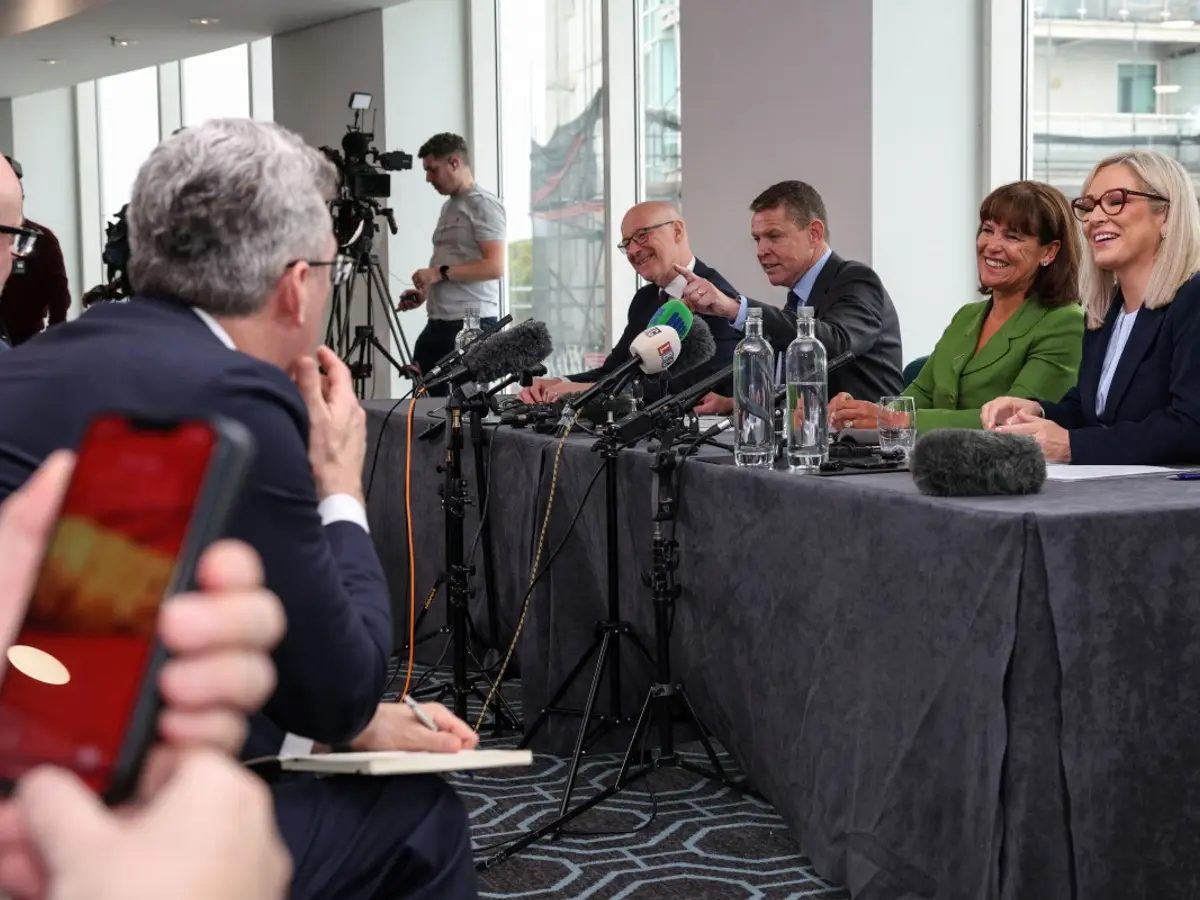
Leaders from Scotland, Wales and Northern Ireland are meeting to sign an agreement.
The article says the agreement could lead to major changes in the United Kingdom.
These countries have their own political identities and elected institutions.
However, Westminster in London still has the main legal power over the union.
The United Kingdom does not give every nation exactly the same powers.
This uneven arrangement has created political tension.
The article compares the situation with Ireland leaving most of the United Kingdom and Scotland’s independence debate.
It says the future of the union remains uncertain.

Leaders of Scotland, Wales and Northern Ireland are meeting to sign a deal that the article says could begin changing the United Kingdom.
The United Kingdom’s constitution retains significant legal authority at Westminster, despite separate political identities and elected institutions in the three nations.
The article describes the United Kingdom as an asymmetric union in which its constituent nations have different powers.
It cites Irish independence, the 2014 Scottish independence referendum and Brexit as examples of tensions within the union.
The agreement reflects disagreements over national priorities and the concentration of constitutional power in London.
- Who
- The leaders of Scotland, Wales and Northern Ireland.
- What
- They are meeting to sign a deal that could alter the structure of the United Kingdom.
- Where
- The meeting’s location is not specified; the constitutional power at issue is centered in London and Westminster.
- When
- The article does not specify a date.
- Why
- The deal addresses tensions arising from different national priorities, political identities and the distribution of power within the United Kingdom.
Key facts
- Countries involved
- Scotland, Wales and Northern Ireland
- Political arrangement
- The United Kingdom has an asymmetric constitution, with different powers for different nations.
- Central authority
- Westminster retains legal authority within the union.
- Historical reference
- Ireland joined Great Britain in 1801, while most of Ireland left the United Kingdom after the 1916–1922 independence struggle.
- Scottish referendum
- The article says a 2014 Scottish independence referendum produced a 55% “yes” vote.
- Brexit context
- The article says Scotland wanted to remain in the European Union while the United Kingdom chose to leave.
Sources
Related news
Cardiff Meeting Reopens Debate Over United Kingdom’s Formation

Scotland, Wales and Northern Ireland Leaders Seek Referendum Rights

Scottish, Welsh and Northern Irish Leaders Discuss Independence

Scotland, Wales and Northern Ireland Parties Demand UK Exit
Scottish, Welsh and Irish Parties Unite to Demand Self-Determination
Scotland, Wales and Northern Ireland Renew UK Breakup Debate

Mukesh Kumar joins Nottinghamshire for final County Championship matches

ECB Security Delegation Reviews Pakistan ODI Tri-Series Arrangements
