

1 hr ago
S&P Praises India’s Resilience, Warns of Rising Economic Risks

S&P Global said India’s economy has performed better than many people expected.
It grew by 7.7% during 2025-26 despite problems around the world.
However, India is still affected by events such as wars, oil-price increases and changes in global investment.
Rainfall was also below normal, which could affect farming.
Foreign investors put less money into India than before.
S&P said India needs more private investment to keep growing quickly.
The country also needs more electricity, solar power, energy storage and stronger transmission lines.
The report said India’s future growth will depend on fixing these problems, not just on strong headline growth numbers.

S&P Global said India has shown strong macroeconomic resilience despite inflation, geopolitical conflicts and slower global growth.
India’s economy expanded 7.7% in 2025-26, exceeding analysts’ consensus forecast by more than 100 basis points.
S&P identified risks from higher crude prices, below-normal rainfall, weaker foreign investment and exposure to global trade disruptions.
The report said India must raise investment above 32% of GDP and revive private investment to sustain growth near 7.8%.
Energy, electricity transmission, agriculture, clean-technology supply chains and infrastructure remain major challenges for future growth.
- Who
- S&P Global assessed India’s economic outlook and growth challenges.
- What
- The report praised India’s economic resilience while warning about risks to future growth, investment, energy security and infrastructure.
- Where
- The assessment concerns India and its exposure to global trade, energy and capital markets.
- When
- The report was released on October 1, 2026, and discusses developments in 2025-26 and projections through FY32 and 2035.
- Why
- S&P said India must address external vulnerabilities and domestic bottlenecks to sustain growth near 7.8% annually and achieve the Viksit Bharat goal.
Reasons for Confidence
Risks and Vulnerabilities
Growth outlook
Reasons for Confidence
S&P said India has demonstrated remarkable domestic macroeconomic resilience and exceeded forecasts while facing global inflation and geopolitical pressures.
Risks and Vulnerabilities
The report said strong headline growth does not insulate India from external shocks or guarantee that future growth will remain at current levels.
Global integration
Reasons for Confidence
India’s growing participation in global trade, capital flows and energy markets supports its economic expansion.
Risks and Vulnerabilities
Greater integration also exposes India to maritime disruptions, changes in global portfolio investment, energy-price shocks and geopolitical conflicts.
Energy transition
Reasons for Confidence
Solar, storage and expanding electricity capacity can support India’s future energy needs and reduce fossil-fuel dependence.
Risks and Vulnerabilities
Transmission limits, renewable curtailment and dependence on imported clean-technology components could create new vulnerabilities even as fossil-fuel dependence declines.
Key facts
- Economic growth
- India’s economy expanded by 7.7% in 2025-26.
- Investment target
- Sustaining about 7.8% annual GDP growth requires total investment to rise above its current 32% of GDP.
- Foreign investment
- Gross foreign direct investment reached $94.5 billion, while net inflows were $7.8 billion; net foreign portfolio inflows fell 16.6% in FY26.
- Energy demand
- Electricity demand is forecast to grow 5.56% annually, compared with 2.47% for total energy demand.
- Renewable requirements
- India is expected to need 300 GW of additional solar capacity and 95 GW of storage.
- Grid constraints
- Transmission constraints stranded more than 6 TWh of solar generation between April and June 2026, while renewable curtailment reached 3,300 GWh in early 2026.
- Data centres
- Data-centre capacity is forecast to rise from 1.5 GW to 26.3 GW by FY32.
Quotes

S&P Global
Global financial information, analytics and ratings provider that authored the report
“India’s standout economic outlook does not imply that it is insulated. Its increasing integration into global trade, capital flows and energy mean that external shocks reverberate across its domestic systems.”
 thehindubusinessline.com
“unlike other major economies, India has beaten forecasts while contending with the same inflationary pressures, geopolitical conflicts and slower growth.”
thehindubusinessline.com
Sources
Related news

Moody’s Raises India FY27 Growth Forecast to 7% Amid Risks

India Warned Growth Cannot Offset Rising Global Capital Challenges

India’s Finance Ministry Sees 7.3% Q2 Growth Amid Risks
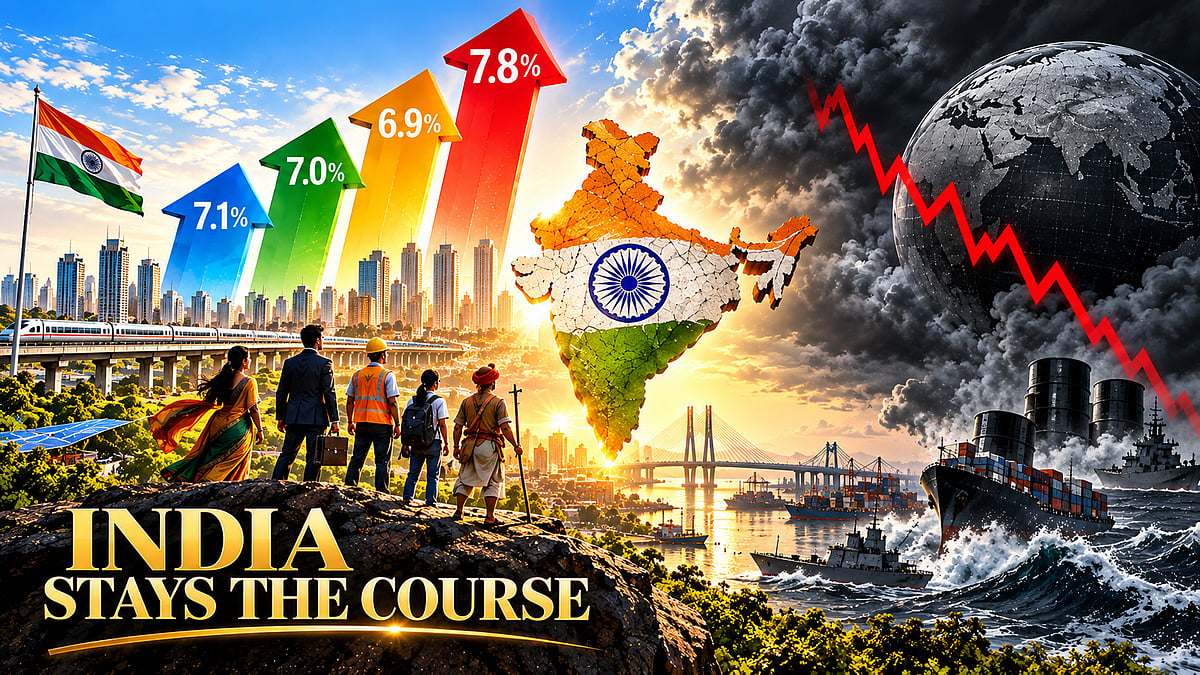
India's Growth Forecasts Meet Energy Risks And Institutional Challenges
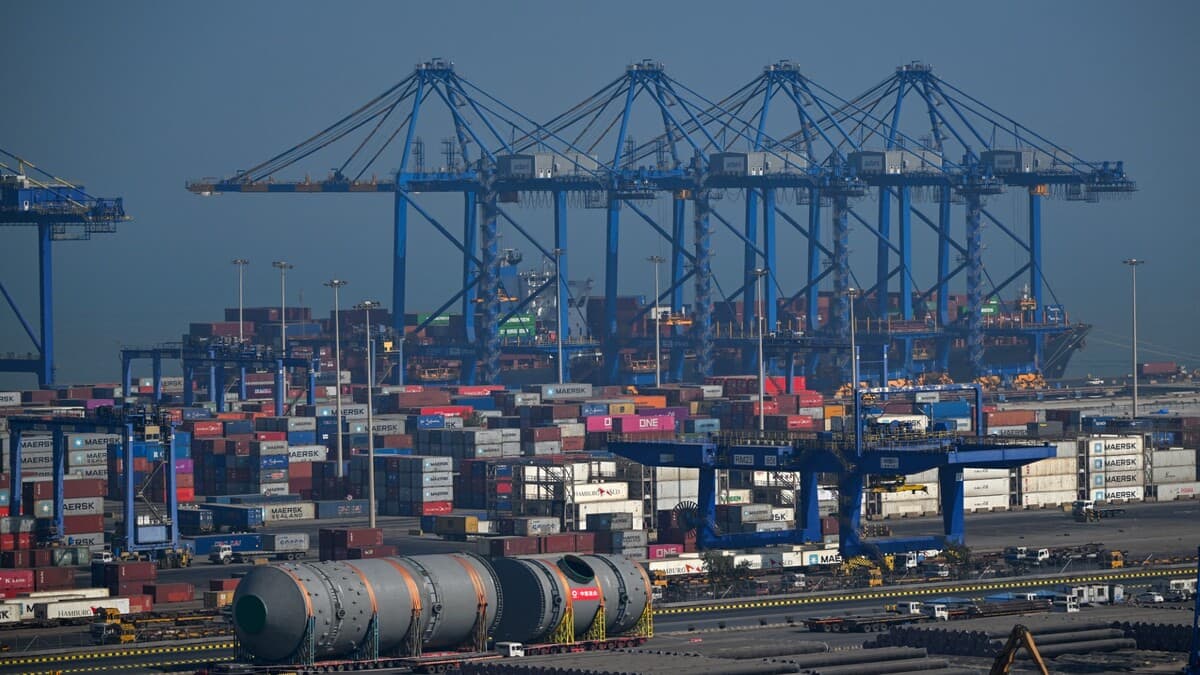
Moody’s Raises India FY27 Growth Forecast to 7% Amid Resilience

Finance Ministry Warns of Inflation Risks Amid Global Uncertainty

Wars, El Niño Raise Fears of Major Global Food Crisis
Trump Weighs Military Action or Deal as Iran Awaits Response

Rupee Falls to 96.31 as Oil, Yields, FII Selling Weigh
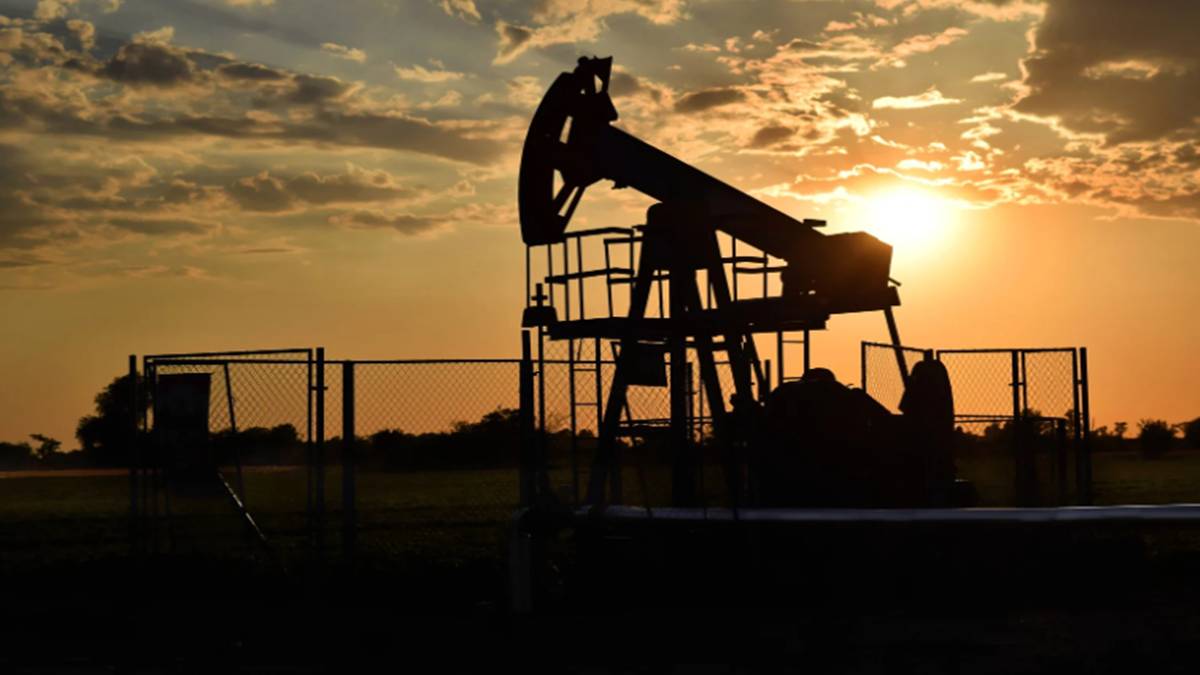
Global Diesel Crunch Puts India at Center of Supply
