2 hrs ago
Squid Hair Cells Offer New Clues About Hearing Loss
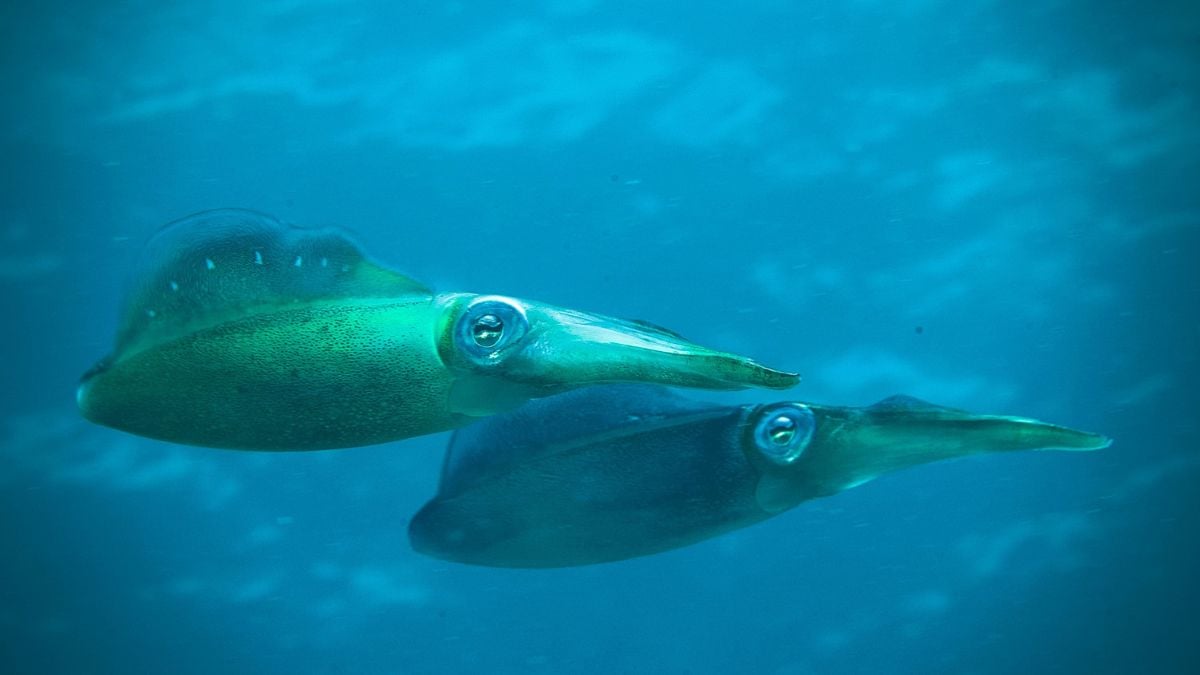
Squids have tiny sensory cells called hair cells on the outside of their bodies.
These cells help them feel movement and vibrations in the water.
Humans also have hair cells, but ours are hidden deep inside the ear.
Human ear hair cells help turn sound vibrations into messages for the brain.
When these cells or their hair bundles are damaged, people can lose hearing.
Scientists studied squid cells because they are easier to reach than human inner-ear cells.
They found that squid cells come in different lengths and react to different movements.
Researchers hope this similarity will help them understand hearing loss better.

Researchers found hundreds of sensory hair cells spread across squid bodies.
The cells detect movement and water vibrations, helping squids sense their surroundings.
Squid hair cells vary in length and respond differently to water movements, similar to human inner-ear cells.
Scientists used light-sheet microscopy to create three-dimensional images of the squid’s structure.
The findings may help researchers study damaged hair bundles involved in deafness and hearing loss.
- Who
- Researchers at Case Western Reserve University, led by associate professor Brian McDermott.
- What
- The researchers discovered and studied hundreds of hair cells distributed across squid bodies.
- Where
- Case Western Reserve University in Ohio, with the cells studied on squids.
- When
- In a recent study published in Current Biology; the articles do not provide an exact date.
- Why
- To better understand how sensory hair cells work and how damage to their hair bundles can cause hearing loss.
Key facts
- Study journal
- Current Biology
- Research institution
- Case Western Reserve University
- Lead author
- Brian McDermott, associate professor at the Case Western Reserve School of Medicine
- Cells discovered
- Hundreds of hair cells spread across squid bodies
- Cell function
- Detecting movement and vibrations in surrounding water
- Imaging method
- Light-sheet microscopy, used to build three-dimensional images
- Human relevance
- Hair-bundle damage can contribute to deafness or hearing loss
Quotes
Brian McDermott
Lead author and associate professor at the Case Western Reserve School of Medicine
“Squid are cephalopods with a diverse population of hair cells on the surface of their bodies, which may yield insights not only into how these fascinating animals detect water movement to survive, but also into how hearing and deafness occur in humans”
 theprint.in
“Often, when a child is born deaf or a hearing person loses their hearing, it is the hair bundle that has been damaged. So, studying the squid’s hair bundle holds promise for understanding how hearing loss occurs”
theprint.in
Sources
Related news

SpongeBob and Patrick Lookalikes Reveal a Predator-Prey Reality

How Crown-of-Thorns Starfish See Without A Central Head

Can Animals Sense Disasters? Science Examines Indian Beliefs

Why Wild Animals Need Quiet Places to Survive

Scientists Grow Brainstem Cells in Petri Dishes for First Time

Scientists Reconstruct Chirps Of Jurassic Forest Insect Soundscape

Scientists Identify New Leopard-Like Wild Cat Species in Bolivia

Bolivian Weird Cat Identified as New Species After Century

Experts Say Eight Hours May Not Suit Every Adult

Scientist Turns Insect Studies into Comics