2 weeks ago
Bedbug Infestations Rising: Here's What To Do About Them
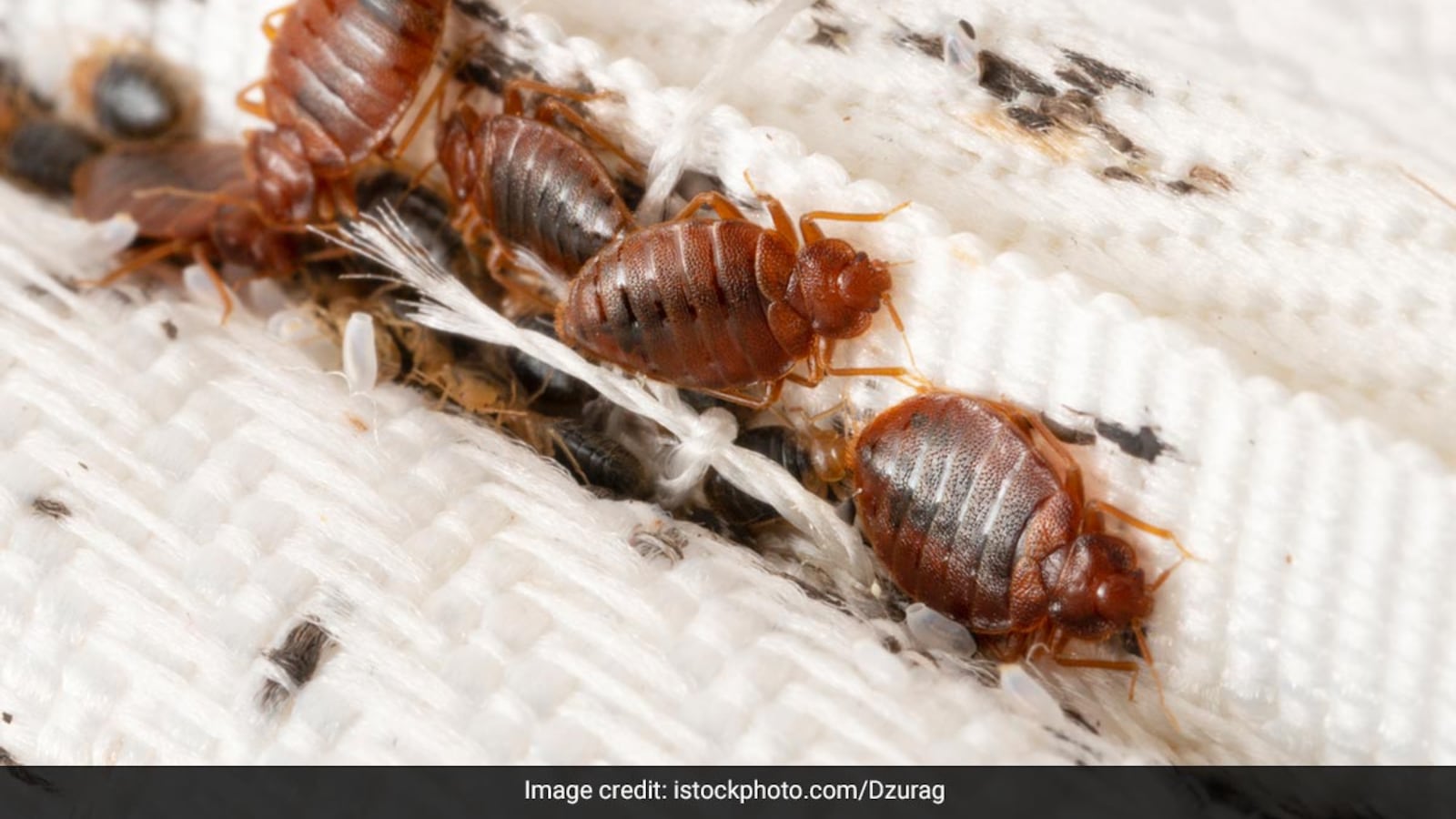
Bedbugs are tiny bugs that hide during the day and come out at night to bite people and drink their blood.
They are about as small as an apple seed and can hide in beds, couches, clothes and luggage.
Lately, there are more and more bedbugs, and summertime is when they are the worst.
The bites do not hurt, but some people get itchy red bumps a day or two later.
One older man in France got very sick because thousands of bedbugs kept biting him and he lost too much blood.
Scientists are checking whether bedbugs can spread a hard-to-treat germ called MRSA.
Bedbugs are very hard to get rid of because they are resistant to many bug sprays.
That is why experts say it is best to hire a professional pest control worker.
When you travel, you can look for bedbugs in hotel beds and keep your suitcase off the bed.
If you think you have bedbugs, do not panic - just take action and get help.

Bedbug infestations are increasing and traditionally peak during the summer, according to pest experts.
A 2023 University of South Dakota experiment found bedbugs can acquire MRSA in one feeding and spread it in a later one, though real-world transmission is not yet proven.
A 2020 case report from France linked a 70-year-old man's anemia and dementia to thousands of bedbugs found in his apartment.
Bedbugs had already developed resistance to DDT by the time the U.S. Environmental Protection Agency banned the pesticide in 1972, helping drive their resurgence.
Experts advise checking hotel rooms, keeping luggage off beds, and hiring experienced professional exterminators instead of using random chemicals.
- Who
- Experts and researchers including Christopher Hayes of North Carolina State University, Chow-Yang Lee of the University of California, Riverside, and Jose Pietri of Purdue University.
- What
- Increasing bedbug infestations, research suggesting the pests may carry antibiotic-resistant MRSA, and expert advice on prevention and treatment.
- Where
- The United States, including New York City, Chicago and Philadelphia, and Paris, France.
- When
- Infestations tend to peak in summer; notable cases cited include New York City buses in 2018, Paris reports in 2023 ahead of the 2024 Olympics, a 2020 French case report, and a 2023 University of South Dakota study.
- Why
- Bedbugs feed on human blood at night, causing lost sleep and possible blood loss; insecticide resistance since the U.S. Environmental Protection Agency banned DDT in 1972 has fueled their resurgence.
Concern about bedbugs spreading MRSA
No clear evidence of disease transmission
Can bedbugs transmit MRSA to humans?
Concern about bedbugs spreading MRSA
A 2023 University of South Dakota experiment showed bedbugs could acquire MRSA during one feeding and spread it during a later one, leading co-author Jose Pietri to say it 'changes the perspective of what bedbugs do, in terms of public health.'
No clear evidence of disease transmission
There has been no clear evidence that bedbugs have spread diseases from one person to another; entomologist Chow-Yang Lee says the bugs' digestion and anatomy seem to prevent germs from being passed on efficiently, and follow-up research is still needed.
Which U.S. city has the worst bedbug problem?
Concern about bedbugs spreading MRSA
Pest control companies publish annual rankings, with Orkin currently ranking Chicago No. 1 and Terminix saying Philadelphia has the biggest problem.
No clear evidence of disease transmission
Those lists are based on how many calls each company receives in a year, not a rigorous survey, and Chow-Yang Lee notes many infestations in low-income or public housing may not hire the big companies that compile the rankings.
Key facts
- Bedbug appearance
- Reddish-brown, about the size of an apple seed
- Bite reaction
- Painless bite; some people develop itchy red welts a day or so later, others have no reaction
- Feeding behavior
- Emerges at night and uses a beaklike body part to pierce skin and suck blood for several minutes
- MRSA research
- 2023 University of South Dakota experiment showed bedbugs could acquire and later spread MRSA
- DDT ban
- U.S. Environmental Protection Agency banned DDT for most uses in 1972 after bedbugs had already developed resistance
- Heat treatment
- Sustained dry heat of at least 122°F (50°C) kills eggs and adult bedbugs, but must be done by professionals
- Top U.S. cities
- Orkin ranks Chicago No. 1; Terminix says Philadelphia has the biggest problem (based on annual call volumes)
- Extermination cost
- Professional treatment can cost hundreds or even thousands of dollars
Quotes
Christopher Hayes
Assistant professor, North Carolina State University, who has been bitten over 50 times
“I think the biggest piece of advice is just people shouldn’t panic…They just need to take action. If you think you have bedbugs, don’t wait to deal with it.”
 NDTV
NDTV
“They certainly are out there…and if you're unaware, if you're not on top of your game, it's easy to bring them into your home.”
NDTV
Sources
Related news

Imported Mosquito on Plane Linked to Two German Malaria Deaths

Hyderabad needs slew of urgent steps to swat mosquito menace
Airport Malaria Outbreak Kills Two Frankfurt Workers

ICMR Study Links Drug-Resistant Infections to Higher Death Risk

Mosquito Blood Type May Influence Bites, But Isn’t Everything

Rats, Cockroaches Reported in Indore-Daund Express AC Coach

India's MSME Opportunity Lies in Cluster-Based Development

IIT-Madras Prof Creates World's Most Detailed Brain Maps