2 weeks ago
Government May Turn Security Needs Into Market For Indian Chips

India has young companies designing computer chips, but many struggle to find their first big customers.
The government is considering buying chips from these companies for public projects.
Security rules for CCTV cameras have already created more space for Indian-designed chips.
Two Chinese CCTV companies, Hikvision and Dahua, did not receive a required security certification.
This gave Indian companies a chance to compete.
Officials say similar rules could help chip companies in telecom, defence and aerospace.
Early government purchases could show other customers that the startups can make useful products.
A new government scheme may also provide money to build factories and a larger chip supply chain in India.

The government may use public procurement and security rules to create demand for India-designed semiconductor processors.
Security requirements for CCTV equipment have opened opportunities for Indian chip companies after Hikvision and Dahua failed mandatory certification.
Officials and industry leaders said telecom, aerospace, defence and other strategic sectors could provide similar opportunities.
Government orders could help startups move from proof of concept to commercial production by providing revenue and credibility.
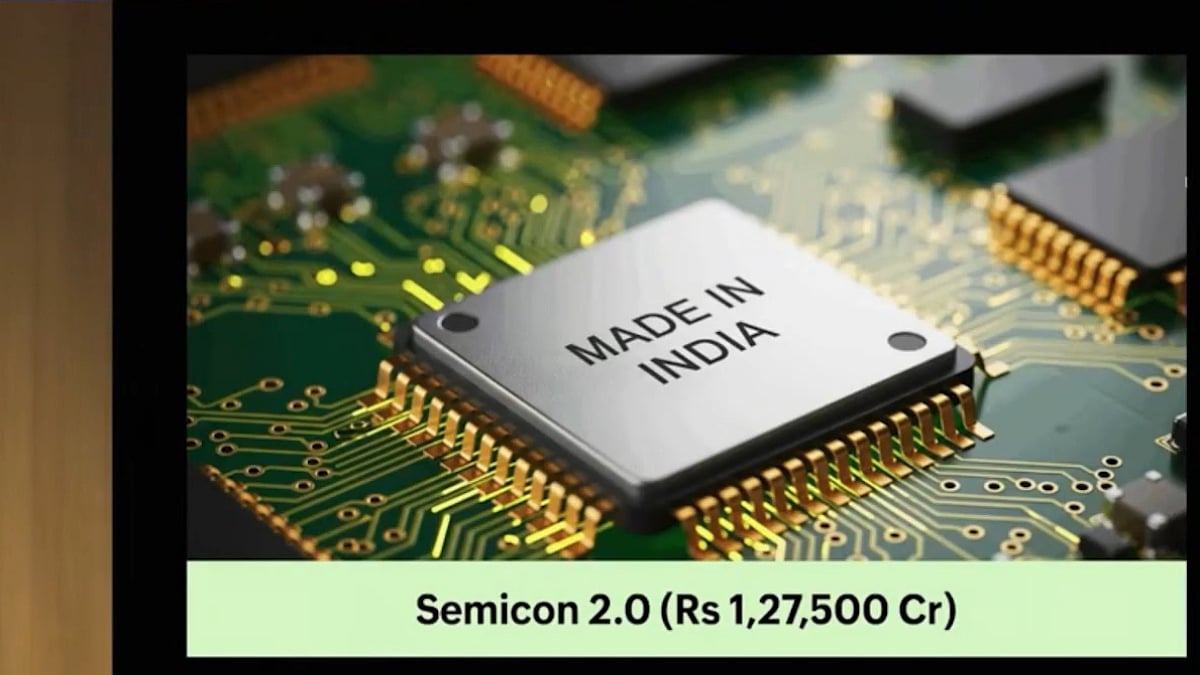
The proposed Semicon 2.0 scheme would offer ₹1.28 trillion over five years, while the 2026 Semicon India conference is scheduled for September.
- Who
- The Indian government, Indian semiconductor startups, industry representative Ashok Chandak, and companies including Hikvision and Dahua.
- What
- The government may become an anchor customer for India-designed semiconductor processors by using procurement and national-security requirements.
- Where
- India, including government procurement and sectors such as CCTV, telecommunications, aerospace and defence.
- When
- The proposal is being discussed ahead of the Semicon India 2026 conference, scheduled for 16–17 September 2026.
- Why
- To help Indian chip startups secure their first commercial deployments, generate revenue and strengthen domestic semiconductor capabilities.
Supporters of Government-Led Demand
Commercial-Market Concerns
Using security rules to create customers
Supporters of Government-Led Demand
Officials and industry leaders argue that procurement rules and national-security requirements can provide Indian chip startups with their first deployments, revenue and credibility.
Commercial-Market Concerns
The articles do not quote opponents directly, but they note that startups still face difficulty moving from proof of concept to production and finding commercial clients.
Expansion into strategic sectors
Supporters of Government-Led Demand
Supporters identify telecommunications, aerospace, defence and other strategic areas as sectors where trusted-source requirements could create demand for Indian chips.
Commercial-Market Concerns
Commercial deployment and scaling remain unresolved challenges, meaning government-created demand alone may not guarantee broader market adoption.
Key facts
- Proposed scheme
- Semicon 2.0 is a five-year, ₹1.28-trillion initiative to encourage chip fabs and a semiconductor supply chain in India.
- Potential government role
- The government could use public-sector purchases and security requirements to act as an anchor customer for Indian chip startups.
- CCTV example
- Security measures for CCTV equipment have created an opportunity for India-designed chips.
- Certification development
- China-based Hikvision and Dahua reportedly failed to obtain mandatory certification from the Standardisation Testing and Quality Certification body.
- Funding proposal
- The India Semiconductor Mission has proposed equity-linked funding that would allow startups to raise partial funds from the Centre and potentially buy back the equity later.
- Semicon India 2026
- The conference is expected to feature more than 240 international companies and delegations from countries including Japan, Korea, Singapore, Germany, the United States and the Netherlands.
- Planned leadership participation
- Prime Minister Narendra Modi is expected to chair a roundtable with selected chief executive officers on 16 September.
Quotes
Senior government official (anonymous)
Indian government official involved in semiconductor policy
“We never intended that the measures we originally took on CCTV cameras, which were oriented towards security requirements, would create a market for India‑designed chips for CCTV cameras, but it ended up creating those conditions,”
 livemint.com
Sources
Related news
India's VIHAAN chip hits first-pass silicon success, eyes 2027 production
India Notifies Rs 1.27 Lakh Crore Semicon 2.0 Programme
Govt Launches ₹1.27 Lakh Crore Semicon 2.0 Scheme
India Builds Semiconductor Ecosystem From Chips to Fabs

China Expands Global Security Influence

FCC Bans New Chinese Drones Over Security Risks

US Tech Enables China's Surveillance in Nepal
Canada Orders Hikvision to Halt Operations Over Security Fears