3 days ago
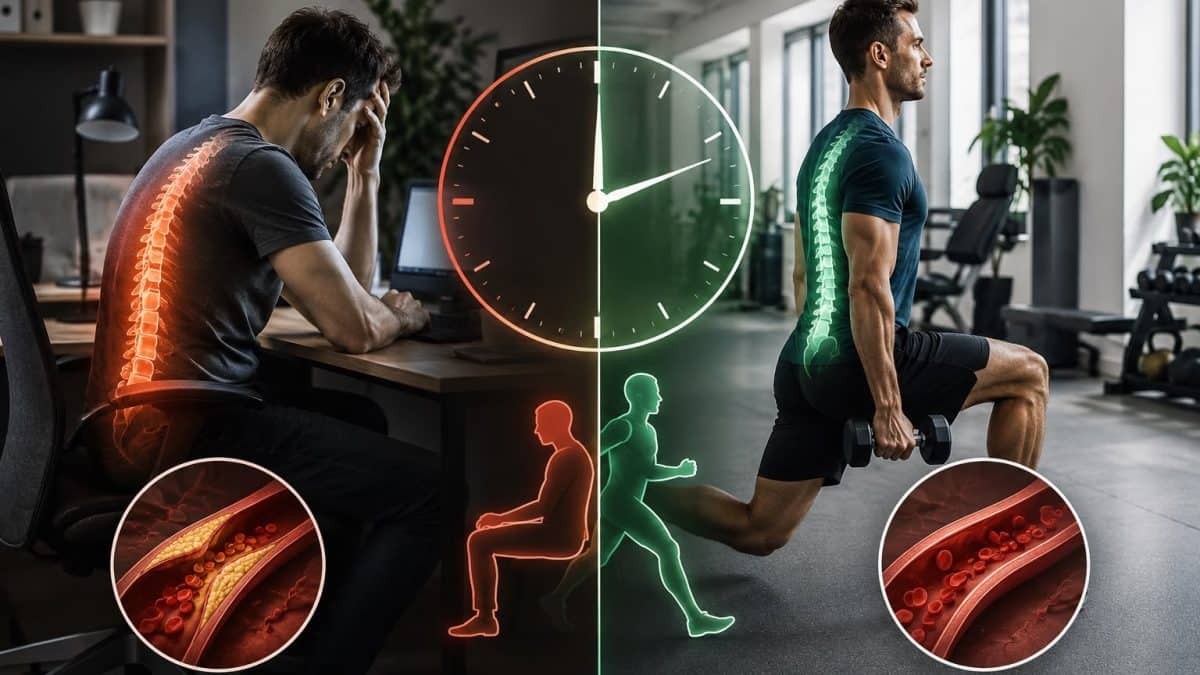
Prolonged Sitting Raises Long-Term Risks for Spine and Heart

Sitting for a long time can change how your body works.
Your hip muscles can become tight while your bottom muscles become weaker.
Slouching can also put extra pressure on your spine, neck, and shoulders.
Staying still for too long can make it harder for your body to manage sugar and fat.
Excessive sitting is linked with higher risks of diabetes, heart attack, and stroke.
The World Health Organization says insufficient physical activity contributes to millions of deaths worldwide each year.
Even people who exercise may still face risks if they sit for most of the day.
Taking walking breaks, standing sometimes, and doing vigorous activity can help reduce the effects.

Young adults may spend more than 60 hours seated each week while working, commuting, or relaxing.
Sitting for more than eight hours daily can tighten hip flexors, weaken glutes, and contribute to back and hip problems.
Poor seated posture can compress spinal discs and cause neck and shoulder stiffness over time.
Excessive sitting slows metabolism and is associated with higher risks of diabetes, heart attack, and stroke.
A 2024 PLOS One study found that eight or more hours of sitting increased cardiovascular risk and body mass index even among active young people.
- Who
- People who spend extended periods sitting, including desk workers, commuters, and young adults.
- What
- Prolonged sitting is linked to posture and spine problems, slower metabolism, and increased cardiovascular and metabolic risks.
- Where
- At desks, during commutes, and at home while relaxing.
- When
- The effects can develop when people sit for more than eight hours a day and continue over time.
- Why
- Long periods of inactivity can weaken some muscles, compress spinal discs, slow metabolism, and reduce the body’s ability to regulate blood sugar and break down fat.
Key facts
- Common sitting duration
- Many young adults spend more than 60 hours per week seated.
- Spinal effects
- Prolonged poor posture can compress spinal discs and contribute to premature degeneration.
- Metabolic effect
- Extended sitting can slow metabolism and affect blood-sugar regulation and fat breakdown.
- Diabetes risk
- People who sit excessively face a reported 112 percent higher risk of developing diabetes.
- Heart and stroke risk
- Excessive sitting is associated with a reported 147 percent higher risk of heart attack or stroke.
- Study finding
- A 2024 PLOS One study linked sitting for eight or more hours daily with increased cardiovascular risk and body mass index, including among young, physically active people.
- Suggested strategies
- Standing desks, regular walking breaks, and 10 minutes of vigorous exercise for each additional hour of sitting were recommended as ways to reduce risks.
Sources
Related news
Two Hours of Exercise Cannot Undo Five Days of Sitting

Daily Workouts Help Heart Health, But Sitting Still Matters

Why auto, cab drivers may face a hidden heart risk

Prolonged Phone and Laptop Use Can Harm Spine Health

Even Fit People Face Heart Attack Risks, Doctor Warns

Heart Disease Is Increasingly Affecting Younger Adults in India

New Hangout Sitcoms Turn Friendship FOMO Into Streaming Appeal

Chinese Workers Fight Office Ageing With Parasols And Sunscreen

India Sends Fifth Aid Tranche as Nepal Flood Toll Climbs

Dyson Launches $499 CameraJet AI Toothbrush With Jet Flossing

PlatinumRx remotely helps families save on recurring medicines