

7 months ago
Indian Spacetech Startups Poised for Growth in 2026

In 2026, Indian spacetech startups are expected to see significant growth and investment.
The sector is moving from a phase of promise to one of proof, with investors focusing on startups that have clear commercial pathways and can demonstrate business viability.
Key areas of interest include small satellite constellations, earth-observation data platforms, and space-enabled communications.
The regulatory environment has improved, with policies like the Indian Space Policy 2023 opening up opportunities for private players.
However, startups will need to show execution speed and operational readiness to attract investment.
The spacetech market in India is projected to cross $77 billion by 2030, marking a transition from high-potential narrative to results-driven outcomes.

Indian spacetech startups are expected to see significant growth and investment in 2026, with a focus on commercial validation.
Investors are prioritizing startups with clear commercial pathways, scalable business models, and near-term revenue visibility.
Key investment areas include small satellite constellations, earth-observation data platforms, launch services, and space-enabled communications.
The regulatory environment has improved, with policies like the Indian Space Policy 2023 opening up opportunities for private players.
The spacetech market in India is projected to cross $77 billion by 2030, marking a transition to results-driven outcomes.
- Who
- Indian spacetech startups and investors
- What
- Selective investment and focus on commercial validation in the spacetech sector
- Where
- India
- When
- 2026
- Why
- Growing demand for cost-efficient space access and regulatory clarity
Optimistic View
Cautious View
Investment Focus
Optimistic View
Investors are optimistic about the potential of Indian spacetech startups and are willing to provide patient capital for long-term growth.
Cautious View
Investors are becoming more selective and are focusing on startups with clear commercial pathways and near-term revenue visibility.
Regulatory Environment
Optimistic View
The regulatory environment is seen as supportive, with policies like the Indian Space Policy 2023 opening up opportunities for private players.
Cautious View
While the regulatory environment is improving, startups still need to demonstrate execution speed, business traction, and operational readiness to attract investment.
Key facts
- Projected Market Size by 2030
- $77 Bn
- Funding in 2025
- $157 Mn
- Key Investment Areas
- Small satellite constellations, earth-observation data platforms, launch services, space-enabled communications
- Average Cheque Size from AVCF
- INR 30-40 Cr
- Number of Private Space Companies in India
- 200+
- Key Enablers
- IN-SPACe, NewSpace India Limited (NSIL)
Timeline
India's 2040 rocket, satellite plan sparks 2026 spacetech boom.
Startups surge, targeting small sats, data, space comms.
Quotes
Umesh Sachdeva
CEO and co-founder of Uniphore
“The big theme for 2026, is that there is probably no industry left that is not thinking about AI agents or driving efficiency with AI. The key difference is that companies have moved past the proof-of-concept or pilot mentality to a production mindset. That brings back some old-fashioned considerations, like the cost of the solution. Not everything needs a large language model; some use cases can be handled with small language models. Not everything needs the biggest GPU from Nvidia; some use cases can be supported by older generations of GPUs. As enterprises get more serious about scaling AI across the organisation, cost, openness, and the fact that one size does not fit all are becoming core architecture decisions. That’s why I believe that while last year an MIT report saying that 95% of agentic initiatives would fail went viral, this year similar reports will point to something very different.”
 CNBC TV 18
“If we had spoken last year—and we did—I would have said I was concerned. But today, almost all of them have very solid strategies in place. They were slow off the mark, but they’ve caught up. They’re all pursuing what’s being called an asset-led services model. The assets are industry solutions, pre-trained models, and pre-built agents. They’re going to clients and saying, “We can now bring our assets and deliver outcomes as a service.” That puts IT services firms firmly in the middle of the AI economy. Over the next four quarters, their growth rates will look very different from last year.”
CNBC TV 18
Jimit Arora
CEO of Everest Group
“Discretionary spending had taken a step back over the past couple of years, and a bounce-back is expected this year. However, in many cases, this recovery is not being funded through new capital and instead is driven by a rotation of spend between business as usual (BAU) and what is considered new. Much of the large and mega deal activity is focused on compressing BAU costs to create funding for discretionary capital requirements”
 thehindubusinessline.com

Salil Parekh
MD and CEO of Infosys
“The next financial year is expected to deliver better outcomes than the current one, supported by strong performance in financial services. In energy and utilities as well, we are seeing a healthy pipeline of deals across the vertical, which is helping sustain momentum. We are not seeing any deterioration, which is a positive sign. From a macro perspective, markets are factoring in the possibility of interest rate cuts, particularly in the US, though we will have to see how that plays out. Some of our expansion initiatives, including programmes focused on smaller clients, are performing well. Overall, as we look into the next year, these things support our growth”
thehindubusinessline.com

C. Vijayakumar
CEO & MD of HCLTech
“We see strong demand for Gen-AI and Agentic AI across the portfolio, and it is getting embedded in every deal. We also see good demand for advanced AI capabilities like Physical AI and AI Factory, which are well linked to the capex spend in the AI space. While traditional discretionary spending areas have slowed, opportunities are emerging in newer pockets such as establishing and managing AI infrastructure, where discretionary investments continue”
thehindubusinessline.com
Sources

Discretionary tech spend shows early recovery, but budgets may stay tight

Capital With Conditions: Indian Spacetech Startups Expected To Break New Grounds In 2026
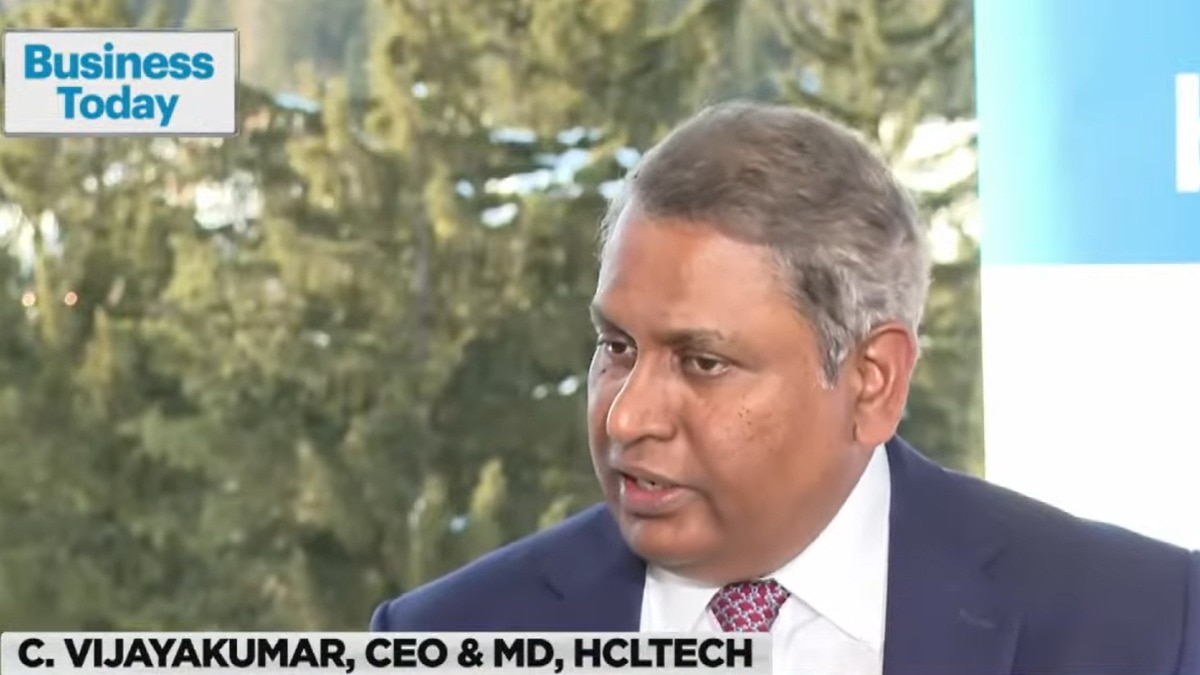
AI driven productivity may deliver 3–5% growth without adding staff: HCLTech CEO at Davos 2026
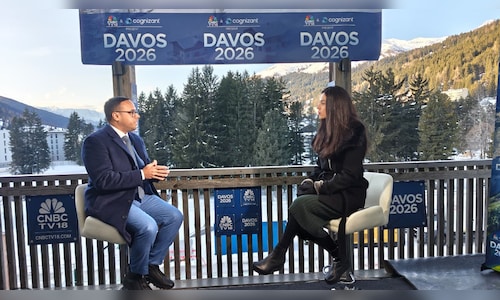
Indian IT set for AI-led growth spurt in 2026: Uniphore Chief Umesh Sachdeva
Where Hiring Will Take Place In 2026
Related news
India’s Manufacturing Majors Scale Capacity Across Strategic Industries
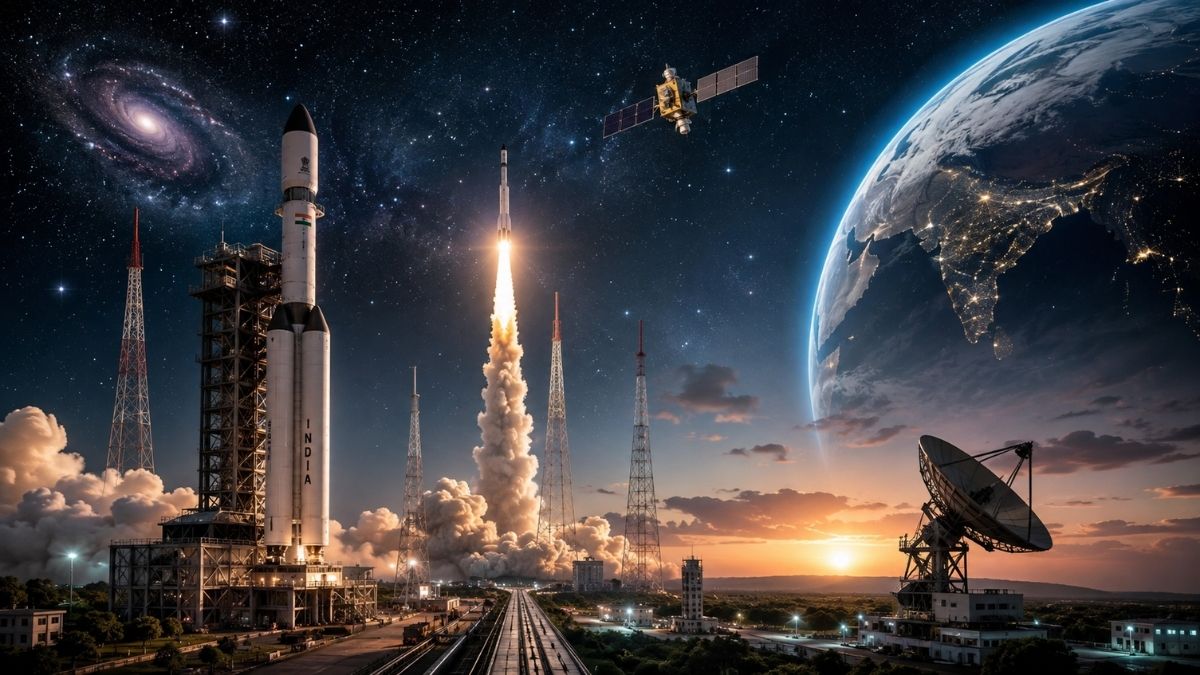
India’s Space Economy Targets $45 Billion by 2030

India’s Space Economy Projected to Reach $40–45 Billion

Chandigarh University hosts National Space Technology Conclave with ISRO, IIST