2 hrs ago
India Rejects Pakistan-China Border Commission Over Disputed Territories
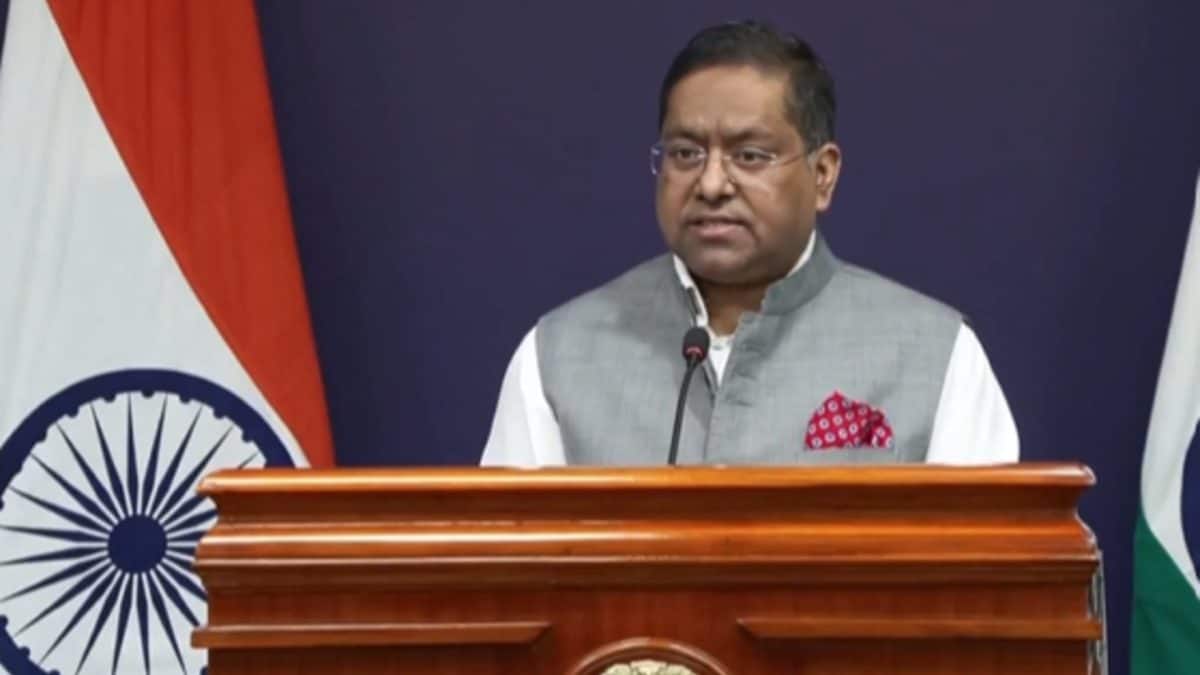
India and Pakistan disagree about who has authority over parts of Jammu and Kashmir and Ladakh.
Pakistan and China held the first meeting of a joint boundary commission in Islamabad.
Pakistan called the meeting an important step in its relationship with China.
It said the commission could help manage borders, conduct surveys, support trade and improve connections between people.
India rejected the commission and said it has no legal basis.
India said there is no recognised boundary between Pakistan and China involving the territories at issue.
India also said Pakistan cannot make agreements about Indian territory.
New Delhi called the 1963 China-Pakistan Boundary Agreement illegal and invalid.
India said the new cooperation would not change its claims over Jammu and Kashmir and Ladakh.
The three countries therefore have sharply different positions on the disputed areas.

India rejected the Pakistan-China Boundary Joint Commission, calling it legally baseless.
India said Jammu and Kashmir and Ladakh are integral and inalienable parts of India.
New Delhi said it has never recognised the 1963 China-Pakistan Boundary Agreement, calling it illegal and invalid.
Pakistan described the commission’s inaugural meeting in Islamabad as a significant milestone in bilateral relations.
Pakistan said the commission would support border management, joint surveys, trade flows and people-to-people connectivity.
- Who
- India, Pakistan and China; India’s response was delivered by Ministry of External Affairs spokesperson Randhir Jaiswal, while the commission was co-chaired by Chinese and Pakistani foreign ministry officials.
- What
- India rejected the Pakistan-China Boundary Joint Commission and related boundary cooperation, while Pakistan and China operationalised the commission.
- Where
- The inaugural commission meeting was held at Pakistan’s Ministry of Foreign Affairs in Islamabad.
- When
- The commission’s inaugural meeting and India’s response took place on Wednesday, according to the articles; the China-Pakistan Boundary Agreement was signed on March 2, 1963.
- Why
- India said Pakistan has no authority to make arrangements concerning what it considers Indian territory under illegal and forcible occupation; Pakistan said the commission would expand cooperation in border management, surveys, trade and connectivity.
India’s Position
Pakistan-China Position
Legal basis of the commission
India’s Position
India rejected the commission as legally baseless and said Pakistan cannot enter arrangements concerning Indian territory.
Pakistan-China Position
Pakistan and China operationalised the commission as a bilateral framework for cooperation.
Status of Jammu and Kashmir and Ladakh
India’s Position
India said the two Union Territories are integral and inalienable parts of India and that related cooperation is unacceptable.
Pakistan-China Position
Pakistan and China proceeded with boundary cooperation involving areas that India says are under illegal occupation.
Purpose and effect
India’s Position
India said the cooperation cannot alter the status of the territories or affect India’s sovereignty and territorial integrity.
Pakistan-China Position
Pakistan said the commission would promote border management, joint surveys, trade flows and connectivity, and called its launch a significant milestone.
Key facts
- India’s position
- Jammu and Kashmir and Ladakh are integral and inalienable parts of India.
- Commission status
- Pakistan and China operationalised the Pakistan-China Boundary Joint Commission and held its inaugural meeting in Islamabad.
- India’s legal objection
- India said the commission has no legal basis and that there is no boundary between Pakistan and China concerning the territories at issue.
- 1963 agreement
- India said it has never recognised the China-Pakistan Boundary Agreement signed on March 2, 1963, and considers it illegal and invalid.
- Pakistan’s assessment
- Pakistan described the commission’s first meeting as a significant milestone for Pakistan-China relations.
- Planned cooperation
- Pakistan said the commission would address border management, joint border surveys, trade flows and people-to-people connectivity.
- Indian demand
- India called on Pakistan to vacate areas it describes as being under illegal and forcible occupation.
Quotes

India’s Ministry of External Affairs
India’s foreign ministry, which issued the statement rejecting the commission.
“We resolutely oppose and reject any attempts to alter the status of these occupied territories or legitimise illegal occupation, impinging on India's sovereignty and territorial integrity. Any so-called boundary cooperation between China and Pakistan concerning Indian territories would be completely unacceptable and would have no bearing whatsoever on India's sovereignty over these territories.”
 thestatesman.com
 NDTV
NDTV
 firstpost.com
“The inaugural meeting of the Commission was held at the Ministry of Foreign Affairs in Islamabad, co-led by Mr. Li Ya, Deputy Director General (Department of Boundary and Ocean Affairs) of the Chinese Ministry of Foreign Affairs and Mr. Bilal Mahmood Chaudhary, Director General (China) of the Ministry of Foreign Affairs, Pakistan”
NDTV
Sources

Related news

India Rejects Chinese Intrusion Claims, Citing Un-demarcated Border Disputes
Pakistan Weighs Province-Like Status for PoK and Gilgit-Baltistan

India-Pakistan Map Dispute Revives Tensions Over Jammu and Kashmir

Pakistan Summons U.S. Envoy Over Kashmir Status Remarks
India-China Border Talks Test Prospects for Early Settlement
Why India Should Not Overread Sergio Gor’s Kashmir Remarks
BRICS Banquet Menu Sparks Debate Over Vegetarian Diplomacy

Rohingya Families Dismantle Jammu Settlements After Eviction Notices

India Names West Indies Squads; Pant Leads Rest Of India
Speaker Defends Seven-Day J&K Session Amid Opposition Criticism