

2 weeks ago
Oil prices fall on demand cuts despite US-Iran supply risks
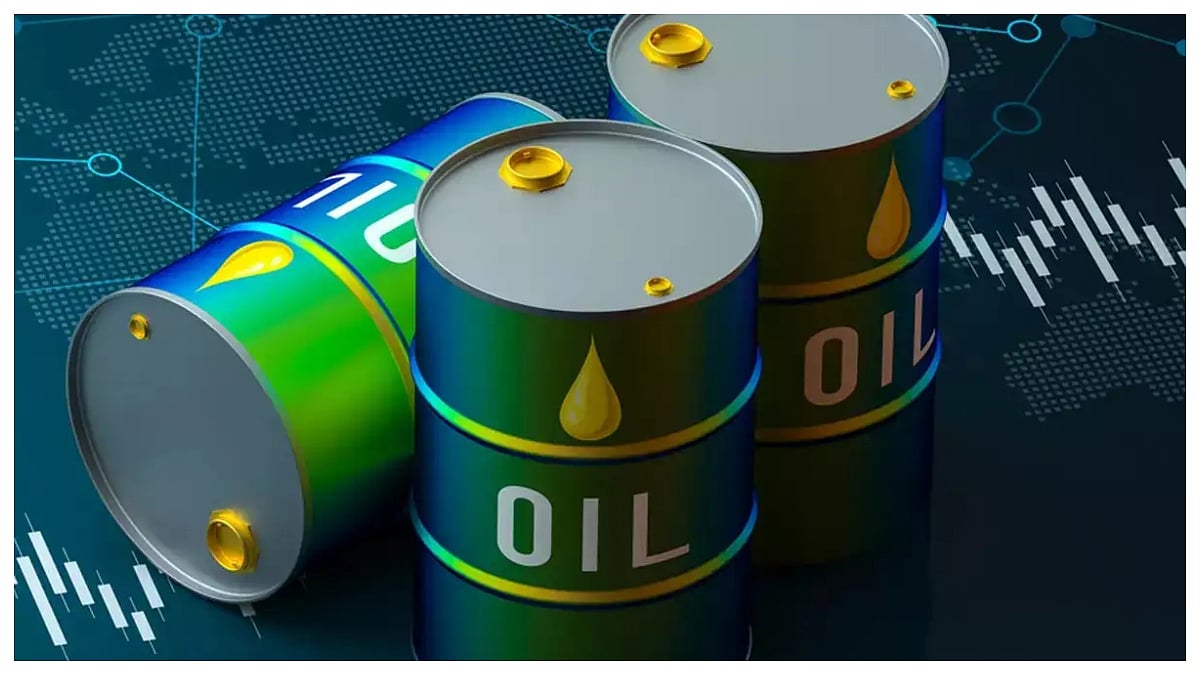
Oil is a liquid that powers cars, planes, and lots of machines, so its price matters to people everywhere.
This week the price of oil went up a little bit one day, then fell by more than one dollar the next day.
People who study oil said the world will need less oil in the coming year than they first thought.
That made the price go down.
But the price did not fall even more because ships that carry oil are being attacked in faraway seas.
The attacks are linked to a conflict between the United States and Iran.
Talks to stop the fighting have slowed down, and Iran says there is no ceasefire to extend.
Because of the danger, very few ships are moving through an important waterway called the Strait of Hormuz.
Experts also expect there to be less oil available, which usually makes prices go up.
So the two forces, lower expected demand and worry about supply, pulled the price in different directions.

Brent crude futures fell $1.29, or 1.5%, to $87.69 a barrel, while WTI dropped $1.30, or 1.6%, to $81.97 on Thursday.
A day earlier, Brent settled up 7 cents at $88.98 and WTI gained 7 cents to $83.27 as attacks on Middle East shipping continued.
OPEC cut its 2026 world oil demand growth forecast to 580,000 barrels per day, and the IEA expects a 1.6 million barrels per day demand contraction this year.
The IEA warned of a 1.8 million barrels per day supply deficit this quarter, more than double its earlier estimate, and the largest 2026 shortfall in five years.
U.S.-Iran negotiations remain at an impasse, with Iran saying there is no ceasefire to extend and Washington blockading Iranian ports, while Strait of Hormuz transits fell to a one-week low of eight.
- Who
- Oil traders, investors, and forecasters including OPEC, the International Energy Agency, and the U.S. Energy Information Administration, as well as the United States, Iran, Pakistan as mediator, and Yemen's Iran-aligned Houthis.
- What
- Oil prices fell more than $1 a barrel on Thursday after 2026 demand forecasts were cut, while U.S.-Iran talks stayed deadlocked and Middle East shipping attacks kept supply disruption risks elevated.
- Where
- Global commodity markets; Middle East waterways including the Strait of Hormuz and the Bab el-Mandeb Strait.
- When
- Thursday, August 13, 2026, following a modest gain on Wednesday, August 12, 2026.
- Why
- Weaker 2026 demand projections outweighed supply concerns, though the U.S.-Iran impasse, the blockade of Iranian ports, and attacks on tanker routes prevented a steeper decline.
Demand concerns
Supply disruption risks
U.S.-Iran ceasefire talks
Demand concerns
Iran says there are no discussions with the U.S. to extend the ceasefire because the deal, from Tehran's perspective, had no start date and there is nothing to extend; an Iranian official added that talks to revive the June interim agreement have made little progress.
Supply disruption risks
Markets remain doubtful an agreement can soon ease disruptions to crude flows or prevent another escalation, and Pakistan says the deadline for a U.S.-Iran memorandum of understanding could still be extended, while Washington maintains its blockade of Iranian ports.
Oil demand outlook
Demand concerns
Forecasters cut 2026 demand projections, with OPEC lowering growth to 580,000 barrels per day and the IEA expecting a 1.6 million barrels per day contraction, pointing to genuinely weaker demand.
Supply disruption risks
Portfolio manager Simon Wong questions how much of the decline reflects temporary demand management versus permanent demand destruction, noting Asian refiners reduced runs only because they could not secure crude supplies due to the Strait of Hormuz closure.
Key facts
- Brent crude (Thursday)
- $87.69 per barrel, down $1.29 (1.5%)
- WTI crude (Thursday)
- $81.97 per barrel, down $1.30 (1.6%)
- Brent crude (Wednesday settle)
- $88.98 per barrel, up 7 cents
- Strait of Hormuz transits (Tuesday)
- 8 vessels, a one-week low (pre-war: 125-140 daily)
- OPEC 2026 demand growth forecast
- 580,000 barrels per day
- IEA 2026 demand forecast
- 1.6 million barrels per day contraction
- IEA quarterly supply deficit
- 1.8 million barrels per day, more than double prior estimate
- U.S. crude stocks
- Largest weekly gain since January 2023
Quotes
Simon-Peter Massabni
Head of business development at brokerage XS.com
“"The continued strength in oil prices comes as markets grow increasingly doubtful that an agreement can soon be reached to ease disruptions to crude flows from the region or prevent another escalation of the conflict."”
 livemint.com
“"The question is, after the war, how much of that demand will actually come back? I don't think all of it will."”
livemint.com
US President Donald Trump
U.S. President
“Negotiations to revive an interim agreement reached in June had made little progress, with both sides yet to agree on a timeline for implementation.”
 freepressjournal.in
“"total control"”
livemint.com
Sources


Related news

Oil Prices Extend Losses as Hormuz Talks Raise Supply Hopes

Oil Prices Slip as Iran-Oman Talks Raise US-Iran Peace Hopes

Oil prices extend losses as diplomacy offsets US-Iran tensions

Brent crude crosses $90 as US-Iran conflict prolongs
Oil prices rise as US-Iran talks stall over Hormuz

Iran Seizes Fuel-Smuggling Vessel in Gulf, Arrests 11 Crew

Trump Floats Renaming Strait of Hormuz as “Trump Strait”

Chevron Plans $7 Billion Venezuela Expansion Amid U.S. Oil Push
Saudi Tanker Hit in Hormuz, Killing Two Filipino Sailors

Indian Stocks Extend Three-Day Losing Streak as Oil Rises
