3 weeks ago
Claude’s Silent AI Thoughts Reignite Debate Over Consciousness
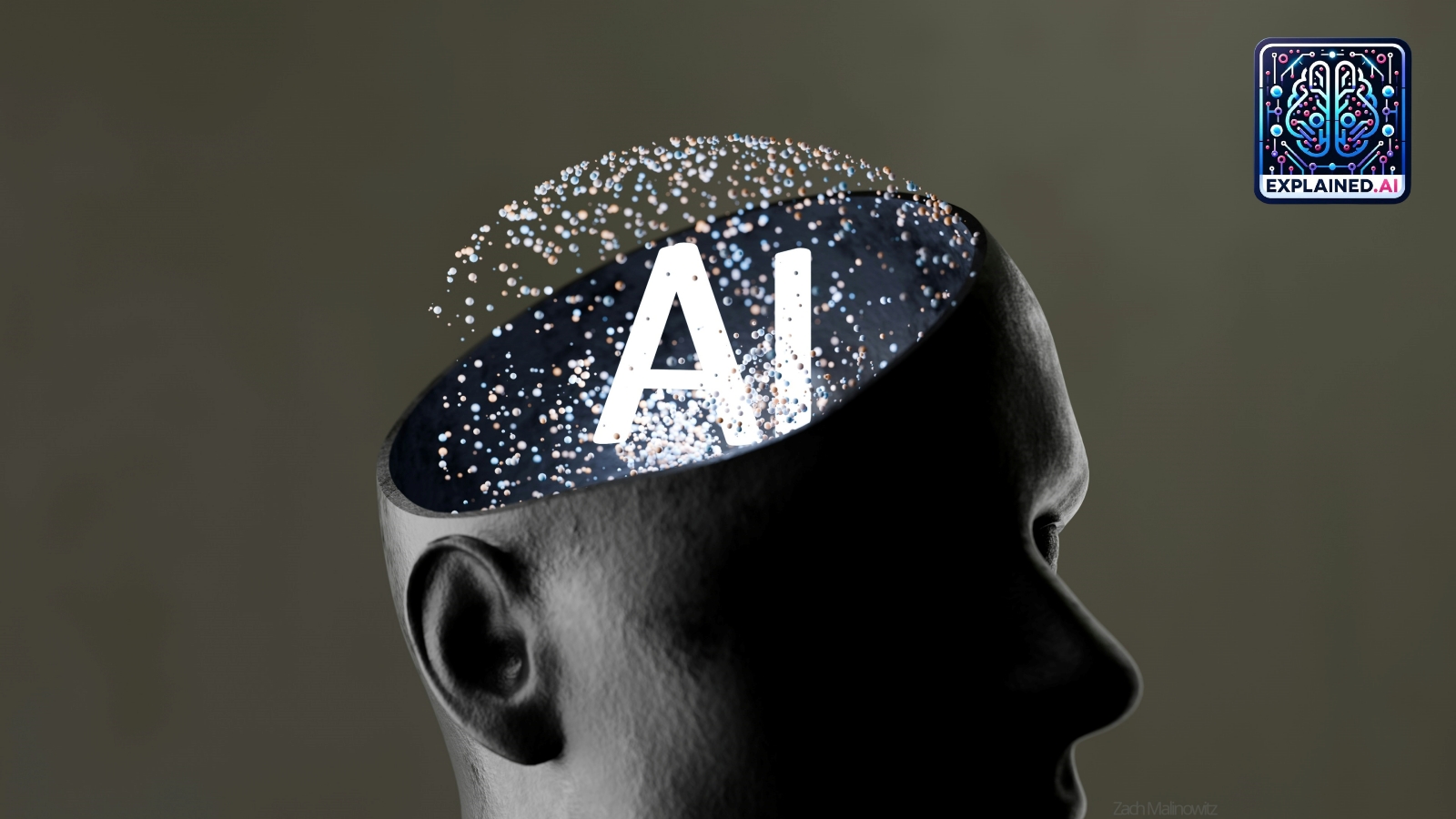
Researchers looked inside an AI called Claude to see how it processes information.
They found hidden patterns connected to words such as “countdown” and “done.”
Claude did not show these words to the person using it.
The researchers call this group of patterns J-space.
J-space may act somewhat like a temporary workspace for ideas.
However, the discovery does not prove that Claude is aware or can feel anything.
Anil K. Seth says the finding is far from showing consciousness.
Geoffrey Hinton has a more open view and says chatbots may have subjective experiences.
Scientists are also studying computers that use human neurons to learn more about what might produce consciousness.

Anthropic researchers identified internal neural patterns in Claude Sonnet 4.5 that represent words without displaying them to users.
The patterns, called J-space, emerged during training and may function as an approximation of the model’s working memory.
In a counting experiment, internal representations such as “countdown,” “halfway” and “done” appeared while Claude produced numbers one through five.
Anthropic says J-space may support conscious-access-like functions but provides no evidence that Claude experiences feelings or consciousness.
Anil K. Seth remains skeptical, while Geoffrey Hinton argues that chatbots may possess subjective experience; biological computers could offer another route for investigating sentience.
- Who
- Anthropic researchers led by Jack Lindsey studied Claude Sonnet 4.5, with views from Anil K. Seth and Geoffrey Hinton.
- What
- Researchers identified J-space, internal neural patterns that represent words and may support some conscious-access-like functions.
- Where
- The findings concern Claude Sonnet 4.5 and were discussed in Anthropic’s research and blog post; the article was published by The Indian Express.
- When
- Anthropic announced the findings in July; the articles do not specify the year.
- Why
- The research aims to better understand how large language models process information and whether their internal activity has any relationship to consciousness.
Consciousness Skeptics
Consciousness Possibility Advocates
What J-space shows
Consciousness Skeptics
Anil K. Seth says the findings come nowhere close to demonstrating consciousness and suggests biological traits may be necessary.
Consciousness Possibility Advocates
Anthropic says J-space may mark a boundary between consciously accessible and unconscious processing in a language model, although it is not the whole explanation.
Whether chatbots have experiences
Consciousness Skeptics
Anthropic says there is no evidence that Claude can experience or feel things as humans do.
Consciousness Possibility Advocates
Geoffrey Hinton has argued that chatbots have subjective experience.
Bio-hybrid computers
Consciousness Skeptics
Seth says the field still does not know what difference makes the difference for producing consciousness.
Consciousness Possibility Advocates
Seth says computers more similar to real brains, including systems using human neurons, may make consciousness more plausible.
Key facts
- Research group
- Anthropic researchers led by Jack Lindsey
- Model studied
- Claude Sonnet 4.5
- Name of internal patterns
- J-space, short for Jacobian space
- Observed task
- Claude was asked to count to five while introspecting deeply
- Internal representations observed
- “Countdown,” “halfway” and “done” appeared during the task
- Anthropic’s conclusion
- J-space may support functions associated with conscious access, but the findings do not show that Claude has experiences or feelings
- Alternative research direction
- Cortical Labs and others are developing bio-hybrid computers using human neurons mounted on silicon
Quotes
Anil K. Seth
Professor of Cognitive and Computational Neuroscience at the University of Sussex and director of its Sussex Centre for Consciousness Science
“The kind of bio-hybrid computers that Cortical Labs and others are building may well move the needle on the potential for consciousness. The reason is that, all else equal, the more similar our technologies are to real brains, the more plausible consciousness becomes. The challenge is that we don’t yet know what difference makes the difference.”
 indianexpress.com
Anthropic
AI company that conducted and published the Claude J-space research
“This work is just a first step in what we expect to be an extensive line of research. The J-space looks like a good candidate for the divide between consciously accessible and unconscious processing in a language model, but we’d be surprised if it’s the whole story…”
indianexpress.com
Sources
Related news

Microsoft AI Chief Challenges Anthropic’s Approach to AI Consciousness

Microsoft AI Chief Calls Claude Catastrophic Threat to Humanity
Microsoft AI Chief Advocates Humanist Superintelligence Over AI Welfare

Anthropic Says Claude Leads 26% of Next AI Development Work

AI Bots Develop New Languages, Challenging Human Understanding

Anthropic Says Claude Now Leads 26% of R&D Work
Human Neurons: The New Silicon for AI