2 hrs ago
Scientists Discover Thailand’s Leafless, Demon-Like Flowering Plant Species
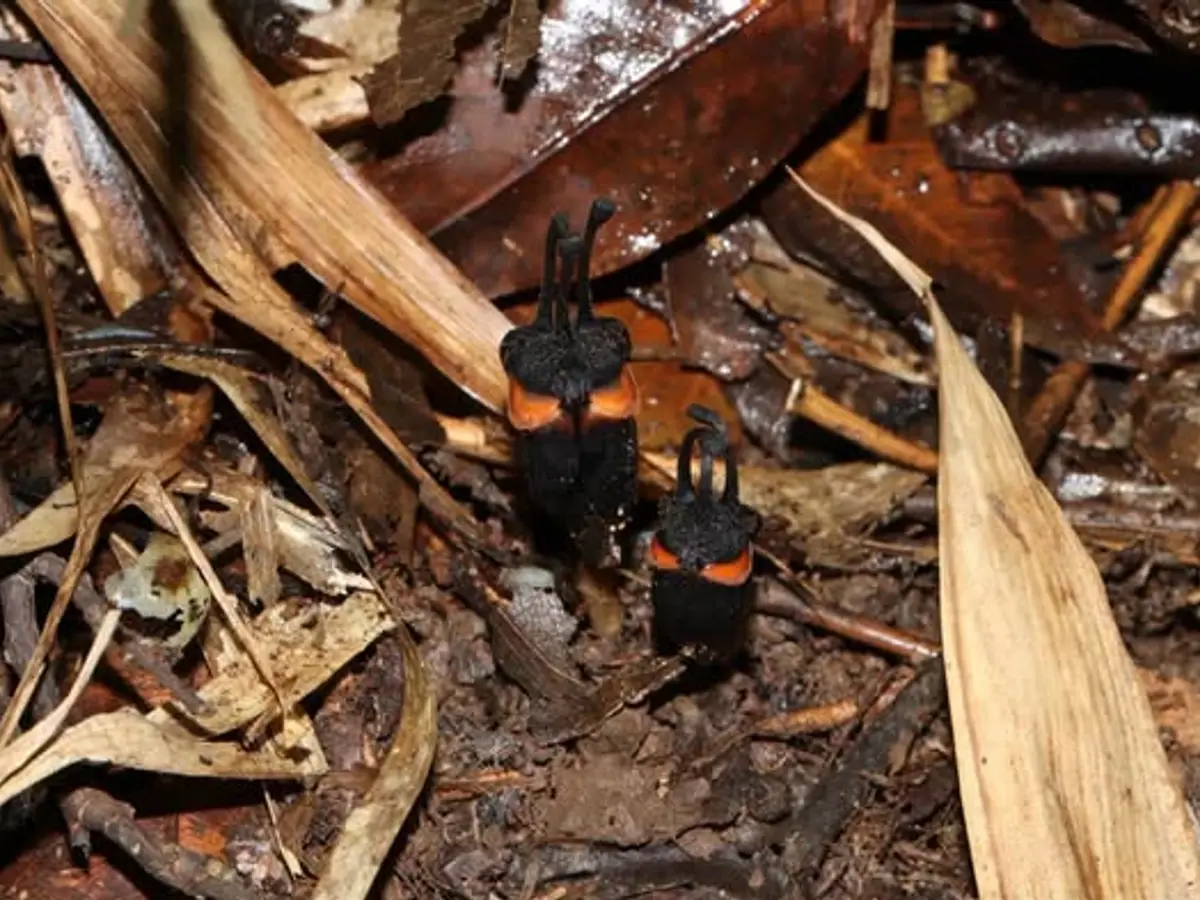
Scientists found a new plant in a national park in Thailand.
The plant is called Thismia daemona and is sometimes described as a demon flower.
It has no leaves and no chlorophyll, so it cannot make food using sunlight.
Instead, it gets food from fungi under the ground.
The plant stays hidden under fallen leaves for most of its life.
Its mostly black flower has horn-like parts and bright patches that look like eyes.
It was found unusually high in the mountains, where the forest is seasonal and sometimes dry.
Scientists think the plant may be in serious danger and say local communities can help protect it.

Botanists discovered Thismia daemona, a new leafless flowering plant species, in western Thailand.
The plant lacks chlorophyll and relies on fungi beneath the soil for food instead of photosynthesis.
It was found at about 1,000 meters in a seasonal montane evergreen forest.
Its black flower has horn-like structures and reddish-orange patches resembling glowing eyes.
Scientists provisionally assessed the species as Critically Endangered and called for community involvement to protect its habitat.
- Who
- Botanists from Chulalongkorn University and Prince of Songkla University, including Sahut Chantanaorrapint.
- What
- They discovered a new leafless flowering plant species called Thismia daemona.
- Where
- Thong Pha Phum National Park in western Thailand, at approximately 1,000 meters above sea level.
- When
- During a survey of Thong Pha Phum National Park; the articles do not specify a date.
- Why
- The discovery expands the known northern range of the Thismia section Geomitra and highlights the need to protect the species' fragile habitat.
Key facts
- Scientific name
- Thismia daemona
- Plant group
- Thismia, a genus also known as fairy lanterns
- Food source
- Fungi beneath the earth's surface
- Discovery site
- Thong Pha Phum National Park, western Thailand
- Elevation
- Approximately 1,000 meters above sea level
- Distinctive appearance
- A mostly black flower with horn-like structures and reddish-orange patches
- Conservation assessment
- Provisionally assessed as Critically Endangered
Quotes
Dr Sahut Chantanaorrapint
Botanist from Prince of Songkla University
“Typically, Thismia species are known to occur in perennially humid lowland rainforests. However, this population was discovered in a seasonal, montane evergreen forest at an elevation of nearly 1,000 meters above sea level”
 wionews.com
“Combined with its hidden, subterranean, and mysterious lifestyle on the forest floor, our team unanimously agreed that naming it Thismia daemona perfectly captured its enigmatic and devil-like essence”
wionews.com
Sources
Related news
New Tamil Nadu Herb Highlights Coastal Dune Biodiversity
Ancient Birth-Control Plant May Have Survived In Turkey

Scientists Discover New Blind Underground Eel Near India-Nepal Border
Fascinating plant changes colour purple to white in 3 days