2 weeks ago
Record Democratic primary turnout offers uncertain boost for US midterms
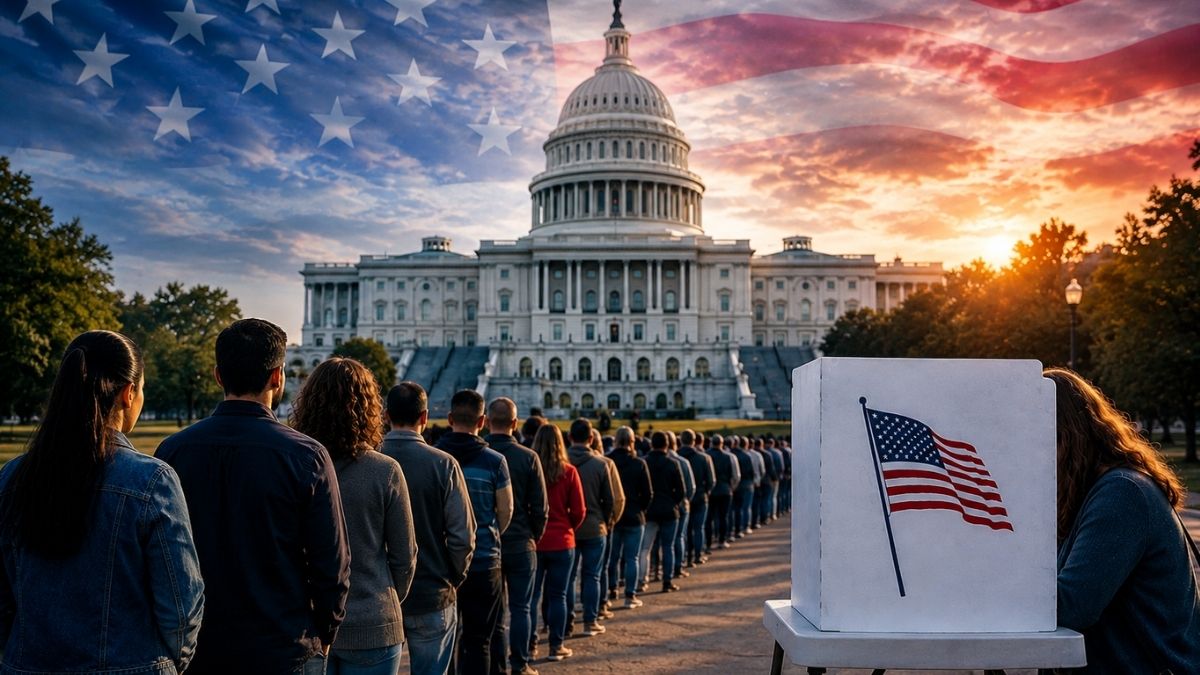
A primary is a special vote where people in one political party choose their favorite candidate.
This year, a lot of Democrats voted in their party's primaries.
In states like Wisconsin, Michigan, Georgia, Texas and Minnesota, more Democrats turned out than in many years.
That made some people think Democrats are very excited.
But voting in a primary is different from voting in the big election.
The big election happens on November 3, and everyone gets to vote, not just Democrats.
Experts say the big primary numbers are a good sign of excitement, but they can't tell us who will win in November.
In November, people will choose all the members of the House of Representatives and many Senators.
Right now, Republicans control the Senate, so Democrats want to win more seats.
We will have to wait and see what happens!

Democratic primary turnout hit 20-year midterm highs in Wisconsin and Michigan, with Georgia and Texas also posting their strongest rates since at least 2002.
Wisconsin saw nearly 800,000 Democratic primary voters (about 22% of registered voters); David Crowley won the gubernatorial primary and will face Republican Tom Tiffany in November.
Michigan's Democratic Senate primary drew over 1.5 million voters (about 18% of registered voters) and more than $80 million in spending; Abdul El-Sayed narrowly defeated Representative Haley Stevens.
Experts caution that primary turnout is not a reliable predictor of the general election, since the November electorate is much broader than primary voters.
The November 3 election will decide control of Congress, with all 435 House seats and 35 Senate seats up for grabs; Republicans currently hold the Senate majority.
- Who
- Democratic primary voters and candidates including David Crowley (Wisconsin), Abdul El-Sayed (Michigan) and Republican nominee Tom Tiffany, with experts and party officials commenting on the figures.
- What
- Record Democratic primary turnout ahead of the November 3 mid-term elections raised questions about whether it signals a Democratic advantage in the fight for control of Congress.
- Where
- United States, with notably strong turnout reported in Michigan, Wisconsin, Georgia, Texas and Minnesota.
- When
- Primaries were held in March (Texas), on May 19 (Georgia) and in August (Michigan and Wisconsin); the general election is scheduled for November 3.
- Why
- Democrats cite enthusiasm from competitive primaries and issues such as President Donald Trump's approval ratings, persistent inflation and opposition to the war with Iran; analysts caution that primary turnout is not a solid predictor of November results.
Democratic perspective
Republican/analyst perspective
Significance of high primary turnout
Democratic perspective
Record turnout shows Democratic voters are energized and engaged, which is a good sign heading into November.
Republican/analyst perspective
Primary turnout is not a reliable forecast; the November electorate is much larger and includes independents and Republicans, so the numbers do not guarantee wins.
Outlook for November
Democratic perspective
Democrats could benefit from President Donald Trump's weak approval ratings, persistent inflation and opposition to the war with Iran, and hope to keep primary voters engaged.
Republican/analyst perspective
Republicans retain structural advantages from congressional redistricting and can narrow the gap once general-election contests become clearer; Republican turnout also remains significant.
Key facts
- Election
- US mid-term elections, November 3
- Wisconsin Democratic primary turnout
- Nearly 800,000 voters, about 22% of registered voters
- Michigan Democratic Senate primary turnout
- Over 1.5 million voters, about 18% of registered voters
- Georgia Democratic primary turnout
- Just over 1 million voters, about 13% of registered voters
- Texas Democratic primary turnout
- About 2.3 million voters, about 12% of registered voters
- Michigan Senate primary spending
- Over $80 million (AdImpact)
- Republican primary turnout
- About 11% in Michigan and 14% in Wisconsin
- Seats at stake
- All 435 House seats and 35 Senate seats
Quotes
Corwin Smidt
Political scientist at Michigan State University
“"high turnout is a ‘good sign for Democrats’ but ‘not a very solid predictor’ of November voting behaviour."”
 financialexpress.com
Sources
Related news
Democrats Need Four Senate Flips to Reclaim Majority

Michigan primary tests Democratic Party direction as El-Sayed leads Stevens
Progressive Abdul El-Sayed Wins Michigan U.S. Senate Primary
Florida Left-Wing Upset and Alaska Democrat Boost Primaries

Democrats Target Republican States as Senate Race Becomes Toss-Up