Health · Medical Research · 6 hrs ago
Rice-sized robots aim to shorten heart infection treatment
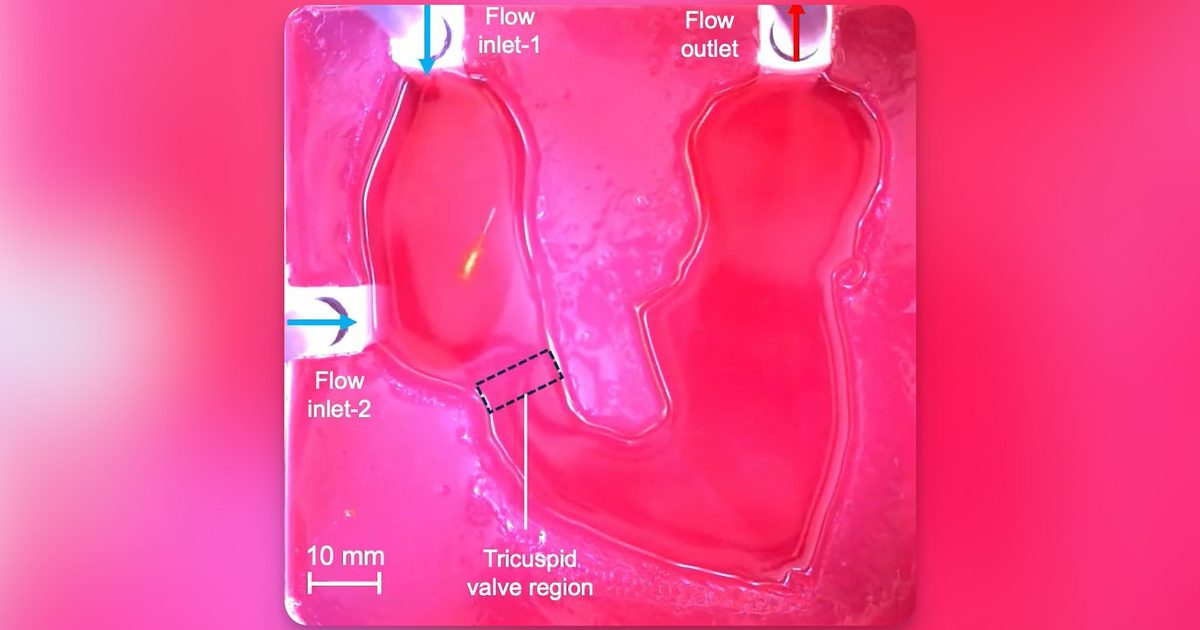
Heart tissue infections, called endocarditis, affect about 50,000 Americans each year.
Treatment usually involves several weeks of antibiotics through an IV, and some patients need risky open-heart surgery if the drugs fail.
Engineers at Johns Hopkins University developed rice-sized magnetic robots to carry antibiotics directly to infected tissue.
One robot anchors near the infection, while a second attaches to it and gradually releases the medicine.
External coils steer the robots through the body, and doctors could replace the drug-carrying robot for repeat doses.
The team estimates the procedure could take about 10 minutes, potentially replacing four to six weeks of treatment with a day or less.
The robots have been tested in heart models and pig tissue; next, researchers plan to try them in models that beat and contract like a real heart.

Johns Hopkins University engineers have developed magnetic millirobots designed to deliver antibiotics directly to infected heart tissue.
The robots are about as wide as a pencil tip and as long as a grain of rice.
The team says the approach could reduce a treatment that usually takes four to six weeks to a day or less.
The robots have been tested in heart models and on pig heart tissue, but further testing is planned.
- Who
- Engineers at Johns Hopkins University developed the robots. First author Anuruddha Bhattacharjee and senior author Axel Krieger are named.
- What
- Magnetic millirobots are designed to deliver antibiotics directly to infected heart tissue.
- When
- The article was published on 2026-10-13. The study is described as published in Advanced Materials Technologies.
- Where
- The work is from Johns Hopkins University. Testing included heart models and pig heart tissue.
- Why
- Current treatment often involves weeks of IV antibiotics, which may fail, or risky open-heart surgery. The robots aim to deliver medicine at the infection site.
This story does not have two clearly opposing sides.
The robots navigated heart models that mimic a human heart, including against simulated blood flow, and were tested on pig heart tissue.
The team plans to test the robots in phantom hearts that beat and contract like real ones.
- Robot length
- Roughly as long as a grain of rice
- Robot width
- About as wide as a pencil tip
- Current treatment
- Several weeks of IV antibiotics
- Potential treatment time
- A day or less
- Next test
- Phantom hearts that beat and contract like real ones
What people are saying
With just a little pinprick, you insert a micro robot and do a procedure without infection or blood loss
Sources
Related news

Pope Leo to have surgery to remove an early-detected lung nodule

Study links several health issues to early-onset Alzheimer’s years before diagnosis

Pope Leo XIV to have surgery to remove an early-stage lung nodule

Studies differ on whether sperm counts are falling worldwide

Olive oil before glucose reduced blood sugar spikes in mice

Pope Leo XIV to have lung nodule removed in surgery this week

Pope Leo XIV to have surgery to remove early-stage lung nodule

Italian experts call for a unified care pathway for metastatic breast cancer
Swiss life expectancy rises slowly as gap between married and single people widens

UK stroke rates are rising faster among Black African and Caribbean people

Early studies suggest soup may ease respiratory infection symptoms