Science & Tech · Science & Environment · 2 hrs ago
Rice team develops a 3D ion trap for quantum research
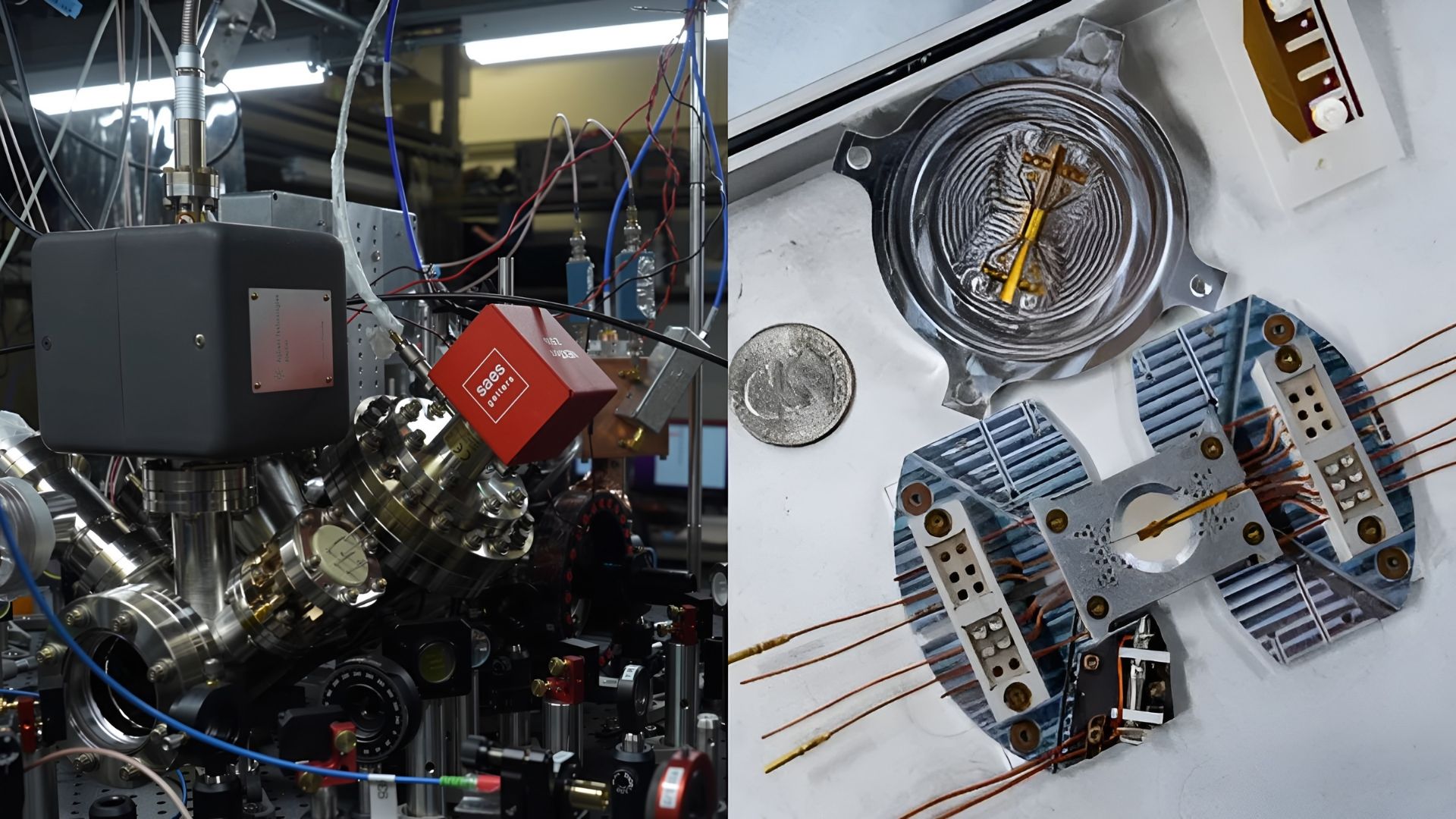
Researchers at Rice University developed a three-dimensional ion trap with collaborators from Duke University and Translume Inc.
The device uses electric fields to hold charged atoms and lasers to control them, allowing scientists to study systems that are difficult to model with conventional computers.
The design works with heavy ions such as ytterbium, expanding the options for monolithic traps, which are built as a single structure.
Earlier designs could use lighter ions but faced engineering challenges with heavier ones.
After two prototypes developed problems, the team redesigned the trap to improve heat dissipation and reduce unwanted ion movement and heating.
The researchers tested the finished devices, and their measurements matched earlier computer simulations.
The trap could make experiments easier to reproduce and help laboratories investigate complex processes, including charge transfer during photosynthesis.
Researchers may also adapt its engineering approach for other ion traps, but no specific next steps are stated.

Researchers at Rice University developed a three-dimensional ion trap designed to make quantum systems easier to study in laboratories.
The device can trap heavy ions such as ytterbium, which earlier monolithic designs struggled to handle.
After three generations of redesign, tests showed the traps performed as intended and matched earlier computer simulations.
The work involved researchers from Duke University and Translume Inc.
The study was published in Physical Review Applied.
- Who
- Researchers at Rice University, working with collaborators from Duke University and Translume Inc.
- What
- They developed a three-dimensional monolithic ion trap that can work with heavy ions such as ytterbium.
- When
- Not stated.
- Where
- Rice University; the researchers tested the finished traps individually.
- Why
- To make trapped-ion experiments easier to reproduce and expand the range of ions available for quantum research.
This story does not have two clearly opposing sides.
Applying the required radio-frequency voltage caused thermal and electrical problems, and the trap began glowing as it heated.
The redesign fixed the main flaws but introduced unwanted axial micromotion and high ion-heating rates.
The researchers improved heat dissipation, reduced ion movement and used plasma-based surface treatment to lower ion-heating rates.
Rice and Duke researchers tested the finished traps, and measurements agreed with previous computer simulations.
- Institution
- Rice University
- Collaborators
- Duke University and Translume Inc.
- Ion species
- Ytterbium
- Trap generations
- Three
- Journal
- Physical Review Applied
Related
High-speed video shows how detached honeybee stingers keep pumping venom
2 hrs ago · 6 sources

Isle of Wight fossil identified as a new megaraptoran dinosaur
2 hrs ago · 3 sources

AI data centers face rising insurance risks as construction expands
52 mins ago · 2 sources

A sharper ear may help adults learn second-language sounds
2 hrs ago · 2 sources