Health · Medical Research · 2 days ago
Review outlines polymer-based approaches to improve solid tumor immunotherapy
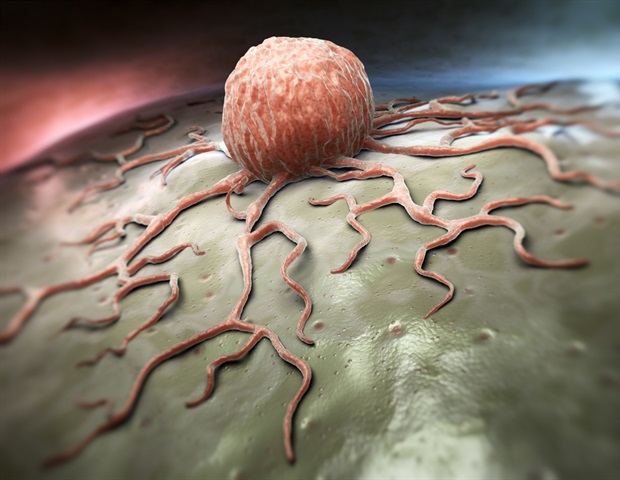
Solid tumors can block medicines and weaken the immune system’s attack on cancer.
A review describes tiny polymer-based carriers that could target several of these barriers at once.
Imaging tools could help track how tumors respond and guide treatment adjustments.
The approaches are promising, but more work is needed to address safety and large-scale manufacturing before they can be used widely.

A review published in the Chinese Journal of Polymer Science examines polymeric nanomedicine strategies for regulating the tumor microenvironment and supporting solid-tumor immunotherapy.
The review describes approaches targeting cellular, physical and biochemical barriers that can suppress immune responses or limit drug delivery.
Examples include nanomedicines designed to reprogram tumor-associated macrophages, reduce suppressor cells, inhibit regulatory T cells and inactivate cancer-associated fibroblasts.
The authors also discuss imaging methods, including near-infrared II fluorescence, ultrasound, MRI and urine-based reporters, to monitor immune activity and guide treatment.
The review identifies challenges to clinical translation, including carrier toxicity, accelerated blood clearance associated with PEGylation and variability in large-scale manufacturing.
- Who
- Researchers from Xiamen University, the Changchun Institute of Applied Chemistry and the University of Science and Technology of China
- What
- A review of polymeric nanomedicine strategies for tumor-microenvironment regulation and cancer immunotherapy
- When
- Published June 10, 2026
- Where
- Chinese Journal of Polymer Science
- Why
- To address immune suppression and physical barriers in solid tumors and assess strategies that could improve immunotherapy.
This story does not have two clearly opposing sides.
No direct quotes in the coverage so far.
This story does not have a timeline yet.
- Journal
- Chinese Journal of Polymer Science
- Review DOI
- 10.1007/s10118-026-3678-6
- Publication date
- June 10, 2026
- Core dimensions examined
- Cellular, physical and biochemical
- Imaging methods discussed
- Near-infrared II fluorescence, ultrasound, MRI and urine-based reporters
Sources
Related news

Pope Leo to have surgery to remove an early-detected lung nodule

Pope Leo XIV to have surgery to remove early-stage lung nodule

ADHD and Later Cognitive Diagnoses: Why the Risk Estimate Needs Context

Higher Pre-Surgery A1c Linked to Macular Edema Risk After Cataract Surgery

Pope Leo XIV to have lung nodule removed in surgery this week

PRIMA retinal implant showed control of geographic atrophy for up to 3 years

Presley Gerber died at 27 after years of public struggle with addiction

Chewable gummy offers another oral-care option for people with dementia

Study asks how intense intercourse feels for each partner

Pope Leo XIV says he will have surgery to remove a lung lesion

Chiranjeevi urges people to seek early cancer screening