

Business · Trade · 3 hrs ago
South Korea completes first Arctic container voyage to Europe and back
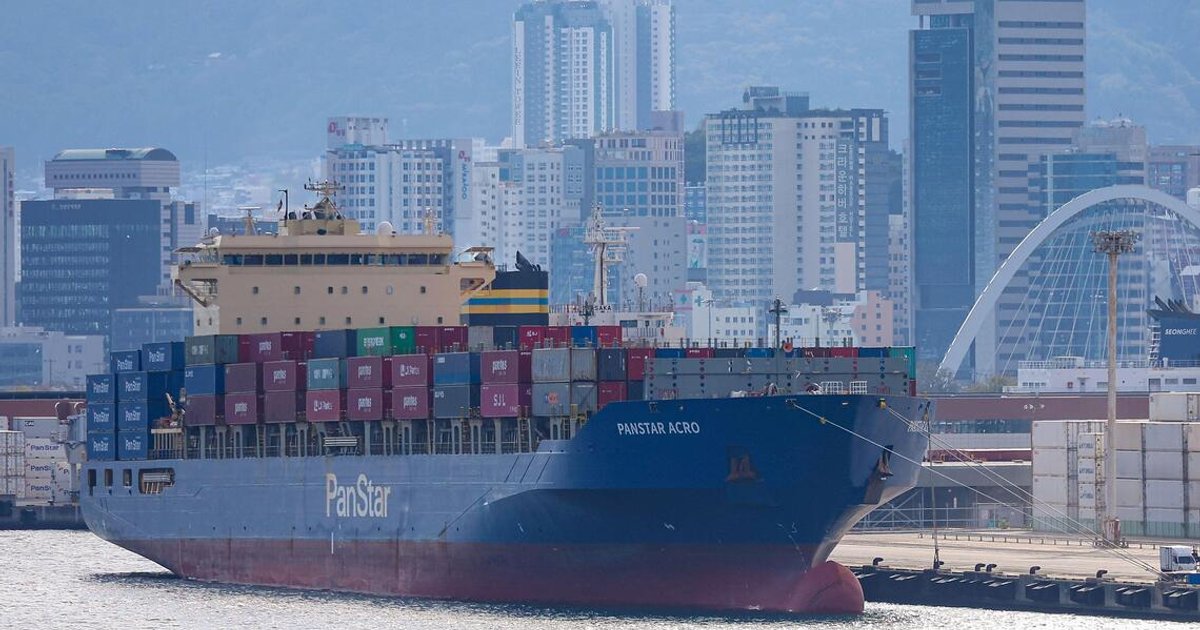
South Korea’s PanStar Acro completed the country’s first container voyage to Europe and back via the Arctic, returning to Busan on October 11.
The 50-day trip included stops in Felixstowe, Rotterdam and Gdansk, and President Lee Jae Myung welcomed the crew on October 13.
South Korea hopes to launch regular Arctic shipping services by 2030, with more trial voyages planned for 2027.
The route could cut sailing time by about a third compared with the Suez Canal route, as less ice has made northern waters more accessible.
The voyage has not yet shown the route can carry enough paying cargo, and officials say reliable schedules, ice conditions, insurance and fuel costs also need to be assessed.
The route follows Russia’s Arctic coast, raising concerns about ties with Western allies while the war in Ukraine continues; South Korea says it will follow international norms and sanctions principles.
Officials expect the route to become economically viable around 2040, but that depends on overcoming the commercial and diplomatic hurdles.

South Korea’s first container ship to travel to Europe and back through the Arctic returned to Busan on Oct 11 after a 50-day voyage.
President Lee Jae Myung welcomed the ship’s captain and crew at a ceremony on Oct 13.
South Korea plans further trial voyages in 2027 and aims to start regular services on the route by 2030.
Officials say the route could cut sailing time by about a third compared with the Suez Canal route.
The voyage left questions about commercial viability, including cargo demand, costs and reliable schedules.
- Who
- The PanStar Acro and its crew completed the voyage. President Lee Jae Myung welcomed them home.
- What
- It was the first South Korean container ship to sail to Europe and back via the Arctic.
- When
- The ship returned on Oct 11 after a 50-day voyage; Lee welcomed it on Oct 13. The article was published on Oct 13, 2026.
- Where
- The voyage used the Arctic route and stopped in Felixstowe, Rotterdam and Gdansk; the welcome ceremony was in Busan, South Korea.
- Why
- South Korea is pursuing the route as another shipping option and plans regular services by 2030. The voyage also tested the route’s commercial potential.
South Korean government
Opposition lawmaker Kang Seung-kyoo’s office
Commercial prospects
South Korean government
The government plans further trial voyages and aims to launch regular service by 2030, with economic viability expected around 2040.
Opposition lawmaker Kang Seung-kyoo’s office
Kang’s office said the voyage had yet to prove commercial viability, citing cargo figures and the lack of imports.
The PanStar Acro returned after a 50-day voyage that included stops in Felixstowe, Rotterdam and Gdansk.
President Lee welcomed the ship’s captain and crew at a ceremony in Busan.
South Korea plans further trial voyages involving container ships and automobile carriers.
South Korea aims to launch regular services on the Arctic route.
Oceans Minister Hwang Jong-woo said he expected the route to become economically viable.
- Ship
- PanStar Acro
- Voyage duration
- 50 days
- European stops
- Felixstowe, Rotterdam and Gdansk
- Outbound export cargo
- 737 TEU
- Return containers
- 1,743 TEU of empty containers; no imports
- Service target
- Regular service planned by 2030
What people are saying
We have clearly learned how badly the Korean economy is shaken when existing sea lanes are blocked
The newly opening Arctic route can become another sea lane, another option... to rely on in a crisis.
We will strictly observe international norms and the international community’s sanctions principles
For now there is no problem, but there is also the relationship with the United States
Sources
Related news
Chip stocks fall as investors weigh AI spending and Chinese competition

South Korea to create 3 trillion won fund for overseas construction projects
South Korea’s early October exports hit a record, led by chips

Lotte to present mobility businesses at Japan trade event

Hyundai Green Food adds care support for employees’ older relatives

APR shares slide on forecast for weaker-than-expected third-quarter profit

Shoe retailer Shoemarker joins Baemin’s shopping service

Samsung Electro-Mechanics executive receives Industry Medal for MLCC work

South Korea’s Kospi falls 6.5% as AI profit concerns return

South Korea central bank chief apologizes over warnings on leveraged ETFs

South Korean ship completes Arctic shipping trial
