

Business · Markets · 9 hrs ago
FSB says differing stablecoin rules create opportunities for regulatory arbitrage
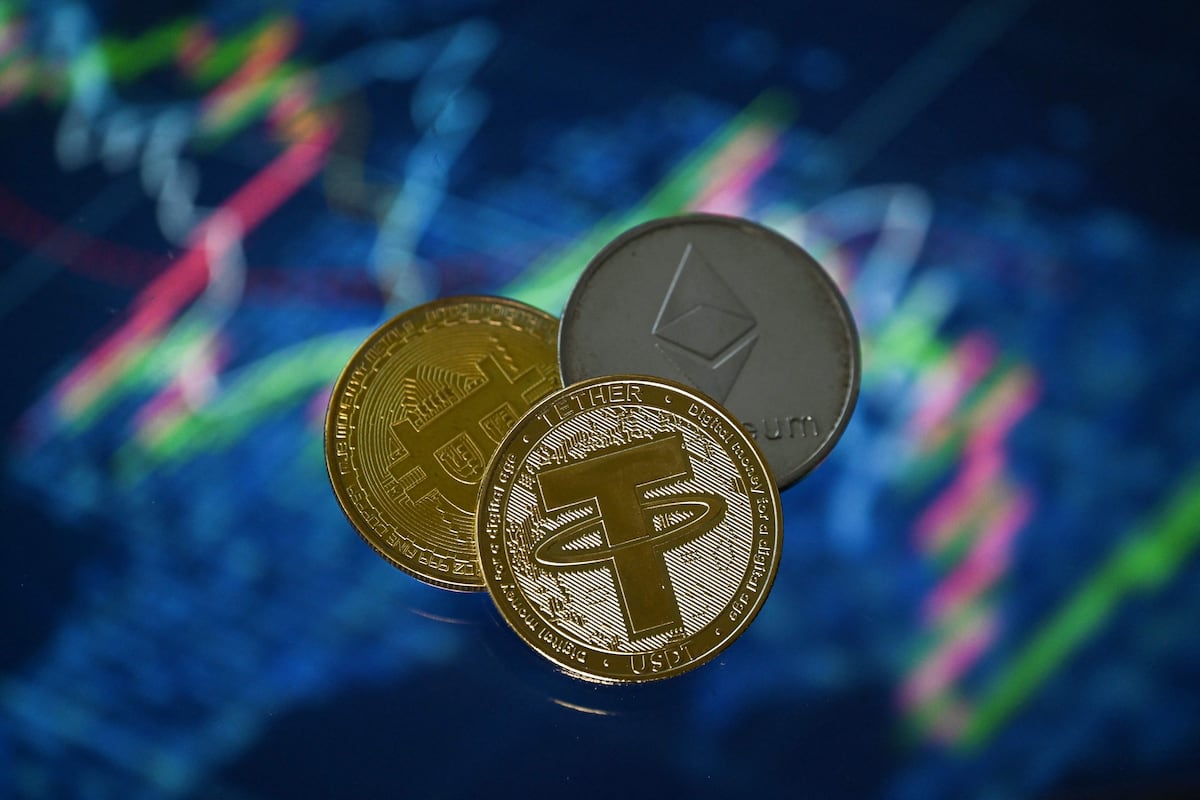
Stablecoins are cryptocurrencies designed to track the value of traditional currencies such as the dollar or euro.
The Financial Stability Board says different rules across countries create opportunities for regulatory arbitrage, in which issuers choose places with looser or no rules.
This matters because stablecoins operate across borders and could become important to financial systems.
The stablecoin market is worth about $300 billion, and around 99% of it is linked to the US dollar.
Tether’s USDT and Circle’s USDC are major global stablecoins, but they face different rules in the United States and Europe.
USDT is more widely used, even though it cannot be offered in Europe or the United States under the rules described.
The FSB says differences in reserve requirements and complex company structures also make these issuers harder to supervise.
Countries are applying the FSB’s recommendations under their own laws, so how their rules will work together remains uncertain.

The Financial Stability Board says differences in stablecoin rules across jurisdictions have created opportunities for regulatory arbitrage.
The FSB says complex cross-border structures make global stablecoin issuers harder to supervise.
Stablecoins are cryptocurrencies linked to traditional currencies, and their total market value is about $300 billion.
About 99% of the stablecoin market is linked to the US dollar.
USDT, issued by Tether, has 180 billion tokens in circulation, compared with 73 billion for Circle’s USDC.
- Who
- The Financial Stability Board (FSB), which issued the report. Tether and Circle are cited as issuers of major global stablecoins.
- What
- The FSB says differing national rules create opportunities for regulatory arbitrage and complicate supervision of global stablecoins.
- When
- The report was published on October 12, 2026.
- Where
- The report concerns rules across jurisdictions, including Europe, the United States, some Asian countries and the United Arab Emirates.
- Why
- Jurisdictions apply different requirements, including rules on the quantity and quality of reserves, and some have looser or no regulation.
This story does not have two clearly opposing sides.
Europe adopted a law setting rules for the sector.
The FSB published a report highlighting regulatory differences and arbitrage opportunities for global stablecoins.
- Stablecoin market value
- About $300 billion
- Share linked to US dollar
- 99%
- USDT in circulation
- 180 billion tokens
- USDC in circulation
- 73 billion tokens
- European stablecoin rules
- Law adopted in late 2024
What people are saying
The regulatory and supervisory framework under which a particular structure operates remains an essential factor in determining the resilience of a global stablecoin
Different countries are applying the recommendations issued by the FSB according to their own mandates and legal frameworks, so the way these regulations will interact with each other remains complex and uncertain
Sources
Related news

Robert Hall and Michael Woodford win 2026 economics prize

IMF chief warns AI could disrupt jobs and weaken tax revenues

Iran war raises costs for banana trade to the United States

H&M investigates claims of a possible cyber incident

Mid-market fashion brands are staging a comeback

African investors look beyond AI models for startup value

Asian shares mixed as oil falls amid Trump’s Russian diesel plan
OPEC cuts 2026 oil demand growth forecast to 400,000 barrels a day
OPEC sees oil demand growth rising to 1.7 million barrels a day in 2027

Robert Hall and Michael Woodford win Nobel economics prize
IMF and World Bank to discuss global economic risks in Bangkok
