

Business · Energy & Commodities · 4 hrs ago
LNG Disruption and High Prices Lift Coal Demand Prospects
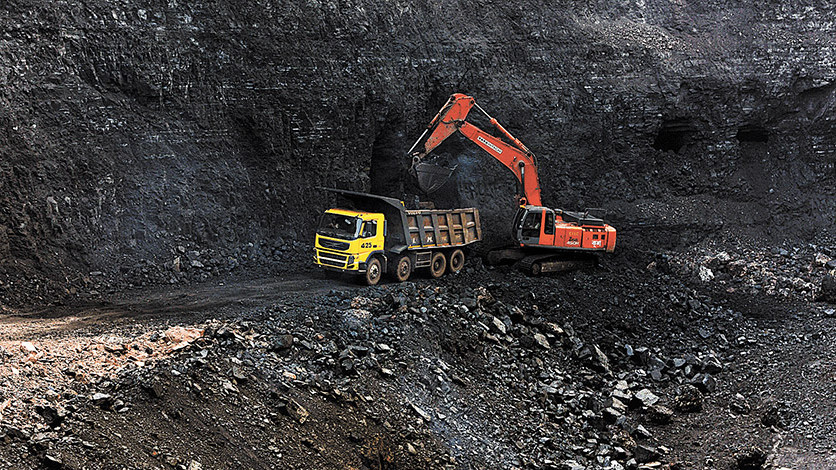
Coal demand is expected to rise as winter approaches and natural gas shipments from the Persian Gulf remain sharply below pre-war levels.
The disruption followed the war in Iran, and tanker attacks and QatarEnergy’s force majeure have constrained LNG flows through the Strait of Hormuz.
In September, an estimated 21 LNG cargoes left the strait, compared with more than 60 before the war.
In Asia, LNG prices are high, while Australian coal costs far less per unit of energy.
China, Japan and South Korea together imported 122 million tons of coal in the third quarter.
The International Energy Agency expects global coal demand to reach a record this year, despite efforts to reduce emissions and close coal plants.
The fourth quarter could bring especially strong coal buying as heating demand rises.

Coal demand is expected to rise as reduced LNG supplies from the Persian Gulf and high gas prices make coal more attractive.
The International Energy Agency said in September that it expected coal demand this year to reach an all-time high.
LNG flows from the Persian Gulf remain more than 75% below levels before February 28, according to OilPrice.
In Asia, November LNG spot prices topped $26 per million British thermal units, while Australian benchmark coal was priced at the equivalent of $5.40.
Japan, South Korea and China imported a combined 122 million tons of coal in the third quarter, Reuters data cited in the article showed.
- Who
- Coal buyers, including those in Japan, South Korea and China. The International Energy Agency forecast higher coal demand.
- What
- Coal demand prospects are rising as LNG supplies remain disrupted and gas prices are high.
- When
- The article was published on October 12, 2026. It describes conditions in the third and fourth quarters of the year.
- Where
- Globally, with a focus on LNG flows from the Persian Gulf and coal and gas markets in Asia and Europe.
- Why
- Reduced LNG flows and high gas prices make coal comparatively cheaper; the article says coal was 80% cheaper than LNG.
This story does not have two clearly opposing sides.
LNG flows from the Persian Gulf were higher than current levels.
An estimated 21 LNG cargoes exited the Strait of Hormuz, the highest monthly number since the Iran war began.
The International Energy Agency said it expected coal demand this year to reach an all-time high.
Japan, South Korea and China imported a combined 122 million tons of coal.
- Persian Gulf LNG flows
- More than 75% below levels before February 28
- Strait of Hormuz LNG cargoes
- 21 estimated in September, down from more than 60 before the war
- Asian November LNG spot price
- More than $26 per million British thermal units
- Australian benchmark coal
- Equivalent to $5.40 per million British thermal units
- Coal imports
- Japan, South Korea and China imported 122 million tons in the third quarter
What people are saying
Asian demand remains price-sensitive, with Chinese buyers particularly unlikely to chase spot cargoes unless prices mean revert, and that is currently unlikely
Sources
Related news

Robert Hall and Michael Woodford win 2026 economics prize

IMF and World Bank leaders urge support for young workers facing AI disruption

IMF says AI investment could boost or weaken the global economy

Some luxury goods and trips remain hard to get, even for millionaires

Oil prices fall as traders weigh Russian fuel supply against shipping risks

Bitcoin lump-sum investing only slightly outperformed monthly plans
IMF sees global economy splitting between winners and losers

Asian shares fall as South Korea’s Kospi drops 3.29%

AI firms and chipmakers lead Asia’s IPO pipeline

IMF Set to Release Global Economic Outlook as Nations and Central Bankers Meet

Robert Hall and Michael Woodford win 2026 economics Nobel