Science & Tech · AI · 2 hrs ago
Study finds answer-seeking AI use linked to weaker independent performance
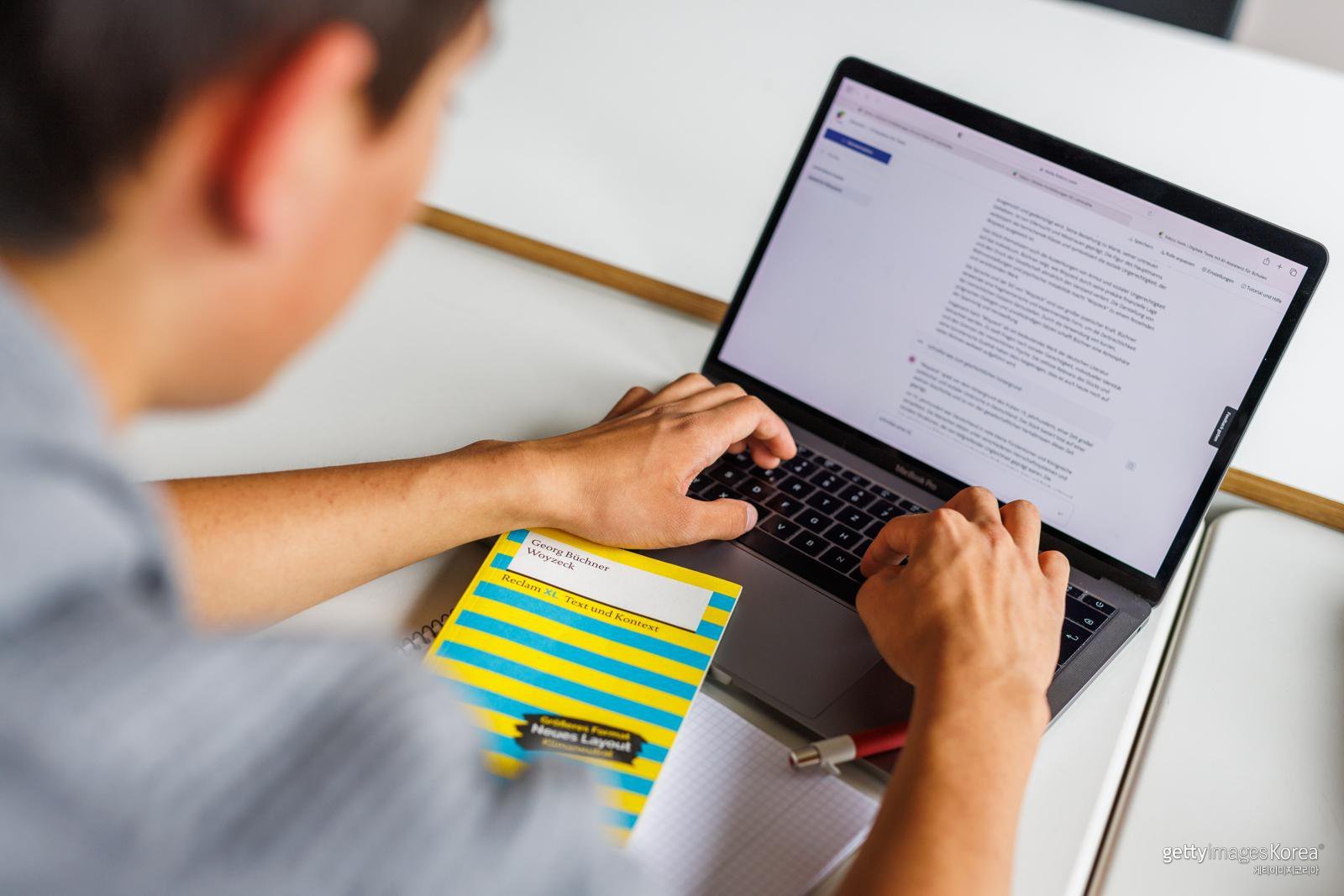
Researchers from several universities tested how AI assistance affected people solving math and reading questions.
Across three experiments involving 1,222 people, participants did better while AI was available but often performed worse once it was removed.
In one experiment, people who used AI to get direct answers scored 65% on later questions, compared with 77% for those who had worked without AI.
People who used AI for hints or explanations scored 76%, close to the no-AI group.
They also skipped fewer questions than those who had relied on direct answers.
The researchers said the results may reflect fewer chances to struggle through problems and learn to solve them independently.
They cautioned that the comparison between answer-seekers and hint-users does not prove that asking for answers caused the difference.
They suggested AI could be designed to guide users toward solutions rather than immediately provide complete answers.

A study of 1,222 people found that using AI for answers was linked to weaker performance when people later had to solve problems without it.
Participants who used AI mainly for hints or explanations performed about as well as those who had solved problems without AI from the start.
In one experiment, participants’ accuracy fell after AI access was removed, while skipping rates rose.
Similar results appeared in experiments using fractions and SAT-style reading questions.
The researchers suggested that relying on instant answers may reduce opportunities for independent practice and productive struggle.
- Who
- Researchers from UC Berkeley, Carnegie Mellon University, MIT, Oxford University and UCLA studied 1,222 participants.
- What
- The study found that AI use, particularly seeking direct answers, was linked to weaker independent performance and more skipped questions after AI was removed.
- When
- The study was presented at COLM 2026 and reported by Donga Ilbo on October 12, 2026.
- Where
- Not stated.
- Why
- Researchers suggested that immediate answers may reduce opportunities to work through difficult problems independently.
This story does not have two clearly opposing sides.
Researchers tested 354 people on fraction problems, allowing one group to use AI for the first 12 of 15 questions.
Researchers tested 667 people and compared results among those who sought direct answers, those who sought hints or explanations, and a no-AI control group.
Researchers tested 201 people on SAT-style reading questions and found a similar pattern after AI support was removed.
The peer-reviewed study was presented at the Conference on Language Modeling.
- Total participants
- 1,222
- First experiment
- 354 participants; 15 fraction problems
- First experiment accuracy after AI removal
- 57% for AI users; 73% for the control group
- Second experiment accuracy
- 65% for direct-answer users; 76% for hint users; 77% for the control group
- Third experiment accuracy
- 76% for AI users after support was removed; 89% for the control group
What people are saying
It is a surprising result, but it also supports something many people have intuitively felt.
It would be difficult to expect a clearer result than this.
We built AI systems to be helpful, but we have to ask whether that help is helping us in the right way.
Paradoxically, it showed that AI sometimes helps us in ways that are not helpful.
Sources
Related news

Microsoft president calls for global AI safety rules

Meta releases Muse Wonder, its first frontier AI model
Meta unveils two AI models it says rival leading competitors
Meta launches Muse models, with Muse Wonder ranked second in performance evaluation
Test taker caught trying to use AI smart glasses in Yonsei exam

Anthropic AI submits false murder tip to Philadelphia police

Bodyfriend introduces heat and sleep care products for seasonal change
South Korea’s OGP team applies startup methods inside government
Microsoft plans to deploy Maia 300 AI chip from 2027

China faces difficulty moving tech firms away from Nvidia chips
Nadella calls for human-controlled emergency brakes on advanced AI