

Business · Economy · 4 hrs ago
Brazil’s commerce and services sectors set priorities for next government
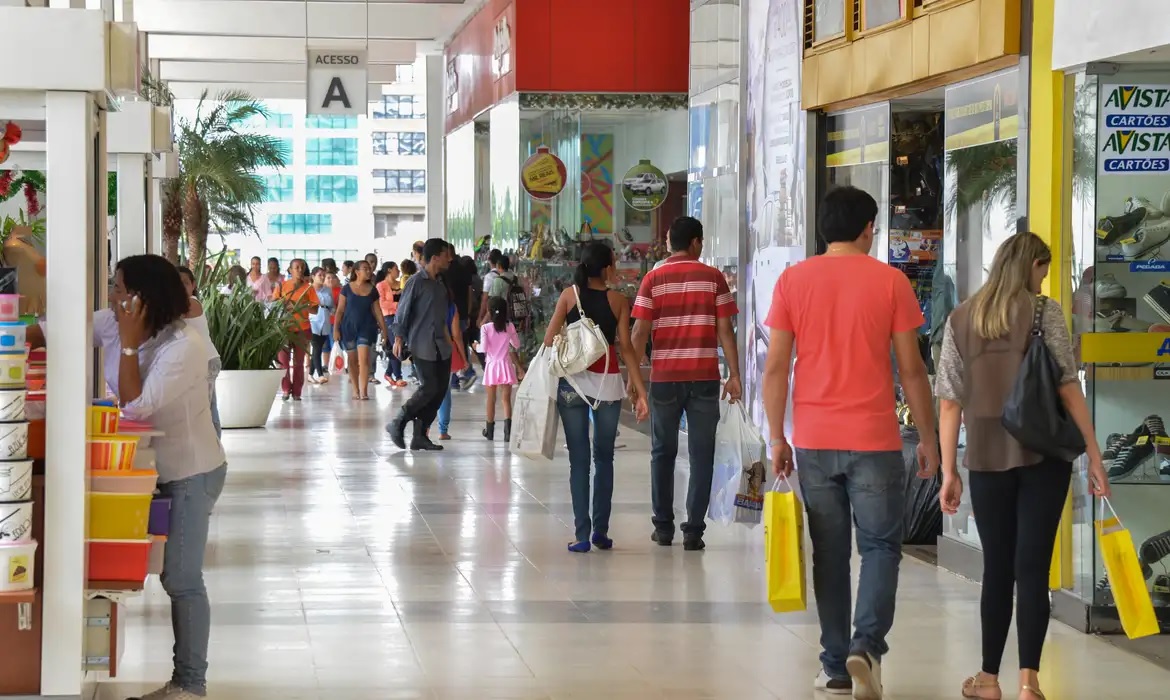
Brazil’s commerce and services sectors are pressing the next government for action as the election campaign moves into its second round.
Together, they account for about two-thirds of the economy, but their growth has slowed amid weaker demand and tighter business finances.
Commerce grew 1.6% in the first seven months of 2026, while services grew 1.9%, and representatives say high interest rates are adding pressure.
They want lower interest rates and more predictable business rules to ease costs and support investment.
They also call for fiscal adjustment and changes to the tax transition that do not increase companies’ tax burden.
The debate over the six-day workweek with one day off is another concern, with the trade association warning that changes could affect small and medium-sized businesses and consumer prices.
These priorities are aimed at the next government’s 2027–2030 term, though the sources do not say which proposals will be adopted.

Brazil’s commerce and services sectors want the next government to provide a stable, predictable business environment and address high interest rates and fiscal policy.
The sectors account for two-thirds of the economy and have slowed as demand weakens and financial margins narrow.
Commerce growth fell from 4.7% in 2024 to 1.6% in the first seven months of 2026, while services growth eased from 3.1% to 1.9%.
Industry representatives also raised concerns about proposed changes to the 6×1 work schedule and the transition to a new tax system.
- Who
- Representatives of Brazil’s commerce and services sectors, including the CNC and FecomercioSP.
- What
- They set out priorities for the next government, including lower interest rates, fiscal adjustment and a predictable business environment.
- When
- The priorities are for the 2027–2030 government. The article was published on October 13, 2026.
- Where
- Brazil.
- Why
- The sectors say high interest rates, slowing demand, narrow financial margins and uncertainty over rules are weighing on businesses and investment.
This story does not have two clearly opposing sides.
Commerce grew by 4.7% and services by 3.1%.
Financial expenses among the 40 largest consumer goods and retail companies consumed 45% of their Ebitda, up from 33.3% in 2024 and 20% in 2023.
Commerce grew by 1.6% and services by 1.9%.
Sector representatives set out priorities for the next government.
- Share of economy
- Commerce and services account for two-thirds of Brazil’s economy.
- Commerce growth
- 1.6% in the first seven months of 2026, down from 4.7% in 2024.
- Services growth
- 1.9% in the first seven months of 2026, down from 3.1% in 2024.
- Financial expenses
- 45% of Ebitda at 40 major consumer goods and retail companies in 2025.
- Debt-to-GDP ratio
- Rose from 71.7% in December 2022 and was projected to end 2026 near 84%.
- Fiscal proposal
- FecomercioSP’s Antonio Lanzana called for a primary surplus of 2% to 2.5% of GDP.
What people are saying
The challenge is to ensure that the transition does not increase the burden on companies, especially in the services sector, at a time when millions of businesses are still facing financial difficulties
Sources
Related news

Brazil energy plan projects distributed generation to reach 91.7 GW by 2036

Vamos shares surge while Vale nears recent lows

IMF lowers Brazil’s 2026 growth forecast to 2.2%

Earnings season may test whether AI boosts company productivity

Brazilian mini-dollar futures extend losses as real strengthens

Brazil mini-index rises as overbought reading signals caution

Brazil’s Ibovespa stock index sets a new intraday record

Júnior Vianna to demonstrate Renko chart analysis at Casa Clear

CAIXA consortium leads Brazil in real estate credit awards

US chip shares fall as investors question AI spending and await bank results

Ibovespa rose 8.82% as dollar futures fell 4.64% in a week
