

Health · Medical Research · 9 hrs ago
Cardiac surgeon outlines first steps when someone collapses at home
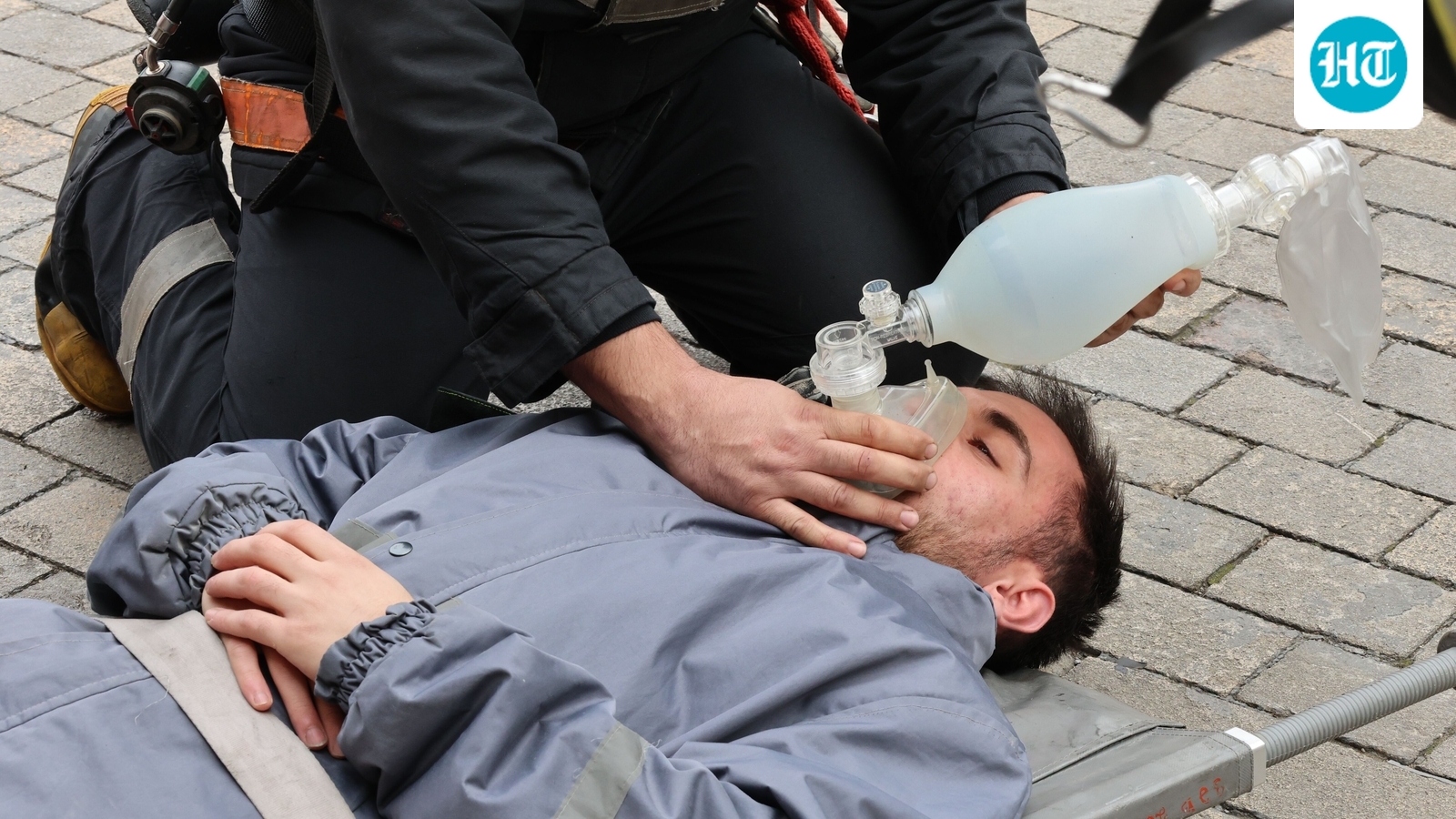
A person who collapses may be in cardiac arrest, when the heart stops pumping blood effectively.
Cardiac surgeon Santosh Gupta says to check for a response and normal breathing, then call an ambulance if the person is unresponsive and breathing is absent or limited to gasps.
While one person calls, another can start chest compressions, and someone else can guide paramedics to the home and look for an automated external defibrillator, or AED.
For hands-only CPR, lay the person on a firm surface and press the centre of the chest hard and fast, letting the chest rise between pushes.
An AED gives voice instructions and delivers a shock only if it detects that one is needed.
If someone is conscious but has chest pain, sweating or breathlessness, Gupta advises keeping them still and calling an ambulance.
He says brief CPR training and keeping emergency contacts and the address of a nearby hospital with cardiac facilities visible can help households prepare.

Cardiac surgeon Dr Santosh Gupta outlined steps to take in the first five minutes after someone collapses at home.
He said to check for a response and normal breathing, and to treat absent breathing or occasional gasps as possible cardiac arrest.
He advised calling an ambulance, starting CPR and assigning someone to guide paramedics to the person.
He recommended hands-only chest compressions at 100 to 120 per minute, with an AED used if available.
Gupta also advised calling an ambulance for a conscious person with chest pain, sweating or breathlessness.
- Who
- Cardiac surgeon Dr Santosh Gupta shared the guidance for people responding to a collapse.
- What
- He outlined steps for the first five minutes, including calling an ambulance and starting CPR.
- When
- In the first five minutes after a person collapses.
- Where
- At home.
- Why
- Immediate action can affect the outcome before an ambulance arrives.
This story does not have two clearly opposing sides.
Once the heart stops pumping, the brain begins to suffer damage within minutes
Do not wait for the family physician, shake the person, offer water or try to carry them to a car. Each of these costs time the heart does not have
Untrained family members do not need to give rescue breaths. Ribs may crack, and that is not a reason to stop.
Stay beside them, because a heart attack can progress to cardiac arrest without warning.
Check for a response by tapping the person’s shoulders and calling out, and assess whether they are breathing normally.
Have one person call an ambulance, another start CPR and a third direct paramedics to the person.
Continue hands-only CPR, and use an AED if one arrives.
- CPR rate
- 100 to 120 chest compressions per minute
- Compression depth
- About 5 to 6 centimetres
- CPR rotation
- Switch rescuers every two minutes
- AED
- Switch it on and follow its voice prompts
Sources
Related news

Early lung nodule removal can offer high chance of cure, oncologist says

Digital tools improve asthma treatment adherence in children

Early statin use linked to lower dementia risk in people with type 2 diabetes

Pope Leo to have surgery to remove an early-detected lung nodule

Navigation and reminders may boost colonoscopy after positive stool tests

Study finds women report more frequent and intense pain than men

Study links APOE4 to scarring around brain blood vessels

Large Study Finds Sudden Body Changes Around Menopause

Climate Change’s Health Costs Fall on the Wrong Parties, Story Says

Pope Leo XIV to have surgery to remove early-stage lung nodule

Long COVID Linked to Differences in Oral and Sputum Microbiomes
