

Science & Tech · Science & Environment · 2 hrs ago
Researchers create fertile female clones from male mice
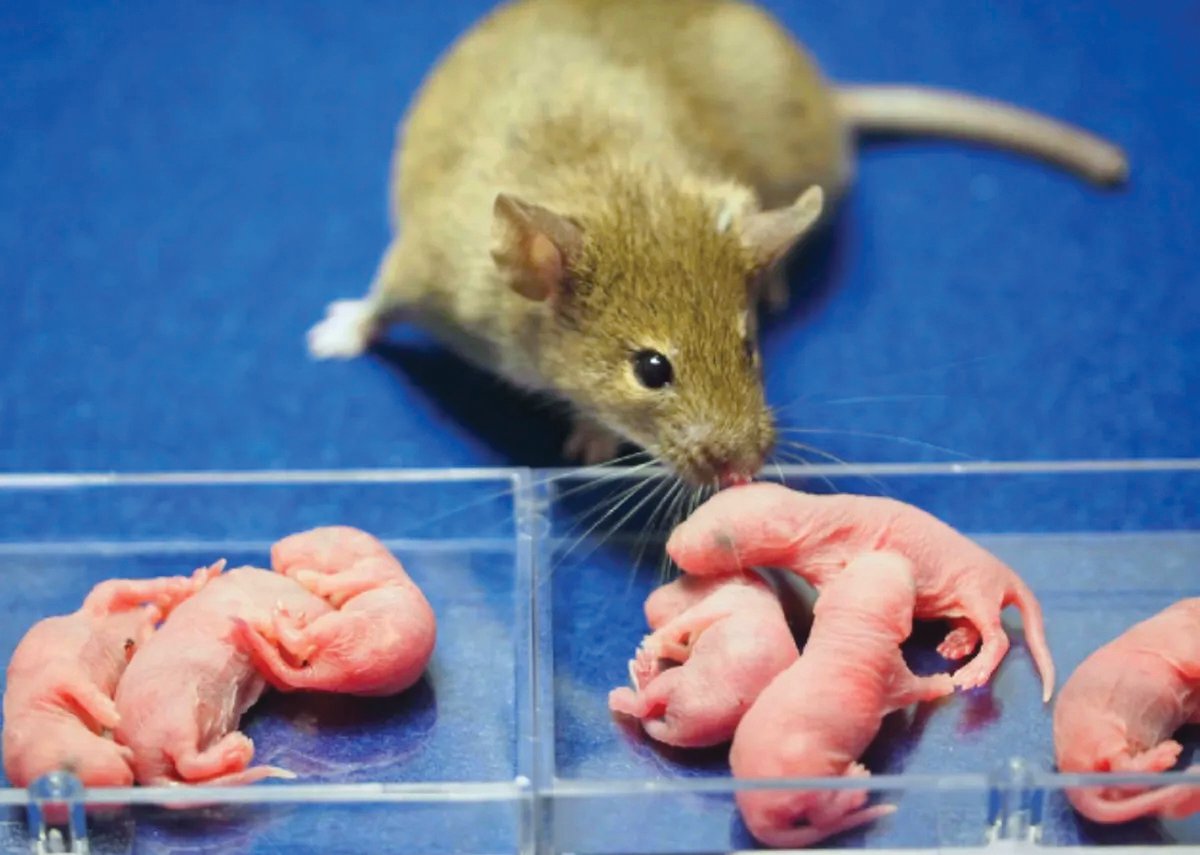
Researchers made fertile female clones from male mice in a laboratory experiment.
The team used a CRISPR-based method called Y-CUT to remove the Y chromosome from cloned male mouse embryos, leaving them with a single X chromosome.
The embryos were carried by surrogate mothers, and the female clones later had offspring with male clones.
This means one male donor could provide both sexes for breeding, a possible aid for endangered species with very few individuals left.
The work is an early step, and the study has not yet been peer-reviewed.
The method may not work for many mammals because females with a single X chromosome cannot reproduce in some species.
The researchers say future technologies that add an X chromosome could help address this limitation.

Researchers produced healthy, fertile female clones from male mice by removing the Y chromosome from cloned male embryos.
The female clones had a single X chromosome and the same genome as the donor male except for the Y chromosome.
The clones mated with male clones and produced offspring with typical XX or XY chromosomes.
The researchers say the method could help create breeding pairs for endangered species with very few survivors.
The study has not yet been peer-reviewed, and the method may not work for mammals that cannot reproduce with a single X chromosome.
- Who
- Researchers created the clones. Ben Novak, who was not involved in the study, commented on its potential.
- What
- They used a CRISPR-based method to remove the Y chromosome from cloned male mouse embryos, producing fertile female clones.
- When
- The article was published on October 13, 2026. The timing of the experiments is Not stated.
- Where
- Not stated
- Why
- The researchers say the technique could help create fertile breeding pairs to support endangered species with few individuals left.
This story does not have two clearly opposing sides.
Researchers tested Y-CUT on male mouse embryos obtained through in vitro fertilization.
Researchers applied Y-CUT to cloned male mouse embryos and transferred them to surrogate mothers.
Surrogate mothers gave birth to healthy, fertile female clones.
The female clones mated with male clones and produced offspring with XX or XY chromosomes.
- Method
- Y-CUT, based on CRISPR, removed the Y chromosome
- Female clones
- One X chromosome; genome matched the donor male except for the Y chromosome
- Reproduction
- Female clones were fertile and produced offspring with male clones
- Study status
- Not yet peer-reviewed
- Potential limitation
- Many mammals, including horses and humans, cannot reproduce with an XO chromosome combination
What people are saying
I think it’s a really neat foundational breakthrough in reproductive science
Being able to manipulate chromosome counts and chromosome makeup will open up a new avenue of functional genomic science
It certainly can have long-term future applications for extreme cases of species revival
Sources
Related news

International timekeepers set to vote on ending leap seconds

Amazon fires and a strong El Niño threaten regional rainfall

Maynooth Researchers Build a DNA Computer That Needs No Continuous Power

Cape Town plans to relocate two baboon troops from Simon’s Town

Ringed barn owls will help assess wildlife-friendly farming

Super El Niño strengthens to unprecedented levels, with impacts expected into 2027

Study Finds Stem-Cell Embryo Models Do Not Fully Match Human Embryos

Jonathan the tortoise’s genes may offer clues to healthy aging

Black hole-inspired quantum teleportation works without quantum magic

Mostly stable weather forecast across Spain, with scattered light rain
Fire ant nest found at logistics centre in Sydney’s inner west
