Health · Fitness & Nutrition · 1 hr ago
More couples are sleeping apart to improve their rest
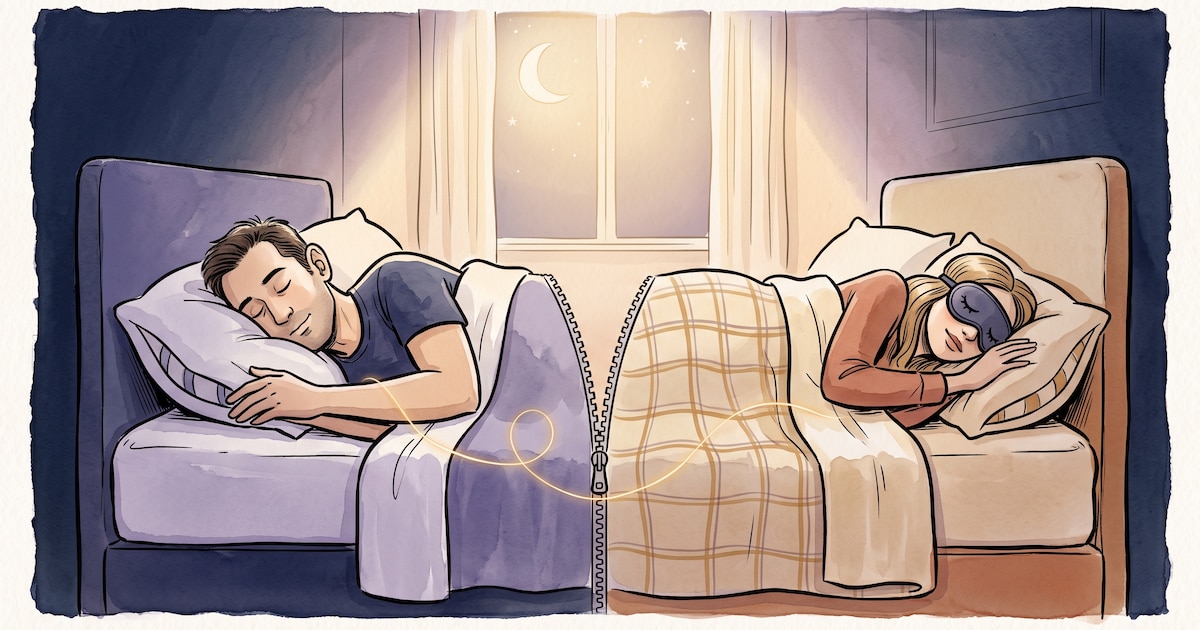
More than a third of adults in the United States sometimes or regularly sleep in another room to suit their partner’s needs.
This arrangement, often called “sleep divorce,” means sleeping in separate beds or rooms and does not necessarily signal a relationship breakdown.
People may choose it because of snoring, different work schedules, illness, temperature preferences or movements that disturb a partner.
A review of 62 studies involving 43,860 people found that better relationship quality was associated with better sleep.
Feeling listened to and understood was linked to better sleep, while more conflict was linked to worse sleep.
The findings do not prove that relationship problems cause poor sleep, or that poor sleep causes conflict.
An eight-year study described the connection as running both ways: tensions can make rest harder, and sleep problems can affect a relationship.
The evidence presented does not establish whether sleeping separately is better for every couple; it points instead to finding an arrangement that lets both people rest.

More than one-third of adults in the United States sometimes or regularly sleep in another room to accommodate a partner’s needs.
The arrangement, sometimes called “sleep divorce,” can involve separate beds or bedrooms.
A review of 62 studies involving 43,860 participants found an association between better relationship quality and better sleep.
The review found that greater perceived partner responsiveness was linked with better sleep, while more conflict was linked with poorer sleep.
Researchers said the findings do not prove that relationship quality directly causes changes in sleep.
- Who
- More than one-third of adults in the United States sometimes or regularly sleep in another room to accommodate a partner.
- What
- Couples are sleeping separately as one way to improve rest.
- When
- Interest in the arrangement has grown in recent years.
- Where
- The reported figure is for adults in the United States.
- Why
- Reasons include snoring, incompatible work shifts, illness, temperature differences or movements that wake a partner.
This story does not have two clearly opposing sides.
No direct quotes in the coverage so far.
This story does not have a timeline yet.
- Adults sleeping in another room
- More than one-third of adults in the United States
- Review size
- 62 studies and 43,860 participants
- Relationship and sleep
- Better relationship quality was associated with better sleep indicators
- Longitudinal study
- Eight years
- Reasons for sleeping separately
- Snoring, incompatible work shifts, illness, temperature differences or movements that wake a partner
Sources
Related news

Trainer offers guidance on starting strength training in midlife

TODAY invites viewers to share how its health coverage affected them

Letters link wartime food scarcity with health and food waste

Creatine may support muscle performance when combined with resistance training

Chef Ivan Barros shares a chicken and lentil bowl with 66 grams of protein
Vibration plates may support exercise, but evidence is mixed

Study questions claims that heel striking and cadence increase running injury risk

Dietitians say protein powder is optional and recommend checking labels

Dermatologist lists five signs that may point to scalp problems

Gut microbes may influence stress, hormones and sex drive

Protein powder and meal replacement powder serve different purposes