

Science & Tech · Science & Environment · 2 hrs ago
Yale team builds fluid system that stores information without electronics
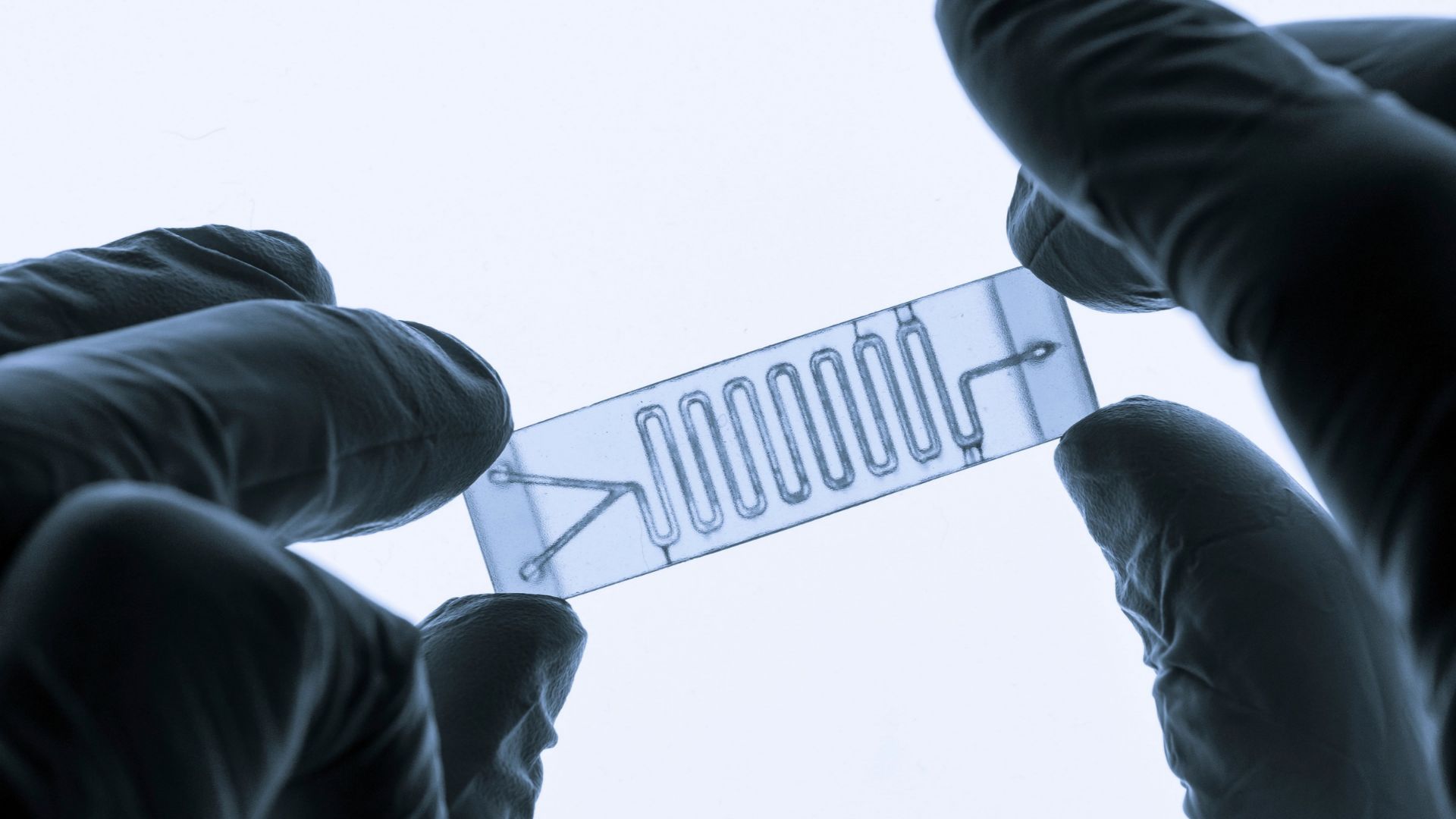
Yale researchers created a chip that stores information in flowing fluid using flexible fibers inside tiny channels.
As fluid moves, pressure pushes the fibers between two stable positions, and each position changes the path the fluid can take.
Those positions record the system’s past state without electronic components, so earlier flows can affect what happens next.
The team says the design could help control soft robots that bend or squeeze through tight spaces, including in environments where electronics face limits.
But researchers still need to show how reliably the system can direct a robot through practical tasks.
Whether the fluid network can be trained to learn useful responses remains an open question, and the team wants to investigate that next.

Yale researchers built a microfluidic system that stores information through flowing fluid and flexible fibers, without electronic components.
Pressure moves the fibers between two stable configurations, changing the fluid’s path and preserving a record of the system’s previous state.
The researchers say the approach could lead to fluidic controllers for soft robots.
They are investigating whether fluidic networks can be trained to produce specific responses, but practical learning remains unproven.
The findings were published in Physical Review X.
- Who
- Yale researchers, including lead author Abhineet Rajput and Professor Amir Pahlavan.
- What
- They developed a microfluidic system that stores information in the positions of flexible fibers, without conventional electronics.
- When
- Not stated.
- Where
- Yale; the system was built inside a microfluidic chip.
- Why
- The work could support fluidic controllers for soft robots and help researchers study how physical systems respond to experience.
This story does not have two clearly opposing sides.
This story does not have a timeline yet.
- Fiber configurations
- Two stable positions that can be represented as zeros and ones
- Channel depth
- Roughly half the width of a human hair
- Potential application
- Fluidic controllers for soft robots
- Journal
- Physical Review X
Related
High-speed video shows how detached honeybee stingers keep pumping venom
2 hrs ago · 6 sources

Isle of Wight fossil identified as a new megaraptoran dinosaur
2 hrs ago · 3 sources

AI data centers face rising insurance risks as construction expands
51 mins ago · 2 sources

A sharper ear may help adults learn second-language sounds
2 hrs ago · 2 sources

What people are saying
While conventional microfluidics relies on active elements, this system uses microfibers to passively store information
We could design a fully fluidic controller that can be integrated into a soft robot and effectively act as its brain