

Health · Medical Research · 6 hrs ago
Trial tests enhanced CAR T-cell therapy for B-cell blood cancers
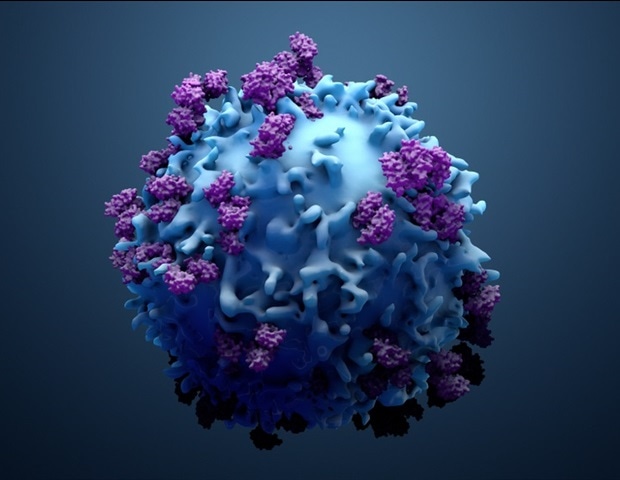
A phase I trial at Ohio State tested an enhanced CAR T-cell treatment for B-cell blood cancers that had returned or resisted treatment.
These cancers include some lymphomas and leukemias, and patients whose cancer returns after CAR T-cell therapy can have few options.
The treatment uses patients’ immune cells, modified to attack cancer cells by targeting three proteins: CD19, CD20 and CD22, with OX40 added to strengthen the immune response.
Eighteen people enrolled, and 16 received the enhanced treatment after a median of three previous types of therapy.
Researchers reported encouraging clinical activity with minimal side effects, including remissions in several types of lymphoma.
The team prepared and returned the cells in six days, and larger studies are needed to assess how well the approach works.

A phase I trial tested enhanced CAR T-cell therapy in patients with relapsed or treatment-resistant B-cell blood cancers.
The therapy targeted CD19, CD20 and CD22 and used OX40 to boost the immune response.
Eighteen patients enrolled, and 16 received the enhanced therapy.
Researchers reported clinical activity with minimal side effects, including remissions in several types of lymphoma.
The study authors said larger trials are needed to assess the treatment further.
- Who
- Researchers at The Ohio State University Comprehensive Cancer Center led the phase I trial. Eighteen patients with B-cell blood cancers enrolled.
- What
- The trial tested CAR T-cell therapy targeting CD19, CD20 and CD22, enhanced with OX40.
- When
- The findings were published in 2026.
- Where
- The Ohio State University Comprehensive Cancer Center – Arthur G. James Cancer Hospital and Richard J. Solove Research Institute led the trial.
- Why
- The researchers aimed to improve options for patients whose B-cell blood cancer had returned or stopped responding to treatment.
This story does not have two clearly opposing sides.
Enrolled patients had previously received a median of three types of therapy.
Eighteen patients enrolled, and 16 were treated with the OX40-enhanced CAR T-cell therapy.
The trial findings were published in Blood Cancer Discovery.
- Trial phase
- Phase I
- Patients enrolled
- 18
- Patients treated with OX40-enhanced therapy
- 16
- Median patient age
- 64
- Cell preparation and return
- Six days
- Journal
- Blood Cancer Discovery
1 source
Related
Pope Leo XIV diagnosed with lung cancer after surgery in Rome
1 hr ago · 60 sources

Davina McCall describes severe memory loss after brain tumour surgery
4 hrs ago · 3 sources

Experimental gene therapy and goggles restored limited vision for some patients
32 mins ago

Blood pressure swings linked to higher death and stroke risk
55 mins ago

What people are saying
Patients are then left with limited treatment options.
This resulted in meaningful clinical activity with minimal side effects in B-cell non-Hodgkin lymphoma, and remission in mantle cell lymphoma, follicular lymphoma and diffuse large B-cell lymphoma.
While our trial showed encouraging outcomes for patients with B-cell non-Hodgkin lymphoma who were treated with our enhanced CAR T-cells, more research in larger patient groups is needed.