2 days ago
India’s Balance of Payments Recovery Faces Questions Over Borrowed Capital
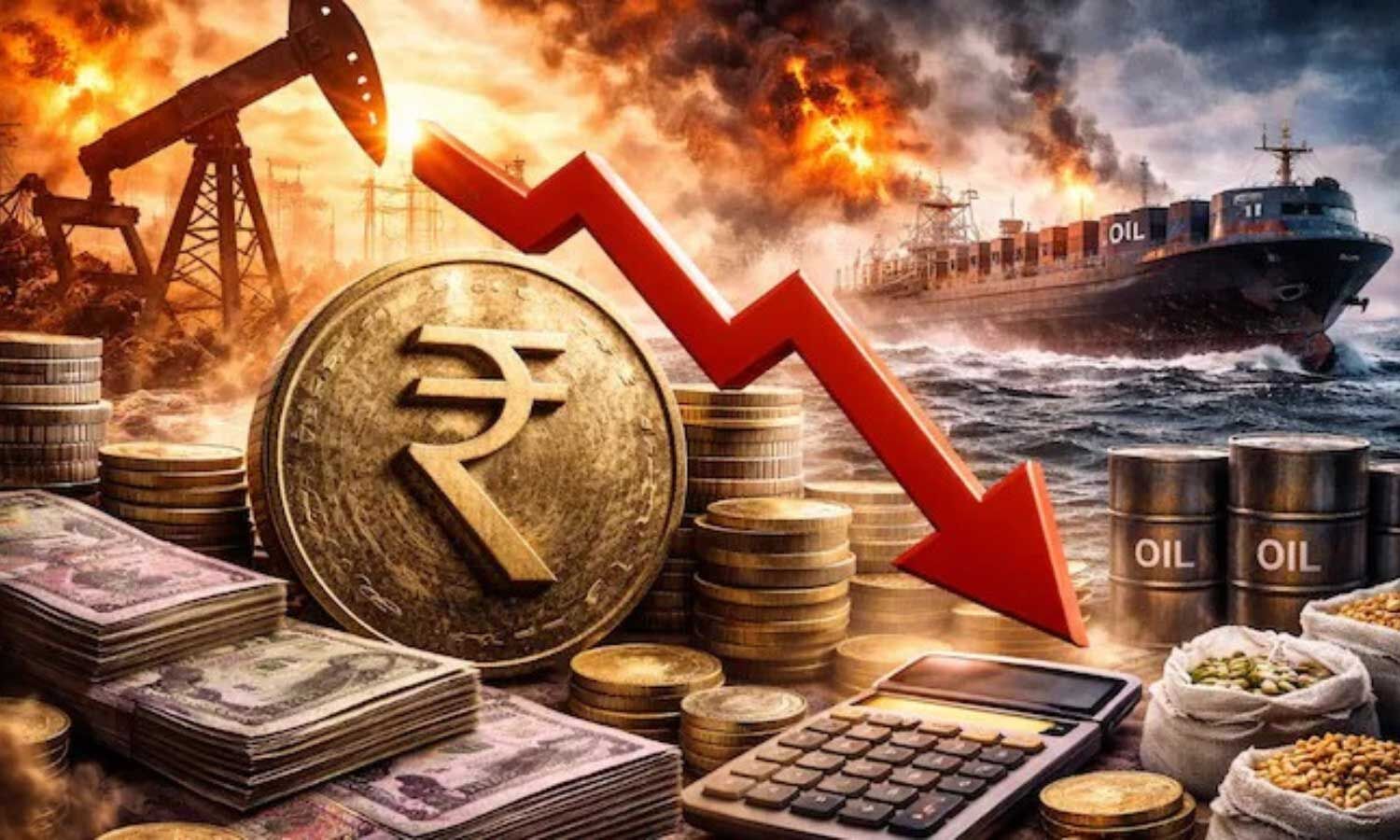
India imports much of the oil it needs, so higher oil prices quickly make its import bill larger.
Tensions in West Asia have pushed energy markets higher and hurt India’s current account.
The current account is the record of money coming in and going out through trade and related transactions.
India’s technology services, remittances and goods exports are helping, but they have not completely covered the higher oil cost.
The Reserve Bank of India offered special measures to attract money from abroad.
These measures brought in $40.8 billion by July 31, 2026.
This could help India’s overall balance of payments look much stronger this year.
However, some of this money is borrowed and may have to be repaid later.
The article says India still needs to reduce its energy dependence and build a broader export base.

India’s current account shifted from a $6.5 billion surplus to a $4.2 billion deficit in Q1 FY27.
Higher energy prices linked to West Asia tensions widened India’s merchandise trade deficit amid heavy crude-oil import dependence.
Services exports, remittances and stronger goods exports provided support but did not fully offset the energy bill.
RBI measures attracted $40.8 billion through FCNR(B) deposits, external commercial borrowings and overseas foreign-currency bonds by July 31, 2026.
CareEdge projects a $64 billion FY27 balance-of-payments surplus, although the inflows may create future repayment obligations and are partly offsetting RBI forward positions.
- Who
- India, the Reserve Bank of India, foreign investors and rating agencies including CareEdge Ratings and CRISIL.
- What
- India’s current-account deficit widened, while special RBI measures attracted foreign-currency inflows that are projected to produce a balance-of-payments surplus.
- Where
- India’s external accounts were affected by global energy-market disruption linked to tensions in West Asia.
- When
- The deterioration occurred in Q1 FY27, from April to June 2026; the RBI measures attracted inflows between June 5 and July 31, 2026.
- Why
- Higher energy prices increased India’s import bill, while capital inflows were needed to strengthen external buffers and offset pressure on the rupee.
Recovery reflects effective policy
Recovery masks structural vulnerability
External stability
Recovery reflects effective policy
The current-account deficit remains far below the 4.8% of GDP recorded in FY13, while services exports, remittances and goods exports provide resilience.
Recovery masks structural vulnerability
The deficit is projected to reach as much as 1.2% of GDP, and its sharp quarterly reversal shows continued exposure to energy-price shocks.
RBI capital measures
Recovery reflects effective policy
The RBI acted pre-emptively and attracted $40.8 billion quickly, potentially strengthening India’s external buffers and supporting the balance of payments.
Recovery masks structural vulnerability
Much of the projected surplus depends on concessional deposits and other borrowed capital, which will create repayment obligations when the funds mature.
Currency impact
Recovery reflects effective policy
The measures helped address pressure on the rupee and allowed the RBI to manage its foreign-exchange position amid global volatility.
Recovery masks structural vulnerability
The rupee remained broadly flat despite the large inflows, partly because the RBI was using them to unwind a net forward short position exceeding $100 billion.
Key facts
- Q1 FY27 current account
- A $4.2 billion deficit, compared with a $6.5 billion surplus in the preceding quarter.
- FY27 CAD projection
- CareEdge Ratings and CRISIL project a full-year current-account deficit of 0.8% to 1.2% of GDP.
- Oil dependence
- India imports roughly 85% of its crude-oil requirements.
- RBI inflows
- The June 5 package attracted $40.8 billion between June 5 and July 31, 2026.
- FCNR(B) contribution
- FCNR(B) deposits accounted for $36.7 billion of the reported inflows.
- Projected FY27 BoP
- CareEdge Ratings projects a balance-of-payments surplus of around $64 billion, up from a $23.6 billion deficit in FY26.
- Forward position
- The RBI’s net forward short position stood at $103.3 billion in June 2026.
Sources
Related news

India’s Current Account Deficit Seen Manageable Despite Trade Widening
India’s Current Account Deficit Doubles as NRI Inflows Boost Surplus

India’s Current Account Deficit Widens Marginally in April-June
Kotak Equities sees India inflows surging to $120 billion FY27

India’s Current Account Deficit Widens Amid West Asia Conflict

West Asia Conflict Pushes India’s Q1 Current Account Deficit Higher
Indian Companies Favor Volumes as Wholesale Inflation Outpaces Retail Prices

Five-Year SIP Data Shows Indian Investors Are Staying Invested Longer

Smaller Indian EV Brands Accelerate Growth Amid Two-Wheeler Boom

Combined Gold and Silver ETFs Outpace Equity ETFs in FY26