2 weeks ago
Google may partner with AMD on CPU-heavy TPU design
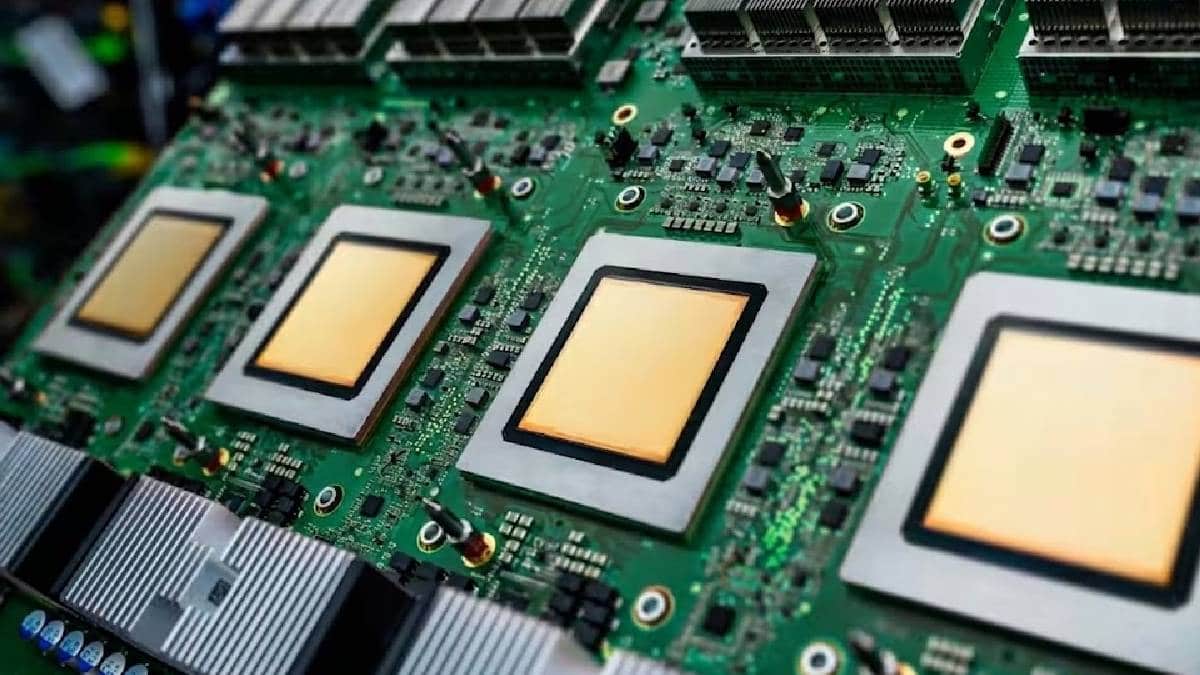
Google makes special computer chips called TPUs that help with artificial intelligence.
These chips are really good at math, but some new AI tasks need more regular computer power too.
A company that studies tech, called SemiAnalysis, thinks Google might work with another company, AMD, to make a new kind of TPU.
This new chip would have both the special AI parts and regular computer parts together.
That could make it faster and use less power for tasks like teaching AI to think and plan.
Google already started adding more regular computer power to its newest TPU systems.
AMD is good at making chips that mix both kinds of parts, so it could help.
But this is just a guess, and we don't know for sure if they will work together.
If they do, it could be a big step for AI technology.

SemiAnalysis reports Google may partner with AMD on a next-generation TPU.
The potential TPU would combine Google's accelerators with on-package CPU cores.
The design targets CPU-heavy workloads like reinforcement learning and agentic AI.
Google's TPU 8i systems already use one Axion CPU per two TPUs, up from one Intel Xeon per four TPUs in the seventh generation.
AMD's Instinct MI300A hybrid design is cited as a reason AMD could supply CPU technology and packaging expertise.
- Who
- Google and AMD, with analysis from SemiAnalysis
- What
- A potential partnership on a CPU-heavy TPU design for reinforcement learning and agentic AI
- Where
- Not specified
- When
- Reported in a recent SemiAnalysis note (date not specified)
- Why
- To support CPU-heavy AI workloads like reinforcement learning and agentic AI, which require more general-purpose computing alongside accelerators
Partnership Likely
Partnership Unlikely
AMD's role in TPU design
Partnership Likely
AMD could supply CPU technology and advanced packaging expertise, leveraging its MI300A hybrid design experience.
Partnership Unlikely
Google has substantial in-house accelerator expertise and may not need AMD for a conventional TPU; the report is speculative.
Key facts
- Reported by
- SemiAnalysis
- Potential partners
- Google and AMD
- Target workloads
- Reinforcement learning, reasoning, agentic AI
- TPU 8i CPU ratio
- One Google Axion CPU per two TPUs
- 7th-gen TPU CPU ratio
- One Intel Xeon 'Emerald Rapids' per four TPUs
- AMD reference design
- Instinct MI300A (x86 CPU + accelerator chiplets)
- Status
- Speculation; exact nature of AMD involvement unclear
Sources
Related news
Anthropic Hires Google Chip Veteran for In-House Semiconductor Push

Marvell Shares Jump as Google Expands Custom AI Chip Partnership
Anthropic builds own chips amid $40 billion xAI compute deal

Google Prepares Gemini 3.8 Flash to Challenge AI Rivals
AMD, Delhi University Partner to Train Students in AI

AWS and Nvidia Plan Two Million More AI GPUs
AMD Unveils Halo Station With 576GB HBM3E for Local AI