1 week ago
India’s BRICS Tightrope Tests Its Broader Multi-Alignment Strategy
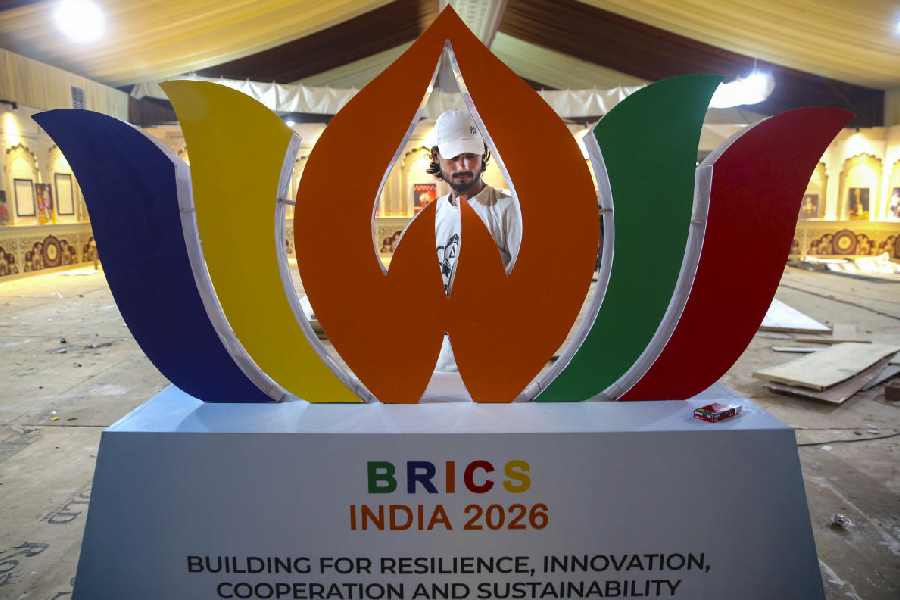
BRICS is a group of countries that began as a way to describe fast-growing economies.
It later became a political forum involving countries including India, China, Russia and others.
India says BRICS should not be used to oppose Western countries.
Instead, India wants to work with many different powers at the same time.
The article says this gives India flexibility but has produced few concrete results.
China’s greater influence makes it harder for India to guide the group.
The larger membership also includes countries with disagreements among themselves.
India’s presidency will be judged by whether BRICS creates useful cooperation instead of only issuing statements.

BRICS began as an economic label and later became a political grouping without a clearly binding common strategy.
India treats BRICS as a forum for selective cooperation, not an anti-Western or counter-G7 alliance.
The bloc’s expansion has increased its diversity and made consensus on geopolitical issues more difficult.
The article argues that China’s growing weight limits India’s ability to shape BRICS outcomes.
India’s BRICS presidency is being judged on practical deliverables, including finance, trade, technology and environmental cooperation.
- Who
- India, led by Prime Minister Narendra Modi, and the expanded BRICS member states.
- What
- India is managing BRICS while trying to preserve its policy of multi-alignment and avoid turning the group into an anti-Western bloc.
- Where
- The summit is scheduled to take place in New Delhi, India.
- When
- India is the current BRICS chair and is scheduled to host a summit in New Delhi next month.
- Why
- India uses BRICS to maintain communication with Western and non-Western powers, pursue selective cooperation and promote a multipolar world.
India’s Strategic Rationale
Critique of India’s Approach
Purpose of BRICS
India’s Strategic Rationale
India views BRICS as a platform for selective cooperation and as part of a broader policy of engaging simultaneously with the United States, Europe, Russia, China and Gulf countries.
Critique of India’s Approach
The article argues that India’s flexible positioning amounts to narrow transactionalism and delays difficult geopolitical choices without producing major strategic gains.
India and China
India’s Strategic Rationale
India wants BRICS to support a multipolar Asia and prevent Chinese hegemony from replacing Western dominance.
Critique of India’s Approach
The article says China’s greater economic and political weight has left India reacting to Chinese and Russian proposals rather than setting the agenda.
Presidency and results
India’s Strategic Rationale
India can use its chairmanship, summit communiqués and working groups to keep dialogue open among countries with strained relationships.
Critique of India’s Approach
The article says India’s presidency risks producing only lowest-common-denominator language and lacks clear deliverables in areas such as trade, technology, health security and environmental cooperation.
Key facts
- BRICS origins
- The term BRIC was coined 25 years ago by Goldman Sachs economist Jim O’Neill to describe Brazil, Russia, India and China.
- Political formation
- The first BRIC summit took place in 2009, and South Africa joined the following year, creating BRICS.
- Key institution
- BRICS established the New Development Bank in 2015.
- Recent expansion
- Egypt, Ethiopia, Iran, Indonesia, Saudi Arabia and the United Arab Emirates joined BRICS in the last two years.
- India’s approach
- India presents BRICS as one element of a multi-alignment policy rather than an anti-Western alliance.
- Internal challenge
- The expanded group includes countries with conflicting regional interests, complicating consensus on issues such as energy security and Middle East crises.
- Main criticism
- The article argues that BRICS has produced limited practical outcomes beyond symbolic participation and the New Development Bank.
Sources
Related news
India Balances Strategic Autonomy and Multilateralism at BRICS Summit

India Hosts BRICS 2026 Amid US-Iran War Tensions
India Seeks Consensus Before Expanded BRICS New Delhi Summit
India's BRICS Presidency Must Turn Advocacy Into Delivery
India Seeks BRICS Consensus Amid West Asia War, Sanctions Pressure
Lokesh Calls for NDA Victory in Upcoming Local Elections
Goyal Defends India’s 7.8% GDP Growth Against Critics

Rubio Says India and Iran Discussed No Trade Deal
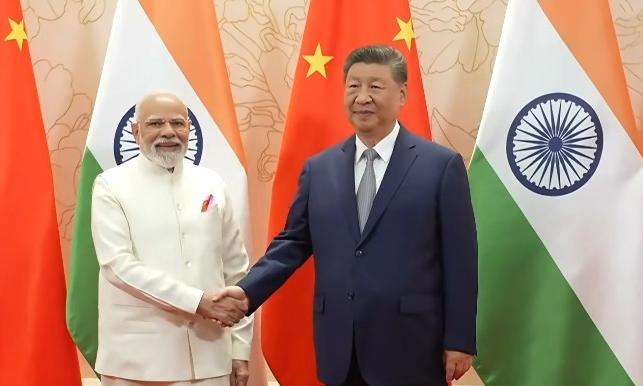
Modi-Xi Signals May Help Reset India-China Ties

GDP Row Escalates as Government Rebuts 2.6% Growth Claim