1 month ago
Telangana HC Rules Twins Birth as One Event for Maternity Leave
A woman who had twins in her first pregnancy was denied maternity leave for her second pregnancy because she already had two children.
She argued that having twins should count as one pregnancy, not two.
The court agreed and said that maternity leave rules should be interpreted to support women, not to make things harder for them.
The court ruled that she should get maternity leave for her second pregnancy, and the government should pay her salary for that time.
This decision helps other women who might be in a similar situation.

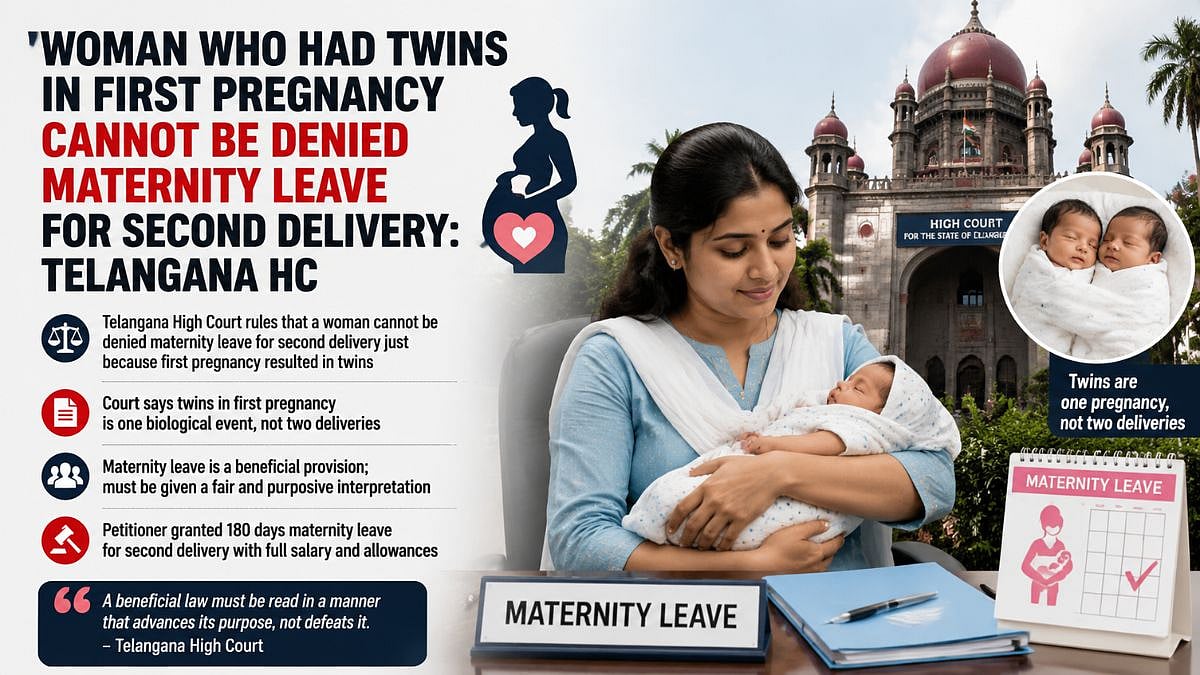
The Telangana High Court ruled that a woman who had twins in her first pregnancy is entitled to maternity leave for her second delivery.
The court held that the birth of twins is a single biological event and should not disqualify a woman from maternity benefits for a subsequent pregnancy.
The petitioner, a Junior Lecturer, had twins in November 2023 and was denied maternity leave for her second pregnancy in April 2026.
The court relied on precedents from the Supreme Court and other High Courts to support its decision.
The court granted the petitioner 180 days of maternity leave and directed the respondents to pay her full salary and allowances for the entire period.
- Who
- A Junior Lecturer (English) with the Telangana Social Welfare Residential Educational Institutions Society (TGSWREIS)
- What
- The Telangana High Court ruled that the petitioner is entitled to maternity leave for her second delivery despite having twins in her first pregnancy.
- Where
- Hyderabad, Telangana, India
- When
- The ruling was made on July 23, 2026.
- Why
- The court held that the birth of twins is a single biological event and should not deprive a woman of maternity benefits for a subsequent pregnancy.
Petitioner's Argument
Respondents' Argument
Single Biological Event
Petitioner's Argument
The petitioner argued that the birth of twins should be treated as a single biological event, not two separate confinements, and thus should not disqualify her from maternity leave for a subsequent pregnancy.
Respondents' Argument
The respondents argued that the petitioner already had two surviving children from her first pregnancy, making her ineligible for maternity leave under the applicable rules.
Purpose of Maternity Leave
Petitioner's Argument
The petitioner contended that maternity leave should be interpreted purposively to support women in balancing motherhood and employment.
Respondents' Argument
The respondents maintained that the rules permit maternity leave only to women with less than two surviving children, and granting leave contrary to the rules could lead to audit objections and irregular payments.
Key facts
- Petitioner's Occupation
- Junior Lecturer (English) with the Telangana Social Welfare Residential Educational Institutions Society (TGSWREIS)
- First Pregnancy
- November 2023, resulted in twins
- Second Pregnancy
- April 14, 2026, resulted in a third child
- Maternity Leave Granted
- 180 days from April 14, 2026, to October 11, 2026
- Relevant Rules
- Rule 101(a) of the Telangana Fundamental Rules and G.O.Ms. No. 50 dated May 17, 2014
- Precedents Cited
- Deepika Singh v. Central Administrative Tribunal, K. Umadevi v. Government of Tamil Nadu, J. Sharmila v. Secretary to Government
Quotes
Justice K. Sarath
Judge of the Telangana High Court
“The court said the condition of having ‘less than two surviving children’ under the Telangana Fundamental Rules cannot be interpreted literally in cases where twins are born during a single pregnancy.”
 freepressjournal.in
“There is no restriction on the number of deliveries for a woman employee under the Central Civil Services (Leave) Rules, 1972.”
freepressjournal.in
Sources
Related news
Jefferies sees 40% upside in Kalyan Jewellers shares
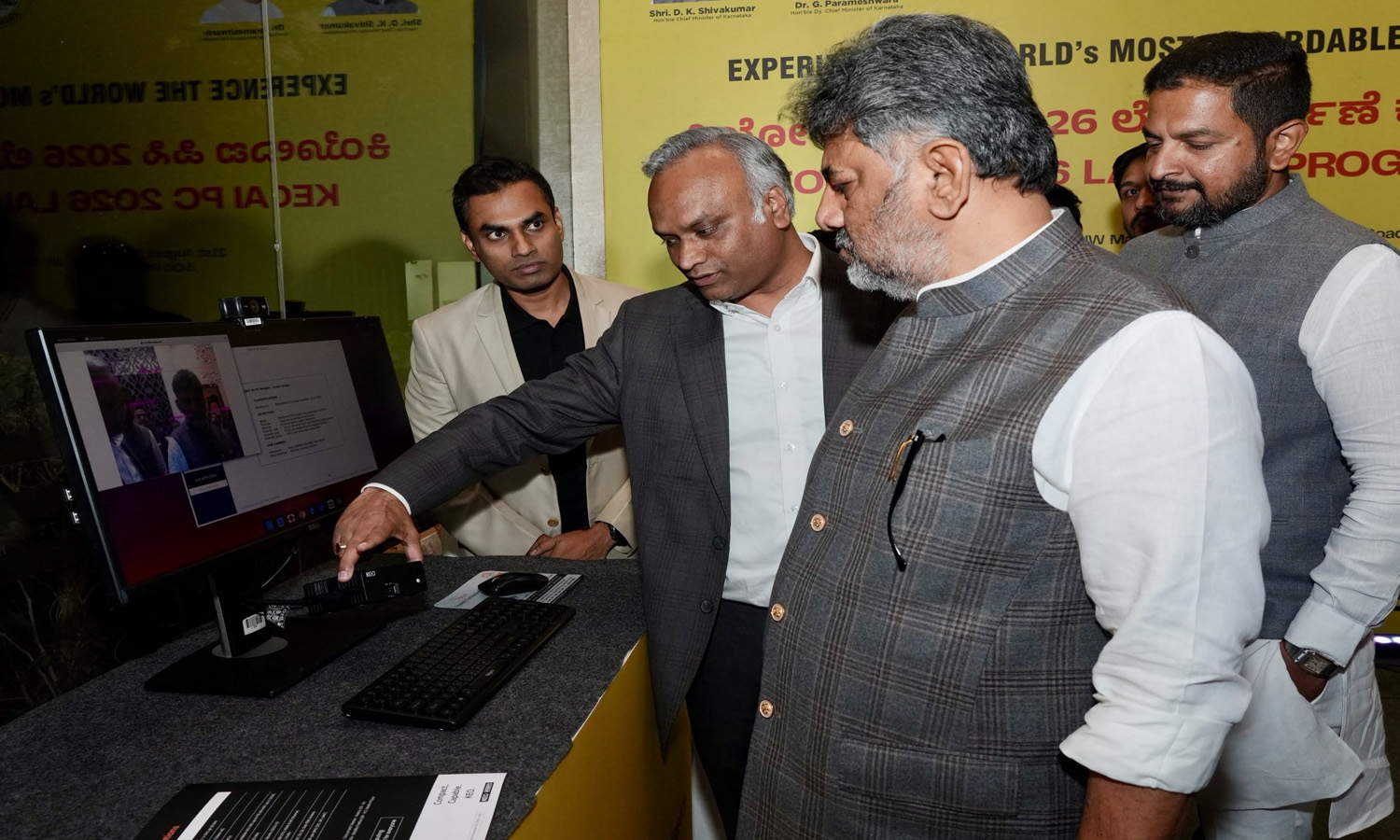
Bengaluru Engineers Develop Affordable AI PC KEO

PC Jeweller shares jump 5% after strong Q1 results
UK and Ukraine Open Battlefield AI Partnership Amid War

Netlist Stock Surges 650% as AI Demand Boosts Memory Business

iPhone 18 Pro expected September launch featuring A20 Pro chip
Andhra Pradesh Launches Excellence Centre for Tribal Students
Telangana Society Offers 200 Free Residential NEET Coaching Seats

Girl Students Leaving Hostels Raises Alarm in Telangana
APSWREIS Invites Applications for Free IIT-JEE, NEET Coaching