1 hr ago
Election Roll Discrepancies Put Voters’ Rights Under Scrutiny
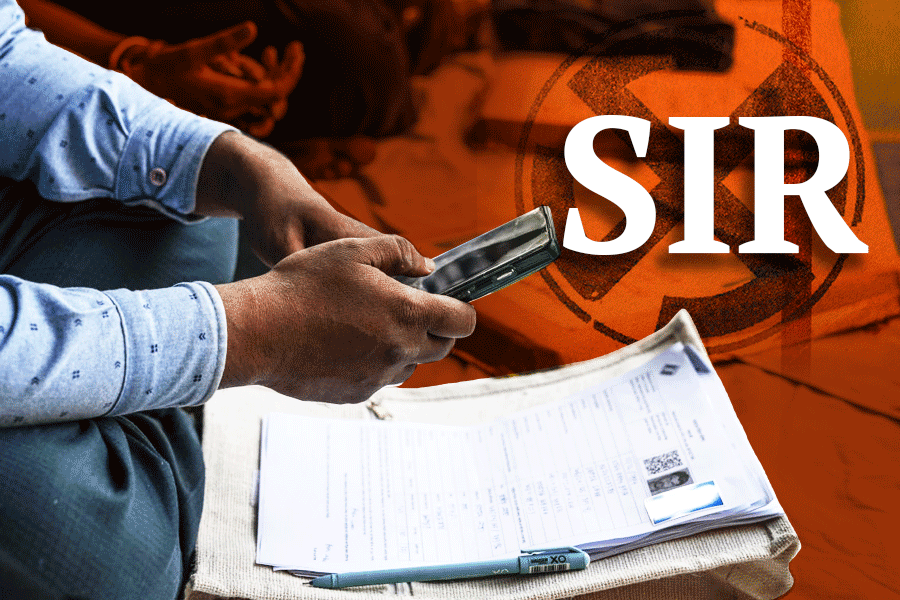
India is checking its voter lists through a process called a special intensive revision.
Many people have been asked to explain problems called discrepancies in their records.
The editorial says some of these problems may be small spelling or age differences.
It argues that eligible citizens should not have to prove why their names belong on a list already approved by election officials.
The Election Commission says it wants to remove people who are absent, have moved, have died, or appear more than once.
It also says no voter will be removed without notice and a chance to be heard.
The editorial claims the process has gone too far.
It says about six crore names have been removed during the first year of the revision.
The main disagreement is over whether the process protects or threatens people’s right to vote.

The Election Commission of India’s special intensive revision has asked many voters to explain discrepancies in their records.
The editorial argues that the process could wrongly remove eligible citizens from electoral rolls.
It says the Election Commission should remove absent, shifted, dead, and duplicate entries, but not go beyond that mandate.
About six crore names have reportedly been removed from electoral rolls during the first year of the revision.
The Election Commission says voters will receive notice and a hearing before any deletion, while critics say its actions contradict that assurance.
- Who
- The Election Commission of India, voters, and critics of the electoral-roll revision.
- What
- A dispute over the Election Commission’s use of reported discrepancies during a special intensive revision of electoral rolls.
- Where
- India, including Delhi and West Bengal.
- When
- During the first year of the special intensive revision; the article does not provide specific dates.
- Why
- The Election Commission says the revision is intended to correct voter data and remove absent, shifted, dead, and duplicate entries; critics say it risks excluding eligible citizens.
Critics of the Revision
Election Commission Position
Burden of proof
Critics of the Revision
The Election Commission should explain why an already approved voter’s name should be removed, rather than forcing the voter to justify inclusion.
Election Commission Position
The Election Commission maintains that discrepancies must be corrected and that affected voters will have an opportunity to respond.
Scope of removals
Critics of the Revision
The revision has allegedly gone beyond removing absent, shifted, dead, and duplicate entries and may exclude eligible citizens.
Election Commission Position
The stated objective is to ensure that no eligible citizen is left out while no ineligible person is included.
Impact on democracy
Critics of the Revision
Critics say mechanical use of discrepancies threatens the constitutional right to vote and the foundations of democracy.
Election Commission Position
The Election Commission presents the revision as a transparent, participative, and inclusive process for improving electoral rolls.
Key facts
- Revision process
- The Election Commission is conducting a special intensive revision of electoral rolls.
- Reported removals
- About six crore names have reportedly been removed during the first year of the revision.
- Delhi claim
- The editorial says one in every three voters in Delhi has been made to appear non-Indian.
- Discrepancies
- The process includes discrepancies such as data differences that may involve spelling or age variations.
- Election Commission assurance
- The Election Commission says voters will receive notice and an opportunity to be heard before deletion.
- Permitted removals
- The article identifies absent, shifted, dead, and duplicate entries as categories that should be removed.
Quotes

Election Commission of India
India’s constitutional authority responsible for conducting elections and revising electoral rolls
“The (Election) Commission reiterates its firm commitment to a transparent, participative and inclusive revision process, ensuring that ‘no eligible citizen is left out while no ineligible person is included in the electoral roll’.”
 deccanchronicle.com
Sources
Related news

Electoral Roll Purge Draws Warning Over India’s Voting Rights
Congress Challenges Delhi SIR Over VIP Notices and Deletions

Delhi Poll Officials Publish Names Excluded From Draft Roll
Delhi Draft Voter Roll Excludes 47 Lakh Names, Sparks Row
Supreme Court to Hear Delhi SIR Notice Disclosure Plea
Quraishi Calls SIR Voter Deletions Illogical and Unconstitutional
Supreme Court Orders Inquiry Over Arrests Without Written Grounds

Tata Sons Board Vote Sparks Article 121 Legal Puzzle

Kawal Reserve Seeks Major One-Kilometre Eco-Sensitive Zone Cut

Pensioners Protest 8th Pay Commission Retirement-Date Distinction