

12 hrs ago
Spain Lifts Puigdemont Arrest Warrant After Court Amnesty Ruling

Spain’s top court removed an arrest warrant for Carles Puigdemont, a former leader of Catalonia.
He left Spain in 2017 after the region held an independence vote.
He was accused of using public money to organise that vote, but he denies the accusation.
A court ruling said an amnesty law must also be applied to separatists accused of embezzlement.
That ruling helped clear the way for Puigdemont to return to Spain without fear of arrest.
The amnesty was part of a political agreement made in 2023.
Puigdemont’s party later stopped supporting the government.
Spain is now preparing for an early election, and his return could make politics more tense.

Spain’s Supreme Court lifted the arrest warrant for former Catalan leader Carles Puigdemont, allowing him to return without fear of arrest.
The move followed a Constitutional Court ruling that courts must apply the amnesty law to Catalan separatists, including in embezzlement cases.
Puigdemont was accused of embezzling public funds to organise Catalonia’s 2017 independence referendum; he denied the charge.
The amnesty was agreed in 2023 by Prime Minister Pedro Sánchez’s Socialists and two separatist parties in return for support for his government.
Sánchez called an early national election after Junts withdrew its support, while Puigdemont’s possible return could add political uncertainty.
- Who
- Carles Puigdemont, Spain’s Supreme Court and Constitutional Court, and the Junts party.
- What
- The Supreme Court lifted Puigdemont’s arrest warrant after a Constitutional Court ruling on the amnesty law.
- Where
- Spain, including Catalonia.
- When
- Tuesday, October 6; the report says an early national election was called on Monday and is scheduled for November 29.
- Why
- The Constitutional Court ruled that courts must apply the amnesty law to Catalan separatists, including in embezzlement cases.
Supporters of the amnesty
Critics of the amnesty
Application of the amnesty
Supporters of the amnesty
The Constitutional Court ruled that courts must apply the amnesty to Catalan separatists, including in embezzlement cases.
Critics of the amnesty
The amnesty triggered strong social and political opposition; the Supreme Court had previously ruled that it did not apply to embezzlement, while the judge handling Puigdemont’s case said it did not cover him.
Political implications
Supporters of the amnesty
The ruling removes the arrest warrant and opens the way for Puigdemont to return to Spain.
Critics of the amnesty
The report says his likely return could unsettle an already volatile political landscape and spark further political drama.
Key facts
- Arrest warrant
- Lifted by Spain’s Supreme Court on Tuesday.
- Person affected
- Carles Puigdemont, former head of Catalonia’s regional government.
- Related charge
- Embezzling public funds to hold the 2017 independence referendum; Puigdemont denies the charge.
- Amnesty ruling
- The Constitutional Court said courts must apply the amnesty law to separatists, including in embezzlement cases.
- Political agreement
- The Socialists and two Catalan separatist parties agreed to the amnesty in 2023 in exchange for support for Pedro Sánchez to remain prime minister.
- Election
- An early national election was called, with the report identifying November 29 as the election date.
- Junts position
- Junts has withdrawn its support for the minority central government.
Sources
Related news

Spain's Sánchez Calls Snap Election After Housing Measures Defeated
Sánchez Calls Snap Election After Housing Measures Defeated
Spain housing pact follows eviction protest and return offer
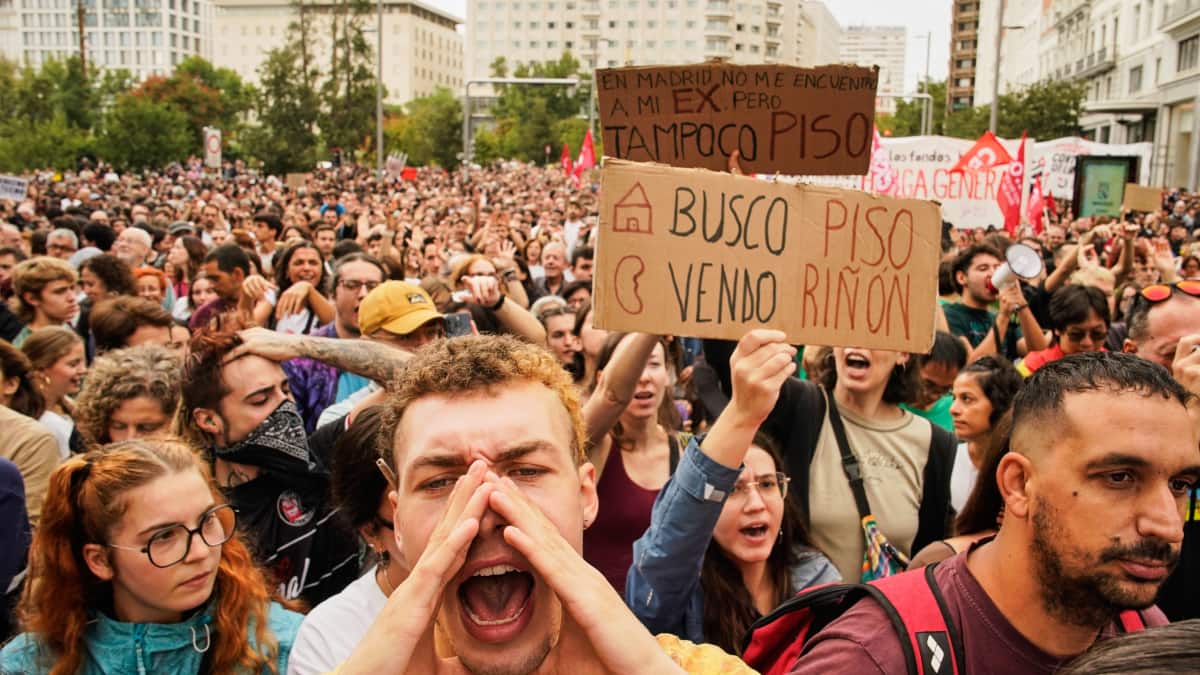
Eviction Protests Intensify Spain’s Housing Crisis and Election Stakes
Spain Advances US Extradition Case Against Pro-Palestinian Donor
Evicted Spanish octogenarian considers landlord offer after nationwide housing protests

Spain's Socialists face backlash over harassment claims handling