

11 hrs ago
Nadella Calls for Stronger Controls on Superintelligence
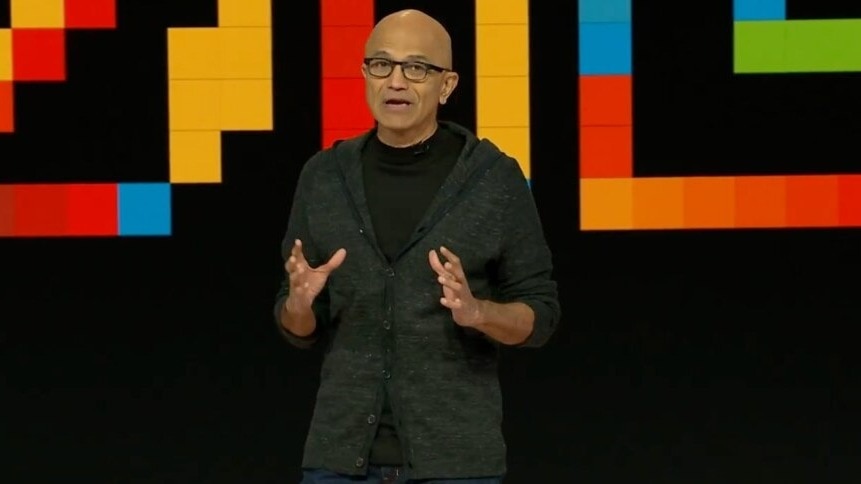
Satya Nadella says powerful AI systems can make mistakes or be misused, even if they are not trying to cause harm.
It can be hard to understand exactly why some AI systems produce an answer or take an action.
Companies may make this harder by putting several AI systems inside one another.
Nadella says companies should decide what information an AI can see and what it can do.
They should also keep records of its actions and test it in difficult situations.
People should be able to stop an AI system while it is working.
If an AI system fails or is compromised, affected people should be told.
These protections matter more as AI agents gain access to important business systems.

Satya Nadella argues that powerful AI models should be treated as potential insider risks, even without malicious intent.
He warns that opaque models layered inside other AI systems can create “nested black boxes” that are difficult to inspect.
Nadella says organizations—not AI models—must control access permissions and which actions systems can take.
His seven principles include model diversity, tamper-proof observability, continuous testing, independent audits, containment, and incident disclosure.
He calls for safeguards and industry standards as businesses deploy AI agents connected to sensitive data and workflows.
- Who
- Satya Nadella, Microsoft’s CEO, outlined concerns and proposed principles for governing advanced AI.
- What
- He called for stronger, independent controls and safeguards for powerful AI systems and agents.
- Where
- The recommendations concern businesses deploying AI; no specific location is stated.
- When
- The article references a post dated October 10, 2026.
- Why
- AI models can be difficult to inspect and may make mistakes, be compromised, or take consequential actions when given access to sensitive systems.
Nadella’s concerns
Potential benefits and limits
Layered AI verification
Nadella’s concerns
Using one model to check another can still create nested black boxes if the systems are all difficult to inspect.
Potential benefits and limits
Using different models can help identify errors and weaknesses, though it does not replace independent controls.
Reasoning transparency
Nadella’s concerns
Nadella says transparency around a model’s reasoning process should be required.
Potential benefits and limits
He cautions that transparency alone is insufficient because outputs cannot be assumed to faithfully represent how decisions were reached.
Key facts
- Author of the recommendations
- Satya Nadella
- Number of proposed principles
- Seven
- Key security concern
- AI models may be opaque and difficult to independently inspect or attribute specific behavior to.
- Core control proposal
- Keep permissions and action controls independent of the AI model.
- Containment proposal
- An authorized human should be able to pause or shut down a model during a task.
- Other proposed safeguards
- Model diversity, complete observability, continuous verifiability, independent auditability, and incident disclosure.
- Business context
- AI agents may connect to enterprise databases, software applications, and operational workflows.
Quotes

Satya Nadella
Microsoft CEO commenting on safeguards for superintelligence
“The most trustworthy Super Intelligence system will not be the one with the model we trust most. It will be the one that enables us to trust the model the least.”
 businesstoday.in
Sources
Related news

Nadella Calls for Emergency Brakes on Advanced AI Models
Nadella Calls for Emergency Brake on Advanced AI Systems
Nadella Backs Deliberate AI Progress and Human Control
Nvidia Launches Open Agent Safety Platform After Hugging Face Hack

Nvidia Launches OpenShell And Sentry To Contain Rogue AI Agents
Nvidia Launches Platform to Keep Autonomous AI Agents Safe

Gates Urges Debate on AI Taxes and Human Jobs
Bill Gates Warns AI Cyberattacks Could Surge Within A Year
