1 week ago
Delhi Court Convicts Sukesh Chandrasekhar Over Impersonation Bid

A Delhi court found Sukesh Chandrasekhar guilty of pretending to be a Supreme Court judge.
The case began with a phone call in 2017, when he was in police custody.
Prosecutors said he used a police constable’s phone to contact Judge Poonam Chaudhary.
They said he first claimed to be the judge’s secretary and then claimed to be the judge.
He allegedly asked the judge to grant him bail quickly.
He also allegedly threatened her with professional consequences.
The court said the prosecution proved the charges beyond reasonable doubt.
Chandrasekhar disagrees with the decision and has asked the Delhi High Court to cancel it.
The trial court will hear arguments about his punishment on August 27, while the High Court petition is listed for August 31.

A Delhi court convicted Sukesh Chandrasekhar under IPC Sections 170, 189 and 507 for impersonating a Supreme Court judge.
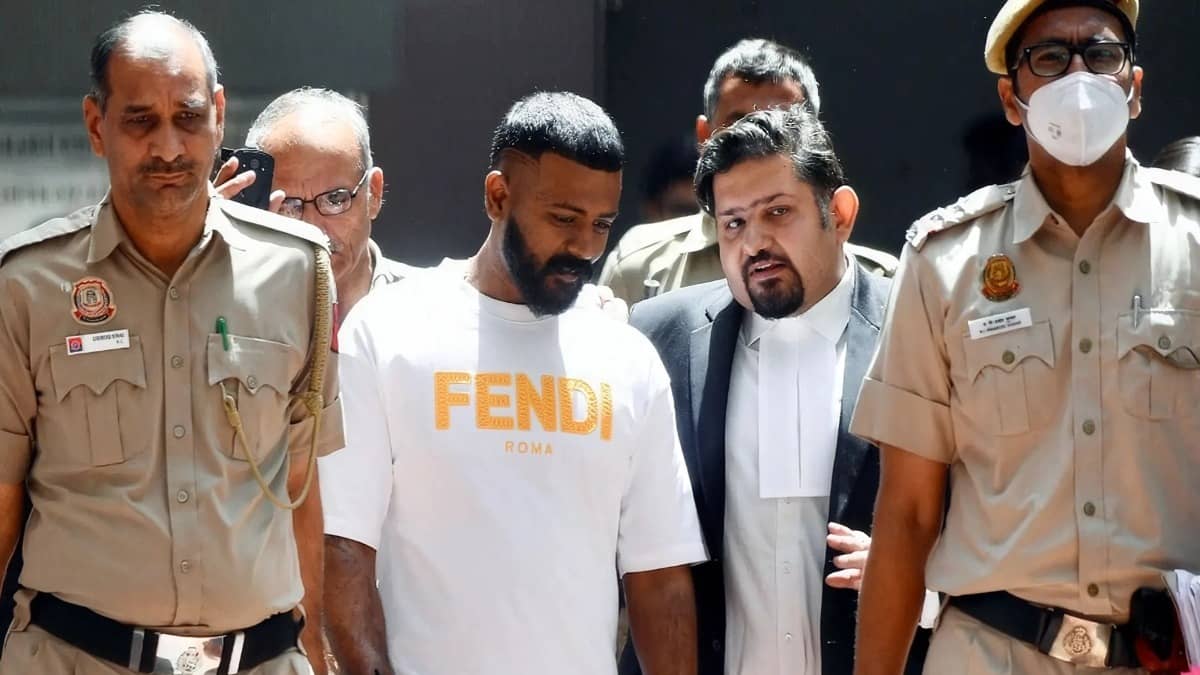
The case concerns an April 28, 2017, call allegedly made from a police constable’s phone while Chandrasekhar was in custody.
The prosecution said he first posed as a judge’s secretary and then as the judge, seeking expedited bail from Special Judge Poonam Chaudhary.
The court said the conduct threatened judicial independence and found the prosecution’s case proved beyond reasonable doubt.
Chandrasekhar has moved the Delhi High Court challenging the conviction and remarks, with the petition listed for August 31, 2026.
- Who
- Sukesh Chandrasekhar was convicted; the case involved Special Judge Poonam Chaudhary and police constable Manjeet.
- What
- Chandrasekhar was convicted of impersonating a public servant, threatening a public servant and criminal intimidation through anonymous communication while allegedly seeking bail.
- Where
- The conviction was issued by Chief Judicial Magistrate Harshita Mishra at Tis Hazari Courts in Delhi; Chandrasekhar’s challenge is before the Delhi High Court.
- When
- The alleged call occurred on April 28, 2017; the conviction order was dated August 20, 2026; sentencing arguments are scheduled for August 27, 2026, and the High Court petition for August 31, 2026.
- Why
- According to the prosecution and trial court, he used the supposed authority of a Supreme Court judge to influence a judicial officer and obtain a favorable bail decision.
Trial Court and Prosecution
Chandrasekhar’s Defence
Evidence and conviction
Trial Court and Prosecution
The trial court relied on the judicial officer’s testimony, call-detail records and circumstantial evidence, finding the charges proved beyond reasonable doubt.
Chandrasekhar’s Defence
The defence argues that the conviction violates legal principles and fair-trial rights and says the case lacked physical evidence such as the phone or recordings.
Characterisations in the judgment
Trial Court and Prosecution
The court described the alleged conduct as a serious attempt to undermine judicial independence and called it a direct affront to the judicial process.
Chandrasekhar’s Defence
Chandrasekhar objects to descriptions including “conman,” “seasoned conman” and “fraudster,” arguing that they were prejudicial and went beyond the evidence.
Trial conduct and requested relief
Trial Court and Prosecution
The trial court convicted Chandrasekhar but directed Delhi Police to re-examine constable Manjeet’s role without finding the constable guilty.
Chandrasekhar’s Defence
The defence alleges judicial bias and prejudgment, seeks a fresh hearing before another court, and says Chandrasekhar has already spent eight years in custody for an offence carrying a maximum punishment of two years.
Key facts
- Convict
- Sukesh Chandrasekhar
- Charges
- Indian Penal Code Sections 170, 189 and 507
- Alleged call
- April 28, 2017
- Judge contacted
- Poonam Chaudhary, then a special judge handling Prevention of Corruption Act cases
- Trial court
- Chief Judicial Magistrate Harshita Mishra, Tis Hazari Courts
- Sentencing hearing
- Arguments on the quantum of sentence are scheduled for August 27, 2026
- Appeal challenge
- Chandrasekhar has asked the Delhi High Court to set aside the conviction, remove contested remarks and defer sentencing while his petition is pending
Quotes
Chief Judicial Magistrate Harshita Mishra
Delhi Chief Judicial Magistrate who convicted Chandrasekhar.
“A courtroom may be entered through its doors, but justice cannot be entered through the backdoor of impersonation, intimidation or manufactured authority. The accused attempted precisely such a backdoor entry into the judicial process. The evidence has closed that door.”
 theprint.in
 deccanchronicle.com
“The present case shall for posterity remain a reminder that the majesty of law does not reside in the voice of an individual, however authoritative it may sound over a telephone, but in the integrity of the judicial process itself.”
theprint.in
Sources

Related news
Sukesh Chandrasekhar Convicted for Posing as Supreme Court Judge
Sukesh Chandrasekhar Gets Eight Years for Impersonating Supreme Court Judge

Delhi High Court Weighs Sukesh Chandrasekhar's Plea Over Remarks
Scammer Poses as Delhi Judge to Target Lawyers

Bihar Police Arrest Man for Impersonating Union Minister's Private Secretary

Chhattisgarh High Court Cuts Fake Police Extortionist’s Jail Term

PUCL Urges CJI Action Over Rajasthan High Court Allegations

Supreme Court Questions IPS Deputation for CAPF Leadership Positions
Supreme Court Quashes 20-Year Conviction, Reaffirms Juvenile Legal Protections

Two Years After RG Kar Doctor's Rape-Murder, Case Remains Unresolved

ED widens Chhattisgarh probes with two arrests and searches