

2 weeks ago
USCIS issues instructions ahead of F-1 visa duration rule change
The United States has new rules for people from other countries who come to study there.
These students are called international students.
Before, they could stay for as long as their studies lasted, without a clear end date.
Now, the government says they can only stay for a set amount of time.
That time is based on their school program, and it cannot be longer than four years.
Students also get 30 days to arrive and 30 days to leave after their program.
If students need more time, they must ask the government for special permission.
The government office called USCIS will start using new forms on September 15, 2026.
Old forms will not be accepted after that day.
The government says these changes help keep the country safe, so students must make sure they have the right paperwork.

The US Department of Homeland Security (DHS) published a final rule replacing open-ended 'duration of status' for F, J, and I nonimmigrant visa holders with fixed admission periods.
The rule takes effect September 15, 2026, following publication in the Federal Register and congressional review.
USCIS will release revised editions of Form I-539 and Form I-765 on September 15, after which older editions of both forms will be rejected.
F-1 students will be admitted for a period based on the program length on their Form I-20, capped at four years plus 30 days for arrival and 30 days for departure.
Students needing more time must apply for an extension of stay (EOS) to complete their program, begin a new program, or pursue OPT or STEM OPT.
- Who
- USCIS and the US Department of Homeland Security (DHS), affecting international students, exchange visitors, and foreign media representatives on F, J, and I visas
- What
- A new federal rule replacing open-ended 'duration of status' for student visa holders with fixed admission periods and an extension of stay (EOS) procedure, plus USCIS instructions requiring updated Form I-539 and Form I-765
- Where
- United States
- When
- The rule takes effect September 15, 2026
- Why
- DHS and the Trump administration cite national security concerns; Secretary of State Marco Rubio said 'US visa is a privilege, not a right'
Key facts
- Rule effective date
- September 15, 2026
- Affected visa classes
- F, J, and I
- Maximum F-1 admission period
- Four years (based on Form I-20 program length), plus 30 days for arrival and 30 days for departure
- Form I-539
- Application to Extend/Change Nonimmigrant Status; new 09/15/26 edition required on or after September 15, 2026
- Form I-765
- Application for Employment Authorization; new 09/15/26 edition required on or after September 15, 2026
- Old I-539 edition cutoff
- Edition 08/28/24 accepted if postmarked or submitted before September 15, 2026
- Old I-765 edition cutoff
- Edition 8/21/25 accepted if postmarked or submitted before September 15, 2026
- Extension of stay purposes
- Complete program of study, begin a new program, or engage in OPT and STEM OPT
Quotes
US Secretary of State Marco Rubio
US Secretary of State
“US visa is a privilege, not a right.”
 financialexpress.com
Sources
Related news
US F-1 Visa Rules Tighten: Fixed Admission Period Explained

Harvard Advises International Students Ahead of US Visa Changes

US Universities Issue Travel Advisories Before September 15 Visa Rule

US to Change Key Immigration Forms from September 15, 2026
US Universities Urge Indian Students to Return Before September 15
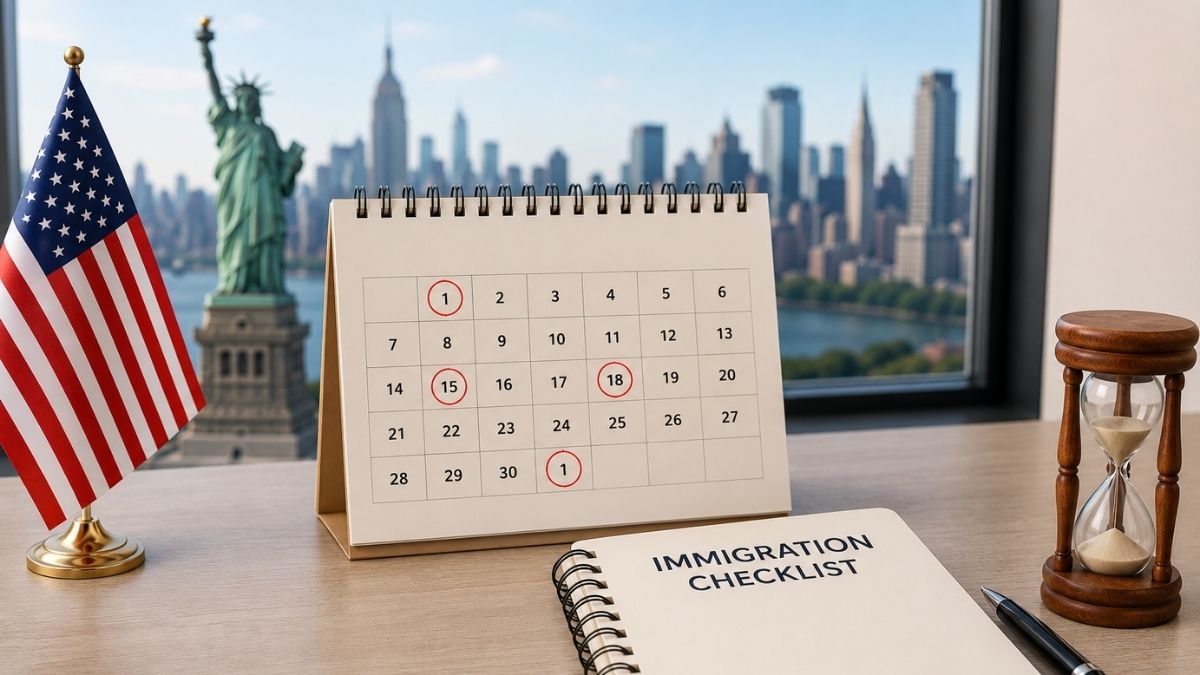
Key US Immigration Dates for Indian Students and Workers
US Warns Middle East Travelers Amid Escalating Iran-Linked Tensions

Family Seeks US Intervention Over VanDyke Detention in Delhi
Trump Seeks Parental Status Proof for Children’s Passports

Debt, Not Inflation, Is Driving the Bond Selloff
US Court Ends Trump Visa Pause Affecting 75 Countries
