

1 hr ago
India’s Bond Tokenization Summit Examines Blockchain’s Financial Future
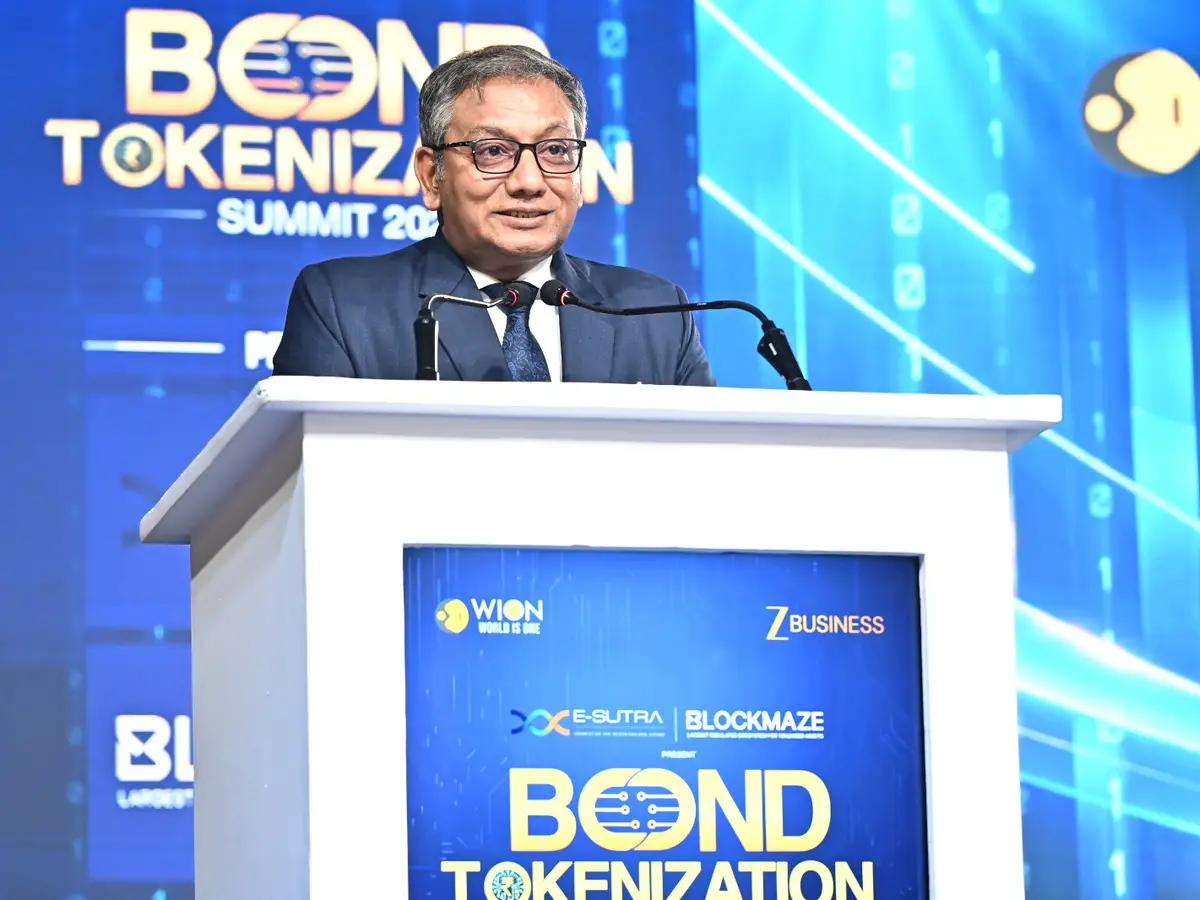
Bond tokenization means using digital tokens to represent parts of a bond.
A bond is a way for companies to borrow money from investors.
Blockchain could keep ownership records on a shared digital ledger.
Smart contracts could automatically send interest and repay investors.
Large bonds could be divided into smaller pieces for people who cannot buy a whole bond.
Transactions might become faster and cheaper.
Records could also become easier for investors and regulators to check.
However, rules about safety, identity checks, taxes and custody still need to be settled.
Experts said India’s digital finance systems could help if they connect properly with tokenized bonds.

The Zee Business Bond Tokenization Summit 2026 examined blockchain’s potential to modernize India’s corporate bond market.
Bond tokenization uses blockchain-based digital tokens to represent ownership or economic rights linked to bonds.
Participants said tokenization could enable fractional ownership, faster settlement, greater transparency and lower costs.
Smart contracts could automate coupon payments, redemptions, principal repayments and some compliance processes.
Panelists identified investor protection, KYC, custody, taxation and regulatory interoperability as key hurdles.
- Who
- Finance, policy and technology leaders participating in the Zee Business Bond Tokenization Summit 2026.
- What
- A discussion about whether blockchain and tokenization could modernize the issuance, settlement and ownership of corporate bonds.
- Where
- Mumbai, India.
- When
- September 9, 2026.
- Why
- To examine whether tokenized bonds could improve accessibility, speed, transparency and costs while addressing regulatory requirements.
Potential Benefits
Regulatory Concerns
Market access
Potential Benefits
Fractional digital units could let retail and smaller investors participate with lower amounts.
Regulatory Concerns
Investor protection and compliance requirements must be resolved before tokenized bonds can become mainstream.
Speed and efficiency
Potential Benefits
Smart contracts could reduce manual work, support near-real-time transfers and lower distribution and settlement costs.
Regulatory Concerns
Tokenized systems must address settlement finality, custody and interoperability with existing depositories.
Transparency and adoption
Potential Benefits
Time-stamped blockchain records could provide issuers, investors and regulators with a clearer audit trail.
Regulatory Concerns
Blockchain infrastructure alone cannot determine whether tokenized bonds fit into the wider financial system; regulatory certainty is necessary.
Key facts
- Event
- Zee Business Bond Tokenization Summit 2026
- Co-presenters
- E-Sutra and Blockmaze
- Core technology
- Blockchain-based digital tokens and smart contracts
- Potential investor benefit
- Fractional ownership could allow investment in smaller units of large bonds.
- Potential operational benefit
- Smart contracts could automate coupon payments, redemptions and some corporate actions.
- Key regulatory issues
- Investor protection, KYC, anti-money laundering, custody, settlement finality, taxation and interoperability.
- Related Indian infrastructure
- UPI, account aggregators and e-rupee pilots were cited as part of India’s developing digital financial ecosystem.
Sources
Related news

India Prepares Pilot for Tokenised Corporate Bonds
REC raises Rs 500 crore through India’s first tokenised bond

Digital Bond Summit Highlights Liquidity, Custody and Cybersecurity Risks

SEBI Plans Bond Tokenisation Pilot, Eases FPI Onboarding

REC Launches India’s First Tokenized Corporate Bond Pilot

Sebi to Float Consultation Paper on Corporate Bond Distribution

BSE Shares Fall as New Closing Auction Session Draws Scrutiny

BSE Seeks Common Order Book to Boost Closing Auctions

Reliance Denies Chandra's Media Allegations Amid Insolvency Dispute
