1 hr ago
Digital Bond Summit Highlights Liquidity, Custody and Cybersecurity Risks

A summit in Mumbai discussed turning bonds into digital tokens.
Digital tokens could make it easier for more people to invest.
But creating a token does not automatically create a market where people can buy and sell it.
Experts said these bonds need enough trading activity so investors can find buyers and sellers.
They also need secure systems to protect ownership and assets.
Clear rules are needed to explain what a token legally represents.
Investors from different countries need simple and lawful ways to join these networks.
Blockchain systems can also face hacking and smart-contract problems.
The experts said strong safeguards are needed before digital bonds become widely used.

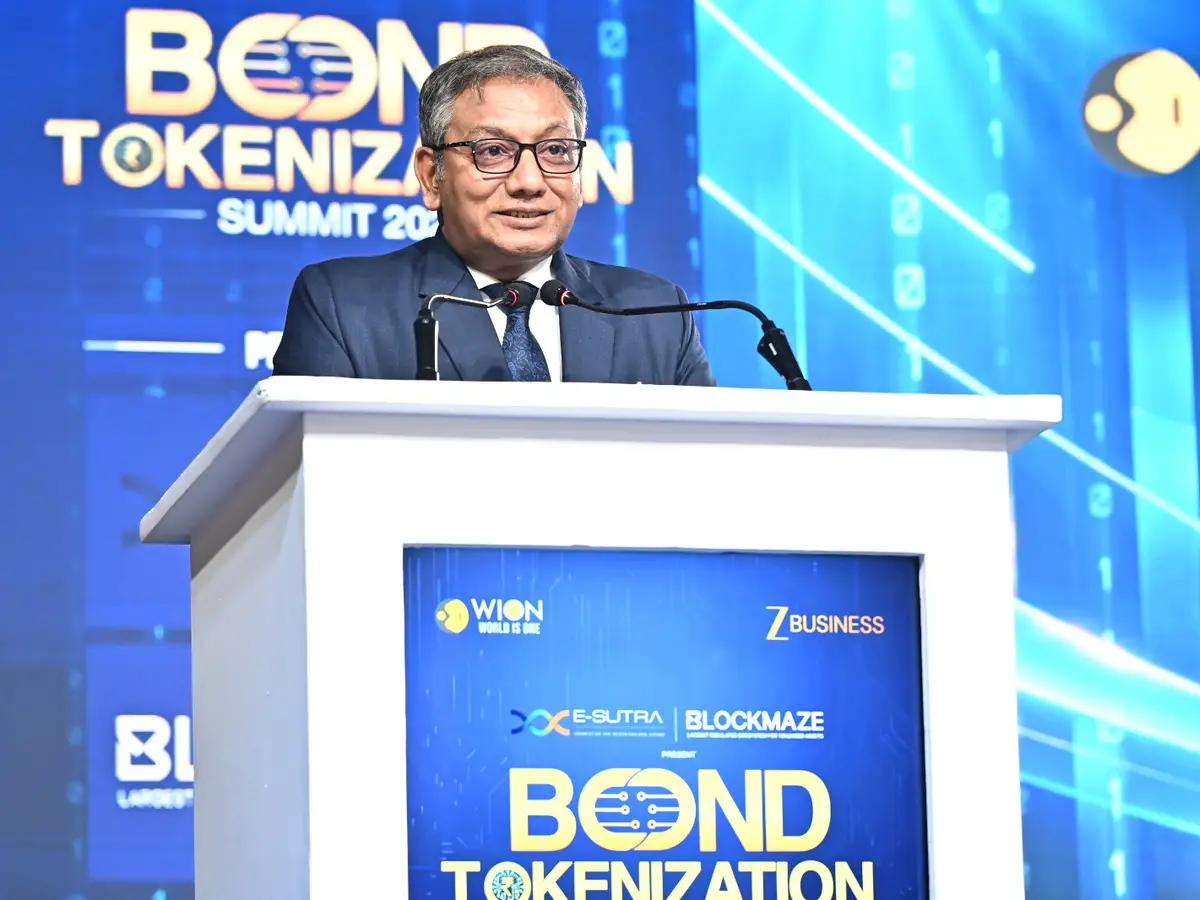
The Zee Business Bond Tokenization Summit 2026 was held in Mumbai on September 9.
Experts said issuing a digital bond is only the first step toward building a functioning market.
STOEX CEO Sudeep Chatterjee highlighted liquidity, custody, settlement and investor-onboarding challenges.
He said tokenised ownership needs explicit legal recognition equal to traditional documentation.
Chatterjee also warned that smart contracts and distributed networks create cybersecurity and operational risks.
- Who
- Finance, policy and technology leaders, including STOEX CEO Sudeep Chatterjee, attended the summit.
- What
- The summit examined real-world-asset tokenisation and digital bonds, focusing on liquidity, custody, legal recognition, settlement and cybersecurity.
- Where
- Mumbai, India.
- When
- September 9, 2026, according to the summit title and article description.
- Why
- The event explored how tokenised assets could reshape India’s financial landscape and broaden access to passive income while addressing investor-protection challenges.
Tokenization proponents
Risk-focused experts
Market potential
Tokenization proponents
Real-world-asset tokenisation and digital bonds could reshape India’s financial landscape and broaden retail access to passive income.
Risk-focused experts
The benefits may not materialise without active secondary markets, secure custody and reliable settlement systems.
Technology versus readiness
Tokenization proponents
Singapore’s Project Guardian experiments showed that tokenised bonds can be issued on a ledger.
Risk-focused experts
The experiments also exposed a fragmented secondary market, showing that technical issuance alone does not create a functioning market.
Adoption framework
Tokenization proponents
Security Token Offerings can streamline the asset-issuance process.
Risk-focused experts
Broader legal, operational, investor-protection and cybersecurity infrastructure is needed after a token is created.
Key facts
- Event
- Zee Business Bond Tokenization Summit 2026
- Location
- Mumbai, India
- Date
- September 9, 2026
- Featured speaker
- Sudeep Chatterjee, CEO of STOEX
- Key market issue
- Token issuance does not automatically create secondary-market liquidity
- Legal concern
- Digital ownership must be explicitly defined and recognised in law
- Security concern
- Smart contracts and distributed networks can create hacking and operational vulnerabilities
Quotes
Sudeep Chatterjee
CEO of STOEX and a speaker on the summit panel
“Under the Monetary Authority of Singapore's (MAS) Project Guardian, financial institutions have conducted approximately 15 localized sandbox experiments to test tokenized assets.While these trials proved that tokenized bonds can be successfully issued on a ledger, they also exposed a fragmented secondary market”
 wionews.com
“Second, blockchain infrastructure brings its own distinct operational challenges, most notably the threat of cyberattacks and hacking risks. Smart contracts and distributed networks open up new vulnerabilities that require robust, institutional-grade defense systems”
wionews.com
Sources
Related news
India’s Bond Tokenization Summit Examines Blockchain’s Financial Future

India Prepares Pilot for Tokenised Corporate Bonds

SEBI Plans Bond Tokenisation Pilot, Eases FPI Onboarding
REC raises Rs 500 crore through India’s first tokenised bond

REC Launches India’s First Tokenized Corporate Bond Pilot