2 hrs ago
Fed Rate Hike May Push Indian Corporates Toward Domestic Loans
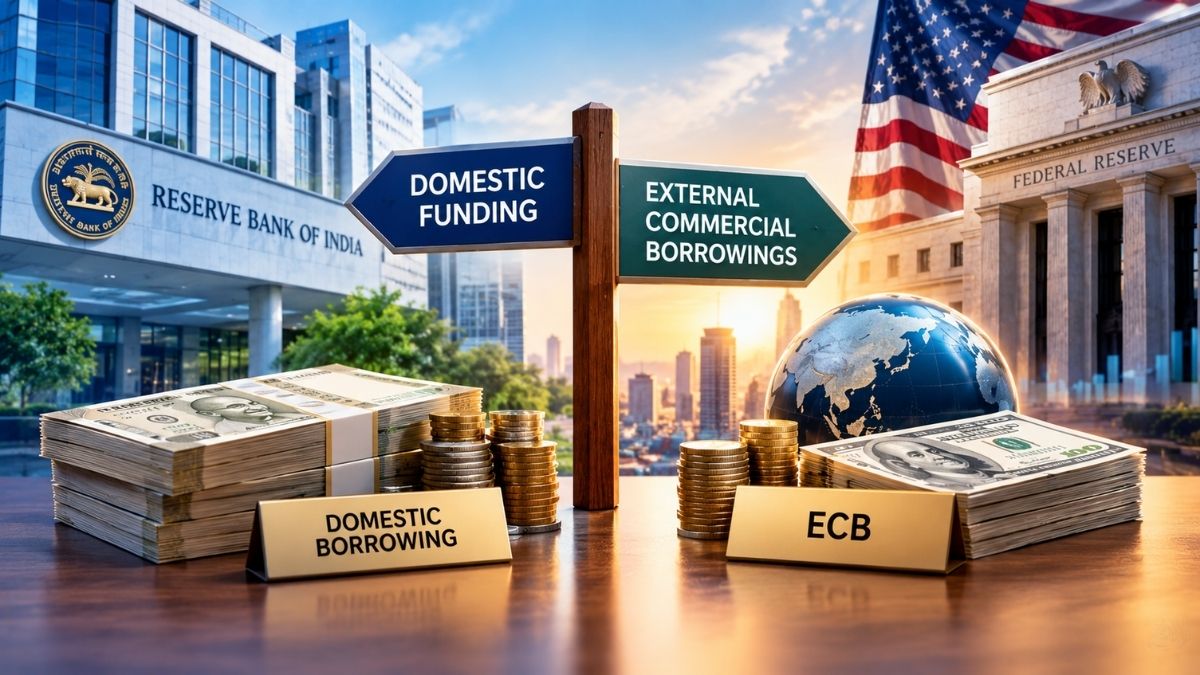
The US central bank raised interest rates.
This can make it more expensive for Indian companies to borrow money from other countries.
Indian companies may therefore consider borrowing more from banks in India.
Indian banks currently have plenty of money to lend.
That could lead banks to offer better deals to large companies.
However, borrowing in India is also becoming more expensive.
A Reserve Bank of India swap program may provide some help to companies borrowing overseas.
The final choice will depend on interest rates in both countries and the value of the rupee.

The US Federal Reserve raised its target rate by 25 basis points to 3.75%-4%, signaling that inflation remains elevated.
Higher US rates and Treasury yields could increase the cost of external commercial borrowings for Indian companies.
Abundant liquidity in Indian banks may make domestic loans relatively more attractive, especially if US rates rise faster than Indian rates.
Indian domestic borrowing costs are also increasing, with 10-year AAA corporate bond yields reaching 7.85%.
Indian companies filed proposals to raise $7.7 billion through ECBs in July, the highest monthly amount in 16 months.
- Who
- Indian companies, Indian banks, the US Federal Reserve, and the Reserve Bank of India.
- What
- A US rate increase may make external commercial borrowings more expensive and encourage Indian companies to consider domestic loans.
- Where
- The borrowing decisions involve Indian domestic markets and overseas funding markets, particularly those influenced by US rates.
- When
- Following the Federal Reserve's rate decision; RBI data cited in the article covers June and July.
- Why
- Higher global interest rates and US Treasury yields can raise overseas borrowing costs, while Indian banks have abundant liquidity.
Domestic Funding Case
Overseas Funding Case
Relative cost
Domestic Funding Case
Abundant liquidity in Indian banks could make domestic loans more attractive as overseas borrowing costs rise.
Overseas Funding Case
External commercial borrowings remain an important funding source, and Indian companies showed strong demand by filing $7.7 billion in proposals in July.
Interest-rate outlook
Domestic Funding Case
Domestic funding could benefit if the Federal Reserve tightens more aggressively than the Reserve Bank of India.
Overseas Funding Case
The cost advantage of overseas borrowing will depend on the relative rate increases in India and the United States, as well as the rupee's trajectory.
Risks and support
Domestic Funding Case
Banks with substantial available funds may compete more intensely for large corporate borrowers and offer more attractive domestic options.
Overseas Funding Case
The Reserve Bank of India's concessional swap window, open until December-end, could provide some relief to companies using ECBs.
Key facts
- Federal Reserve rate increase
- The target rate was raised by 25 basis points to 3.75%-4%.
- July ECB proposals
- Indian companies filed proposals to raise $7.7 billion through external commercial borrowings.
- June ECB proposals
- Companies filed proposals to raise $6.1 billion through ECBs in June.
- Domestic bond yield
- The 10-year AAA corporate bond yield rose five basis points to 7.85%, its highest since May 26.
- RBI swap window
- The concessional swap window is available until December-end and could cushion higher ECB costs.
- Estimated ECB cost increase
- For large corporates borrowing for three to five years, interest rates could rise by 20-50 basis points per year.
- Banking-system liquidity
- Recent Reserve Bank of India foreign-exchange swap operations increased liquidity in Indian banks.
Quotes
Sakshi Gupta
Principal economist at HDFC Bank
“If you look at 3-5 years tenor by large corporates, then you can safely assume that the interest rate would rise in the range of 20-50 basis points per annum.”
 financialexpress.com
“Higher global interest rates and yields are likely to raise ECB costs. In part, the swap window by the RBI open until December-end could offer some relief.”
financialexpress.com
Sources
Related news

India’s External Borrowings Jump 74% in June on Concessions
US Bond Yield Rise Could Reshape Indian FDs and EMIs

US Fed Rate Hike Creates Mixed Outlook for Indian Banks

Fed Rate Hike Puts RBI October Decision in Focus

US Fed Hike Puts India’s Rupee And Markets Under Pressure

Potential US Fed Rate Hike Could Pressure Indian Markets

Gold Falls ₹600 in Delhi as Domestic Demand Weakens

Rupee Breaches 96 Before Mixed Reports on Thursday Close

Bandhan Small Cap Fund adds four stocks, exits six

Kotak Adds ITC, Mankind and Goa Agro to Model Portfolios