

2 weeks ago
Cheetahs Return to India After a 70-Year Absence
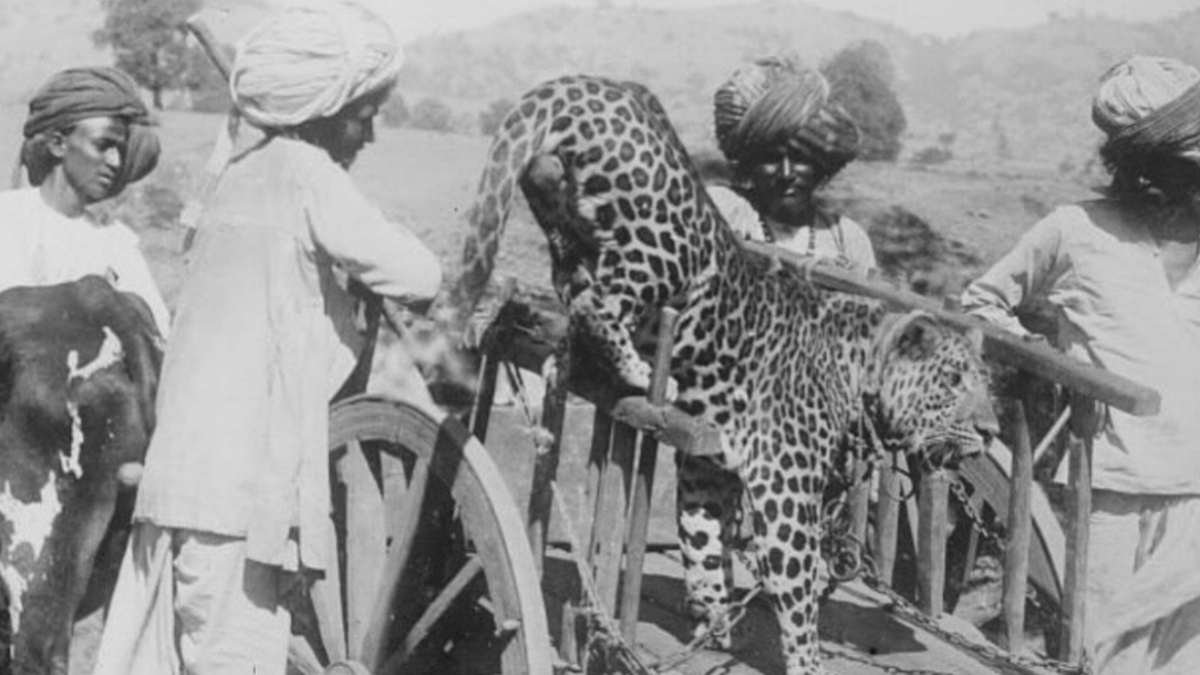
Long ago, cheetahs lived in India, but people hunted them too much and took away their homes, so the cheetahs disappeared from India.
By the 1950s, people thought there were no cheetahs left in India.
Many years later, leaders decided to bring cheetahs back.
In 2022, eight cheetahs flew on a big plane from Namibia to India.
The Prime Minister of India, Narendra Modi, helped release the first one into a special safe area.
A few months later, twelve more cheetahs came from South Africa.
The cheetahs were kept in a big fenced area where deer were already living, so they could learn to hunt again.
Some cheetah cubs were born, but sadly three of them died because of the very hot weather.
Not everyone thinks the plan will work—some people say India has too many leopards and not enough open grassland for cheetahs.
Scientists and forest workers are watching the cheetahs carefully to see if the plan succeeds.

Cheetahs were believed extinct in India by the late 1950s after centuries of hunting, prey depletion, and habitat loss.
On 17 September 2022, eight cheetahs from Namibia landed at Gwalior's Maharajpura IAF airbase and were flown to Kuno Palpur, where PM Narendra Modi released the first one.
Twelve more cheetahs from South Africa arrived in India on 18 February 2023.
As of 8 June 2023, there were 17 adult cheetahs, though three of four cubs born in March died due to the heat in Kuno.
The Government of India spearheaded the reintroduction from 2009, but some conservationists argue India has no suitable habitat for cheetahs.
- Who
- Prime Minister Narendra Modi, the Government of India, the Madhya Pradesh Forest Department, and conservationists such as M.K. Ranjitsinh and Jairam Ramesh.
- What
- The reintroduction of cheetahs to India, a species believed extinct in the country for about 70 years.
- Where
- Kuno Palpur Wildlife Sanctuary in Madhya Pradesh, after the first batch landed at Gwalior's Maharajpura IAF airbase.
- When
- The first eight cheetahs arrived on 17 September 2022; a second batch arrived on 18 February 2023; population status reported as of 8 June 2023.
- Why
- To restore a species eliminated from India by overhunting, loss of prey, and habitat destruction.
Reintroduction supporters
Project critics
Suitability of Indian habitat
Reintroduction supporters
Surveys identified potential cheetah habitats such as Kuno Palpur, Gandhi Sagar, Nauradehi, and the Shahgarh landscape, and released cheetahs into a managed enclosure.
Project critics
Opposing conservationists believe there is no suitable habitat—vast scrub and grassland with abundant prey such as blackbuck and chinkara—for cheetahs in present-day India, noting that past records show no place where cheetahs and leopards occurred together.
Using African cheetahs
Reintroduction supporters
Val Geist and Stephen J. O'Brien vouched that there is no difference between African and Asiatic cheetahs, so African cheetahs are a valid choice.
Project critics
There were considerable objections to bringing Southeast African cheetahs from Namibia and South Africa, which were not considered seriously.
Whether cheetahs are native to India
Reintroduction supporters
Chavda and Ranjitsinh countered arguments against the cheetah's nativity, supporting the reintroduction.
Project critics
Thapar et al. (2013) argued that cheetahs and lions are not native to India and were only imported by royalty.
Key facts
- First batch
- 8 cheetahs from Namibia (5 females, 3 males), arrived 17 September 2022
- Second batch
- 12 cheetahs from South Africa, arrived 18 February 2023
- Release site
- Kuno Palpur Wildlife Sanctuary, Madhya Pradesh
- Acclimatization enclosure
- 6 sq. km with nearly 250 introduced chital
- Adult cheetahs as of 8 June 2023
- 17
- Cubs born
- 4 in March 2023; 3 died due to heat
- Deaths
- 2 females and 1 male cheetah died
- First cheetah released by
- Prime Minister Narendra Modi
Sources
Related news
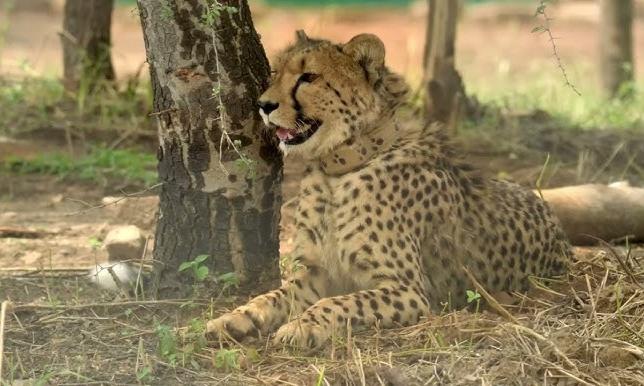
Project Cheetah Expands Madhya Pradesh Habitats To Build Metapopulations

Kuno’s Future Cheetahs May Roam Without Radio Collars
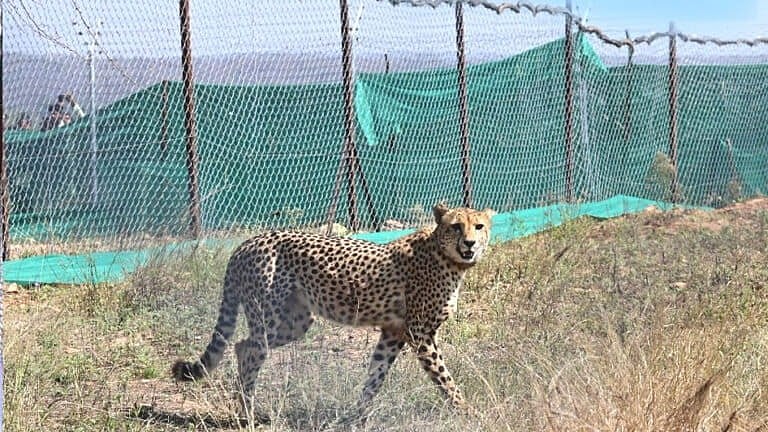
Zambia Adopts Kuno’s Cheetah Conservation Model With Soft Release
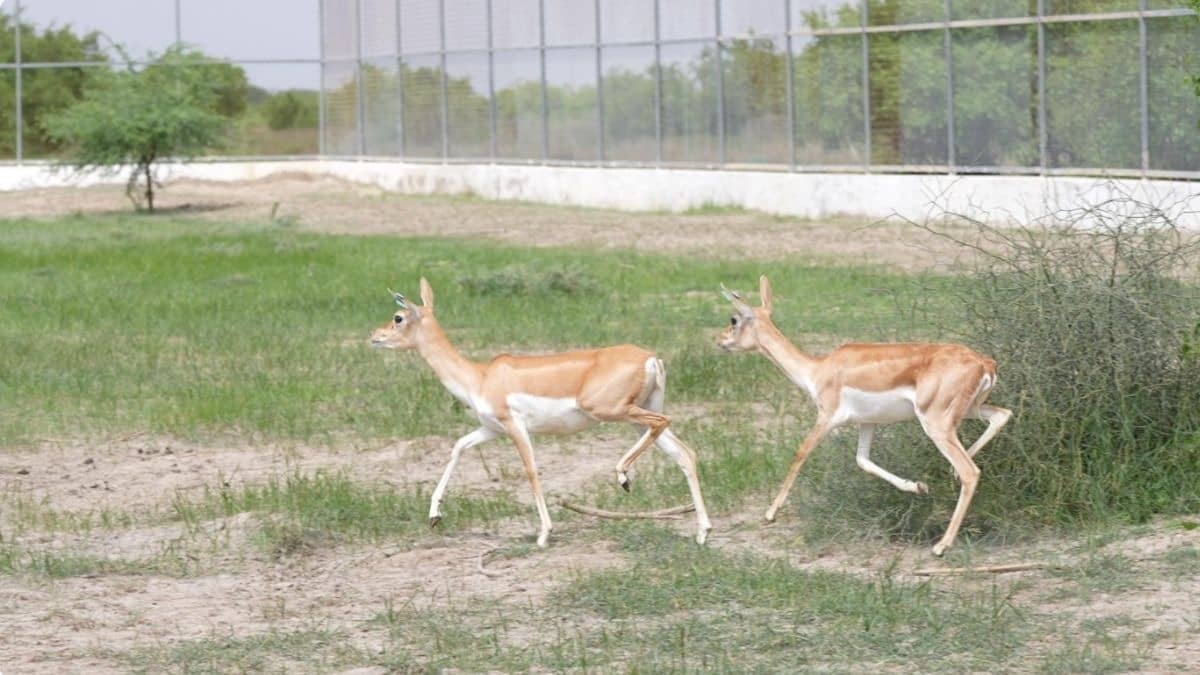
20 Blackbucks Rewilded in Banni Grassland to Restore Native Wildlife
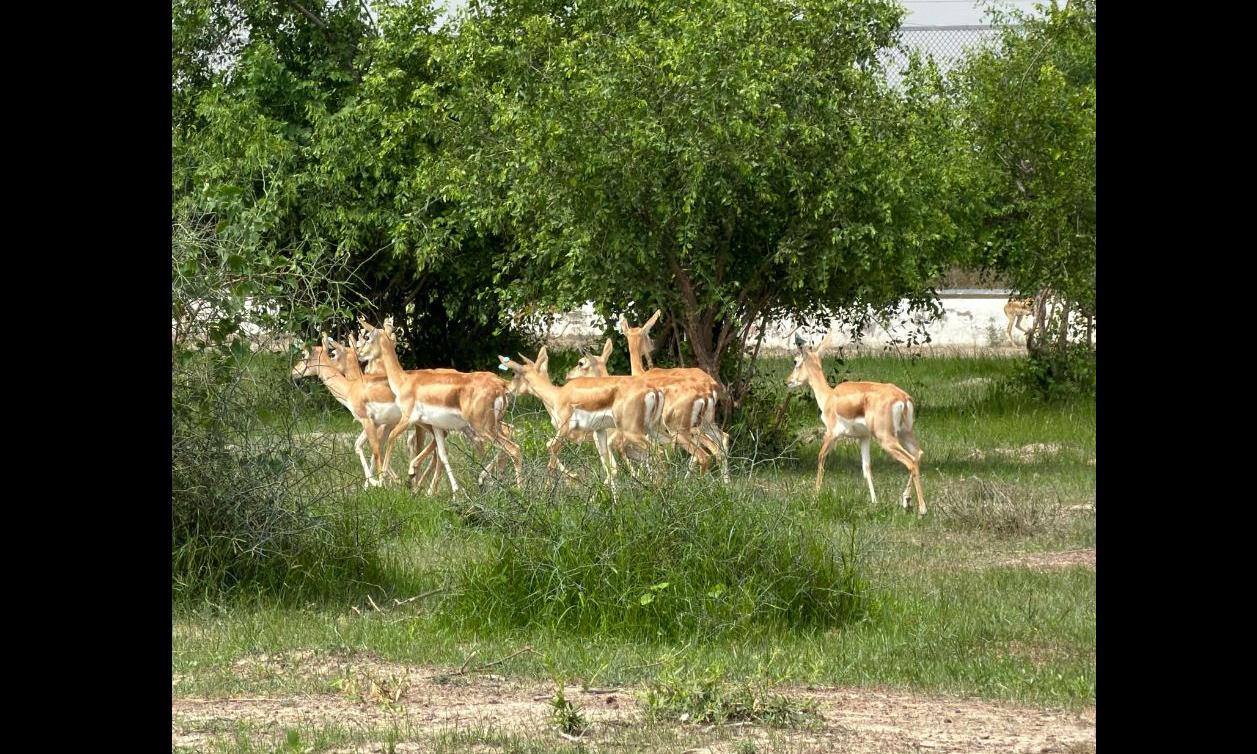
Gujarat releases 20 blackbucks in Banni Grasslands on Independence Day

Cheetah Nirva Missing From Monitoring System At Kuno Park

Two Women Allegedly Assault Colleague In Gwalior Street Fight

Supreme Court Quashes FIRs Against 15 CJP Activists
Bhopal GRP Recovers ₹62.26 Lakh in Train Theft Crackdown

Four Killed, Two Critically Injured in Ashoknagar Bike Crash

MP IPS Transfer List Held Up Over Harda, Narmadapuram Dispute
