2 weeks ago
Small Finance Bank vs Corporate FD: Higher Returns, Higher Risk
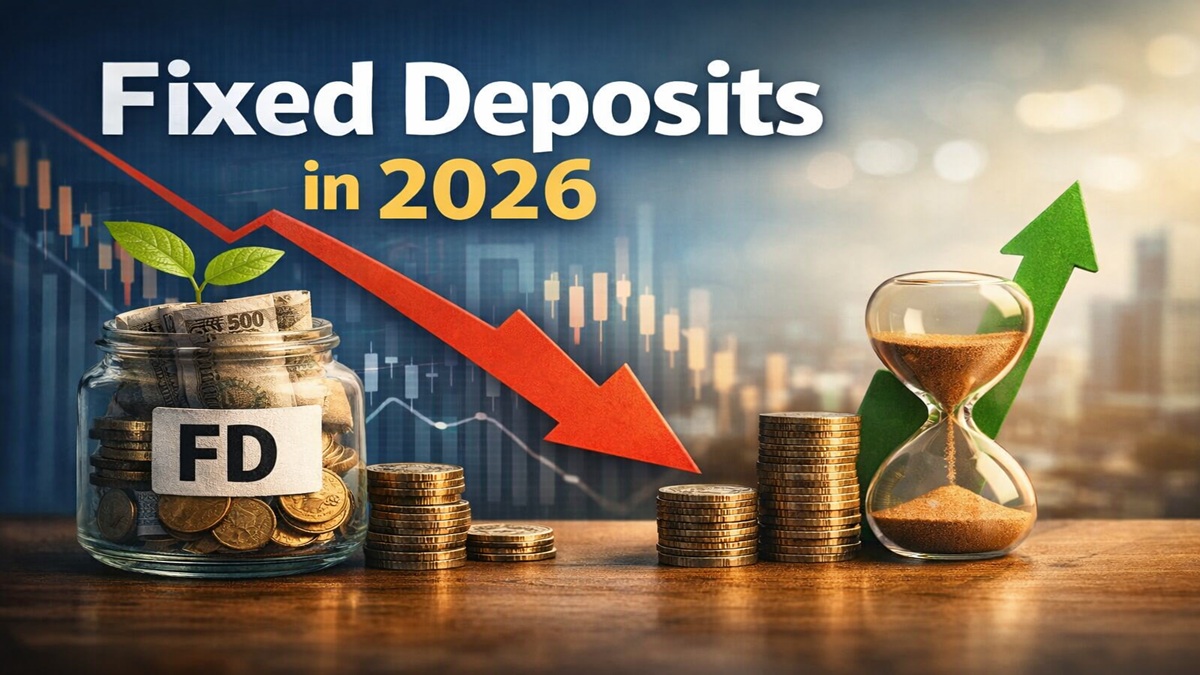
A fixed deposit is when you promise to keep your money with a bank or a company for a set time, and they pay you interest as a thank you.
Some smaller banks and companies offer bigger interest rates to attract your money, like a shop offering a bigger discount.
But a bigger reward usually comes with a bigger catch: more risk.
Money kept in small finance banks is protected by special insurance up to Rs 5 lakh, so your savings are safe up to that amount even if the bank has problems.
Money given to companies through corporate fixed deposits has no such protection.
If the company gets into trouble, you may lose some or all of your money.
That is why investors must check how strong and trustworthy a company is before lending it their savings.
Senior citizens often prefer the safer option because they need steady income, while others may accept more risk to earn more.
The best choice depends on your own need for safety, income, and higher returns.

Small finance bank (SFB) and corporate fixed deposits typically offer higher interest rates than traditional bank deposits, but carry additional risk.
SFB deposits are RBI-regulated and covered by DICGC insurance up to Rs 5 lakh per depositor per bank, including principal and interest.
Corporate FDs are not covered by DICGC insurance, so repayment depends on the issuing company's financial strength and credit rating.
The top SFB rates for non-senior citizens were 8.10% (Suryoday, Utkarsh), while senior citizens could earn up to 8.50% (Equitas, Shivalik).
Adhil Shetty, CEO of BankBazaar, said investors should weigh extra returns against credit risk, liquidity, and tenure, noting that senior citizens may prioritise safety.
- Who
- Indian investors, especially senior citizens, comparing small finance bank and corporate fixed deposits; Adhil Shetty, CEO of BankBazaar, is quoted on the decision.
- What
- A comparison of interest rates, returns, and risks between small finance bank FDs and corporate FDs, including differences in deposit insurance coverage.
- Where
- India.
- When
- Interest rate data as of 12 August 2026.
- Why
- To help investors understand that higher returns come with additional credit risk and to guide choices based on safety, income, liquidity, and tenure.
Safety-First Approach
Higher-Returns Approach
Deposit protection
Safety-First Approach
SFB FDs are the safer choice because DICGC insures principal and interest up to Rs 5 lakh per depositor per bank.
Higher-Returns Approach
Corporate FDs are uninsured but can offer higher returns depending on the issuer, which some investors find worth the extra credit risk.
Investor profile
Safety-First Approach
Senior citizens should prioritise safety and steady income when choosing between SFB and corporate FDs.
Higher-Returns Approach
Investors with more flexibility can take on credit risk and chase higher yields, and a mix of both options can suit their needs.
Key facts
- Highest SFB FD rate (non-senior)
- 8.10% (Suryoday Small Finance Bank, Utkarsh Small Finance Bank)
- Highest SFB FD rate (senior citizen)
- 8.50% (Equitas Small Finance Bank, Shivalik Small Finance Bank)
- Highest corporate FD rate
- 8.95% (Muthoot Capital Services Ltd., 36 months)
- SFB deposit insurance
- DICGC coverage up to Rs 5 lakh per depositor per bank (principal and interest)
- Corporate FD insurance
- Not covered by DICGC; repayment depends on the issuer
- AAA-rated corporate FD example
- Shriram Finance 7.50% p.a. (ICRA/CARE/CRISIL AAA/Stable)
- Rates source
- Paisabazaar
- Data as on
- 12 August 2026
Quotes
Adhil Shetty
CEO of BankBazaar
“"Investors should weigh the extra return against the credit risk, liquidity and tenure before choosing between these options. For both senior and non‑senior investors, the choice between SFB and corporate FDs should reflect their need for safety, income, liquidity and returns."”
 financialexpress.com
Sources
Related news

Small Finance Bank FDs Offer More, But Carry Added Risk

Small Finance Bank FDs Offer Higher Rates, But Risks Matter

Senior Citizen FD Rates: These Banks Offer Up to 8.50%

SBI FD vs small finance banks: ₹8,250 extra per year

Senior Citizens Can Earn Up to 8.5% on Five-Year FDs

Senior Citizen FD Rates Up to 8.30% in August 2026

Muthoot Fincorp Files ₹3,000 Crore IPO Draft with SEBI

Navi mulls Rs 3,000 crore IPO at $2 billion valuation
NBFC FD Rates 2026: Muthoot Capital, Manipal Lead At 8.50%
No hike, no panic: RBI holds rates, raises GDP forecast