

2 days ago
Bihar Targets Massive Solar Investment Amid Energy Crisis
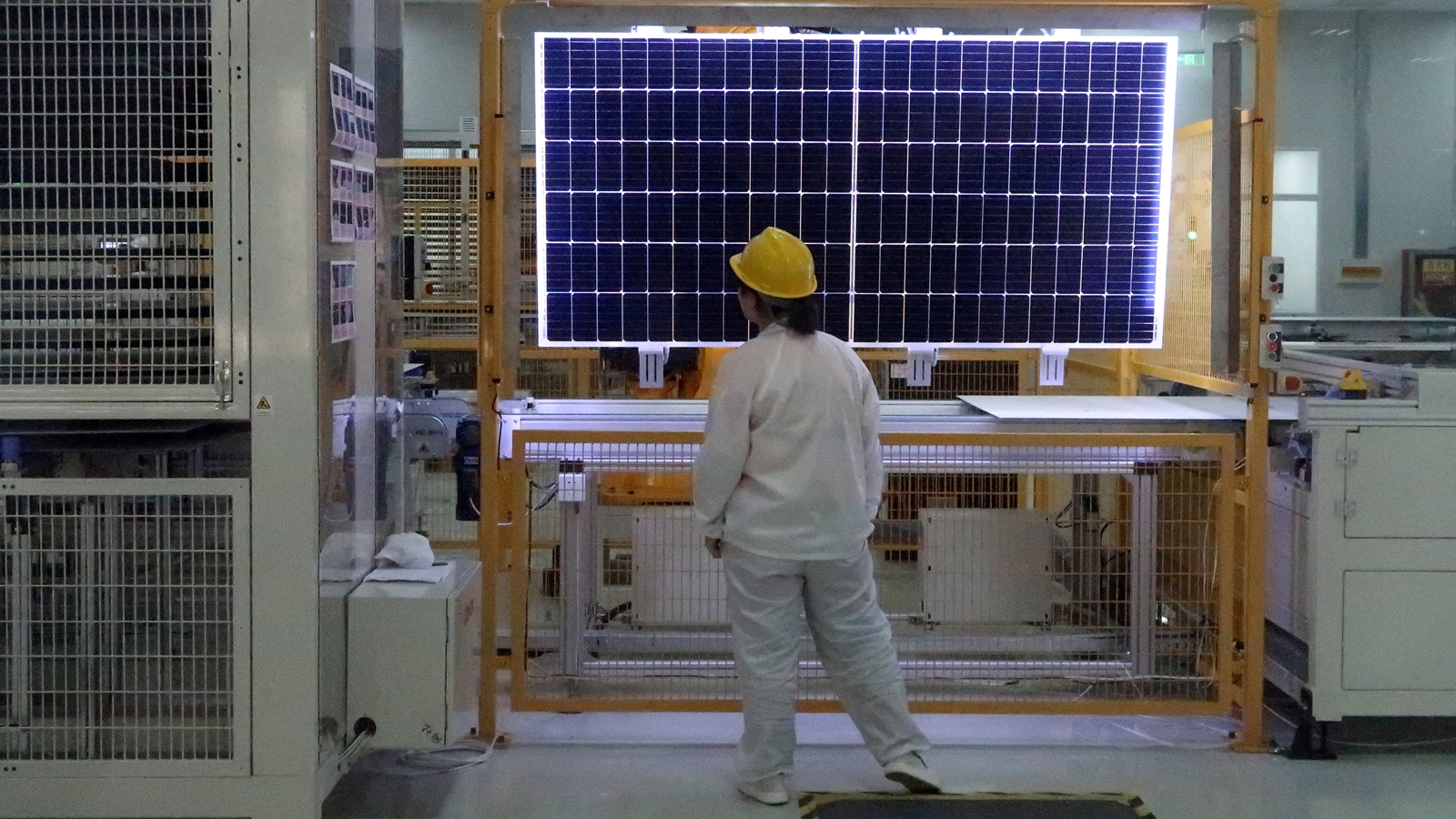
Bihar needs much more electricity than it can produce itself.
In summer, people may need up to 9,500 megawatts, while the state can generate only 550 megawatts.
It buys much of its electricity from elsewhere, which is expensive.
Bihar plans to invest ₹1.38 lakh crore in its energy system over the next five years.
Much of this money will support solar power and energy-storage projects.
By 2030, the state wants 24 gigawatts of renewable energy and 6 gigawatt-hours of storage.
One major project at Kajra will use solar panels and large batteries.
Solar is also being added to government buildings, farms, homes, and villages.
Officials say the plan reflects both rising demand and improving finances in the power sector.

Bihar plans ₹1.38 lakh crore in energy investments over five years, focused heavily on renewables.
The state aims for 24 GW of renewable capacity and 6 GWh of storage by 2030.
Bihar’s daily electricity demand reaches 9,500 MW in summer, versus only 550 MW of own generation capacity.
The Kajra project will combine 301 MW of solar power with a 523 MWh battery system.
Officials cite a financial turnaround, while the state still faces high power-purchase costs and free-power expenses.
- Who
- The Bihar government, Bihar State Power Holding Company Limited, and state energy officials.
- What
- A ₹1.38 lakh crore five-year investment plan centered on renewable energy, especially solar power and storage.
- Where
- Across Bihar, including projects in Lakhisarai and Aurangabad, as well as government buildings, homes, farms, and rural feeders.
- When
- The investments are planned over the next five years, with renewable-energy targets set for 2030.
- Why
- To meet rapidly rising electricity demand, reduce dependence on externally purchased power, and expand clean-energy capacity.
Fiscal-pressure interpretation
Official turnaround interpretation
Reason for the solar push
Fiscal-pressure interpretation
Bihar’s energy finances remain strained: electricity purchases cost ₹25,000 crore–₹35,000 crore annually, while free-power subsidies add ₹3,800 crore.
Official turnaround interpretation
Energy officials say the clean-power strategy is being driven by a sharp financial turnaround in the state’s energy utilities, not only by fiscal pressure.
Purpose of investment
Fiscal-pressure interpretation
Expanding local generation could reduce Bihar’s reliance on expensive power purchased from outside the state.
Official turnaround interpretation
The investment is also intended to prepare for electricity demand projected to exceed 11,700 MW by 2030 and to modernize generation, transmission, and distribution.
Key facts
- Planned investment
- ₹1.38 lakh crore over the next five years
- 2030 renewable target
- 24 GW
- 2030 storage target
- 6 GWh
- Current demand
- Average daily demand is 7,300–7,400 MW, rising to 9,500 MW in summer
- State-owned generation
- 550 MW
- Kajra project
- ₹2,866 crore project combining 301 MW of solar power with a 523 MWh battery system
- Power-purchase spending
- The state spends ₹25,000 crore–₹35,000 crore annually buying power from outside sources
Quotes
Senior energy department official
A senior Bihar energy department official speaking to The Indian Express
“The focus on clean power comes amid a sharp financial turnaround across the state’s energy utilities.”
 indianexpress.com
Sources
Related news
Tata Power's Rs 1.25 Lakh Crore Green Expansion Challenge
Karnataka Targets 66 GW Power Capacity With Green Expansion
Karnataka Targets 66 GW Capacity, Seeks Rs 3 Lakh Crore

Naidu sets Rs 4 power cost target by 2029

SJVN Commissions 75 MW Jamui Solar Power Project in Bihar

Bihar Police Arrest Man for Impersonating Union Minister's Private Secretary
Bihar's Anti-Encroachment Drive Sparks Political Row

Bihar Deputy CM Vijay Sinha Accuses RJD MLC of Drunkenness; RJD Claims Breath Test Cleared Him

Prashant Kishor Criticizes Bihar Govt After Deputy CM's Convoy Attacked
