1 week ago
Maharashtra Makes Marathi Skills Compulsory for Auto, Taxi Drivers
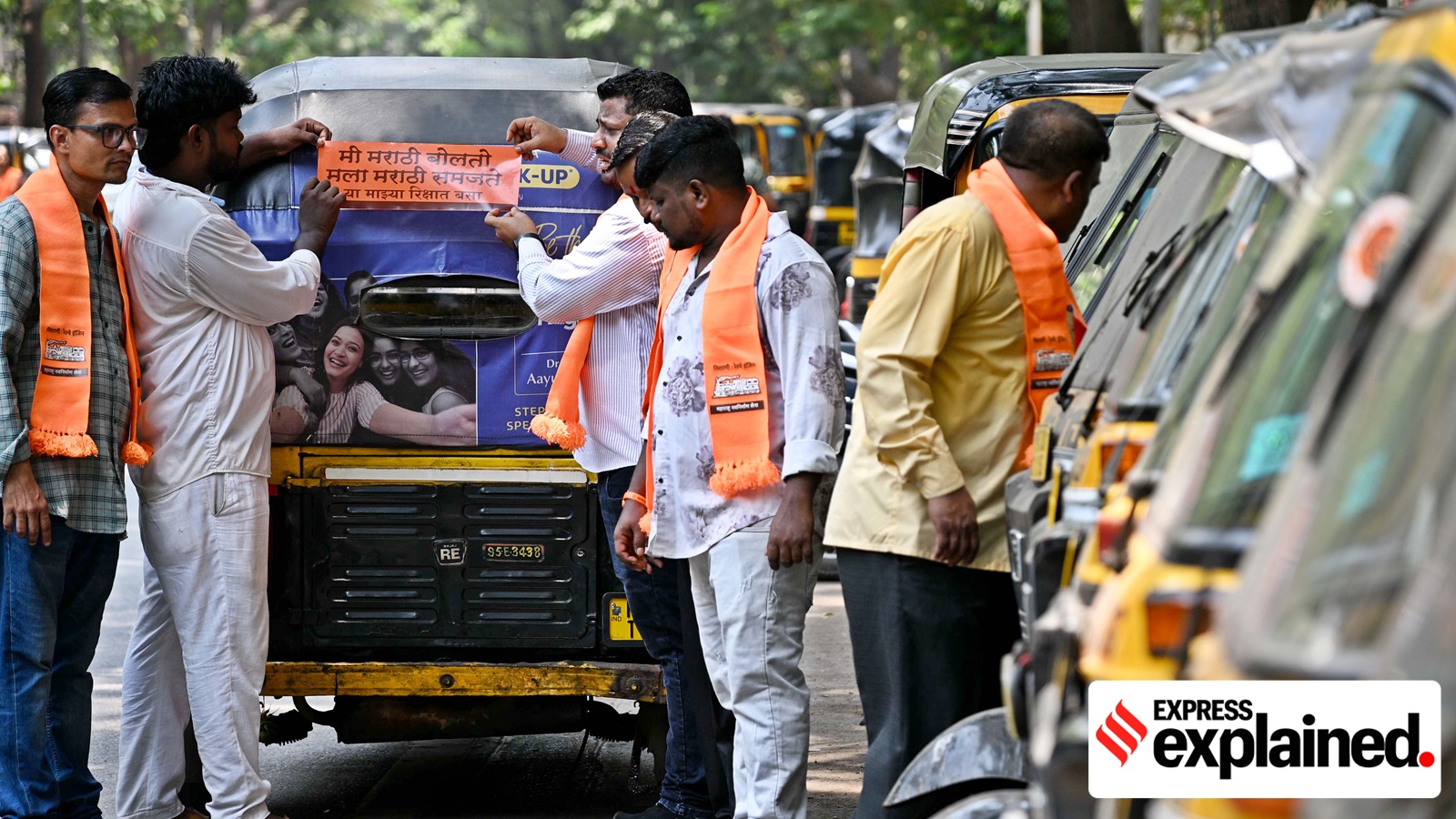
Maharashtra now says auto-rickshaw and taxi drivers must understand basic Marathi.
The government says this helps drivers communicate with passengers.
Training began on May 1 and lasted 105 days.
Teachers gave drivers lessons about destinations, fares, directions and everyday questions.
In Mumbai, thousands of drivers still need to pass or finish the training.
Drivers will first receive a notice and one month to improve their Marathi.
Their badges and licences could later be suspended if they do not comply.
Driver unions worry that migrant and older workers could lose their livelihoods.
The government says it is enforcing rules, but the Bombay High Court had rejected a similar permit requirement in 2017.

Maharashtra is enforcing Marathi proficiency for auto-rickshaw and taxi drivers across the state.
A 105-day training and assessment campaign began on May 1 across 59 transport and language-training centres.
In Mumbai, 7,750 drivers failed assessments and more than 14,000 had not completed training.
The government says Marathi helps drivers understand passengers, while unions fear penalties could harm migrant workers.
The Bombay High Court rejected a similar permit requirement in 2017, creating questions about the current legal basis.
- Who
- The Maharashtra Transport Department, auto-rickshaw and taxi drivers, driver unions, and the Bombay High Court are central to the issue.
- What
- The government is making basic Marathi proficiency a condition for drivers’ authorisations, permits, renewals or related badges.
- Where
- The campaign was conducted across 59 RTOs, sub-RTOs and language-training centres in Maharashtra, including Mumbai and Thane.
- When
- Training and assessments ran for 105 days beginning May 1; certificates were presented on August 17. The earlier court ruling came in 2017.
- Why
- The government says drivers need to understand passengers and communicate in Marathi, while unions say enforcement could disproportionately affect migrant drivers and their livelihoods.
Government’s Position
Drivers’ and Legal Concerns
Need for Marathi proficiency
Government’s Position
The Transport Department says drivers interact with passengers throughout the day and must understand destinations, directions, fares and other basic instructions in Marathi.
Drivers’ and Legal Concerns
Driver groups do not necessarily oppose learning Marathi, but argue training should be prioritised over penalising workers who depend on their licences.
Effect on workers
Government’s Position
The government is applying the requirement through training, assessments, notices and opportunities to improve before suspension.
Drivers’ and Legal Concerns
Unions say the condition could disproportionately affect migrant drivers and older workers with limited formal education, potentially threatening their livelihoods.
Legal authority
Government’s Position
Transport officials say the current exercise enforces existing rules, distinguish permits from PSV badges, and note that amendments to Rules 4, 78 and 85 formalised Marathi proficiency requirements.
Drivers’ and Legal Concerns
The Bombay High Court ruled in 2017 that Rule 24 could not impose Marathi proficiency for an autorickshaw contract-carriage permit because motor cabs were excluded from its language provisions, raising questions about the current enforcement.
Key facts
- Training period
- 105 days, beginning May 1
- Coverage
- 59 RTOs, sub-RTOs and language-training centres
- Mumbai assessment results
- 7,750 drivers failed and more than 14,000 had not completed training
- Training providers
- More than 4,500 teachers from the Konkan Marathi Sahitya Parishad and Mumbai Marathi Sahitya Sangh
- Mumbai permits
- More than 2.8 lakh autorickshaw permits and around 20,000 taxi permits
- Initial penalty process
- Drivers receive notice and one month to learn Marathi before possible suspension
- Potential sanctions
- A PSV badge and driving licence may be suspended for three months; repeated violations could lead to permanent suspension
- Legal background
- The Bombay High Court set aside a similar Marathi permit requirement in 2017
Sources
Related news

Maharashtra to Strictly Enforce Marathi Rule for Auto, Taxi Drivers
Maharashtra Gives Auto, Cab Drivers One Year to Learn Marathi
Maharashtra Notices 1,268 Taxi, Auto Drivers Over Marathi
Maharashtra Auto, Taxi Drivers Protest Marathi Licensing Rule

Maharashtra RTO Enforces Marathi Checks for Auto, Taxi Drivers

Maharashtra makes Marathi knowledge mandatory for taxi, app drivers

Stocks to Watch Thursday as Key Corporate Developments Drive Focus
Jarange Accuses Maharashtra Government of Inciting Riots During Fast
Mumbai Trains Election Officials Amid Statewide Electoral Roll Revision

Bombay Gymkhana Squash Finals Set After Junior Semifinals
NMMC Launches Navi Mumbai Drive to Protect Existing Trees