

1 hr ago
UN Diplomats Invoke Gandhi’s Non-Violence Message Amid Global Challenges
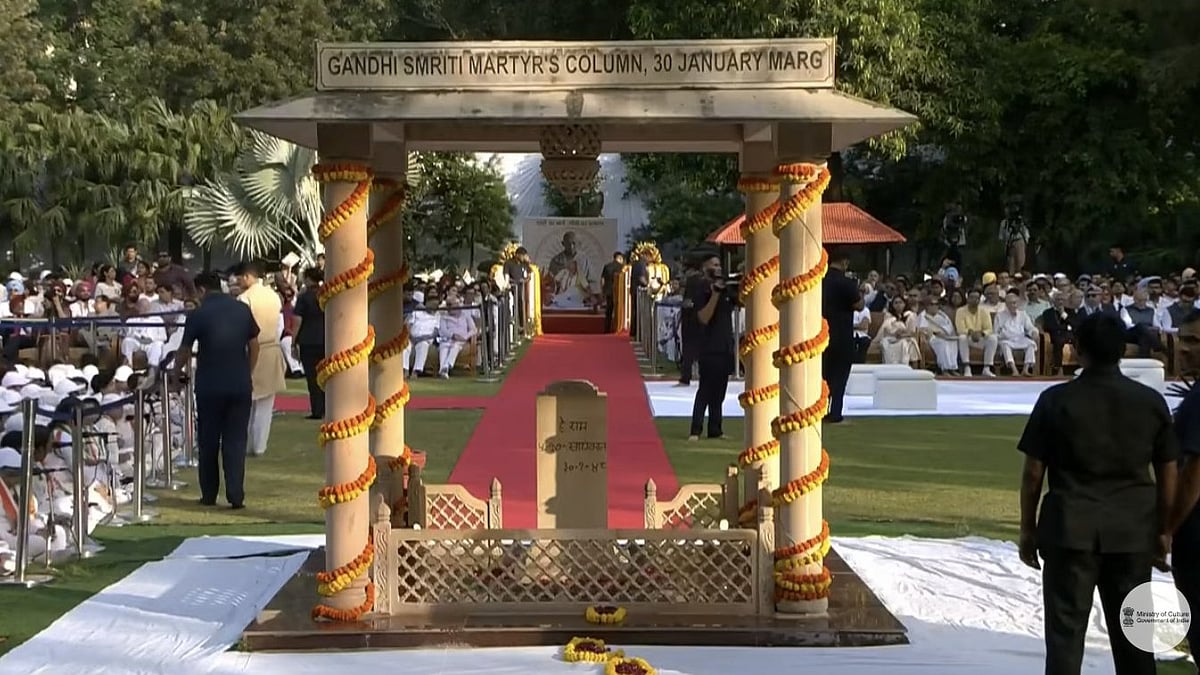
Diplomats met at the United Nations on October 2 to remember Mahatma Gandhi and his teachings about non-violence.
Gandhi believed that choosing peace could require great courage and discipline.
The United Nations made his birthday the International Day of Non-Violence in 2007.
India’s representative shared the story of pilot Smit Machchhar, who helped protect passengers after being attacked.
Diplomats from Uruguay discussed peaceful protests by people searching for relatives who disappeared under dictatorships.
South Africa’s representative said Gandhi’s ideas influenced resistance to apartheid.
Russia’s representative recalled Gandhi’s connection with writer Leo Tolstoy.
The speakers said Gandhi’s ideas can still help people face difficult problems today.

Diplomats commemorated Mahatma Gandhi’s birth anniversary and the International Day of Non-Violence at the United Nations on October 2.
Morocco’s Omar Hilale described non-violence as an active force requiring discipline, courage and faith in humanity.
India’s P. Harish cited wounded pilot Smit Machchhar’s actions during an apparent Flydubai hijacking attempt as an example of ahimsa.
Representatives from Uruguay and South Africa highlighted non-violent resistance in struggles against dictatorships, apartheid and racial legislation.
Russia’s Maria Zabolotskaya recalled Gandhi’s anti-colonial work and his intellectual connection with Leo Tolstoy.
- Who
- United Nations diplomats, including representatives from Morocco, India, Uruguay, South Africa and Russia, commemorated Mahatma Gandhi.
- What
- They discussed Gandhi’s message of non-violence and its relevance to contemporary global challenges.
- Where
- The United Nations complex.
- When
- October 2, Gandhi’s birth anniversary and the International Day of Non-Violence.
- Why
- To commemorate Gandhi and highlight how non-violent principles have influenced humanitarian, anti-colonial and liberation struggles.
Key facts
- Date
- October 2
- Occasion
- International Day of Non-Violence
- United Nations resolution
- The observance was established in 2007 through a resolution sponsored by 141 countries.
- Indian example
- Pilot Smit Machchhar was cited for protecting passengers after suffering stab wounds during an apparent hijacking attempt.
- South African connection
- Gandhi developed his philosophy of Satyagraha during 21 years in South Africa.
- Moroccan representative
- Omar Hilale described non-violence as an active force requiring discipline and courage.
Quotes

Omar Hilale
Morocco’s Permanent Representative to the United Nations
“Non-violence, in his understanding, is an active force. It demands discipline, courage and an unshakable faith in the humanity of the other.”
 freepressjournal.in

Laura Dupuy Lasserre
Uruguay’s Permanent Representative to the United Nations and chair of the G77
“Gandhi demonstrated that non-violence is not a sign of weakness or passivity, but an expression of courage.”
freepressjournal.in

Mxolisi Sizo Nkosi
South Africa’s Permanent Representative to the United Nations
“the principles of non-violence and peaceful coexistence resonate deeply with our own historical journey from apartheid to constitutional democracy”
freepressjournal.in
Sources
Related news
International Day of Non-Violence Honors Gandhi’s Peaceful Legacy
MIT-WPU Highlights Gandhi’s Message of Peace and Non-Violence

Gandhi Jayanti 2026: India Honors Gandhi With Wishes, Quotes
India Honors Gandhi and Shastri With Tributes, Cleanliness Drives
Gandhi Jayanti 2026 Honors Legacy Of Truth And Nonviolence
Finland’s Stubb Quotes Gandhi, Urges Defense of International Law
Centre Approves Classical Marathi Studies Hub at Pune's Deccan College

BC Groups Seek Constitutional Amendment After Local Quota Ruling
BJP Leaders Urge Wider Promotion of Swadeshi Products

Flydubai Pilot Says Hanuman Chalisa Gave Courage During Confrontation
