2 hrs ago
Why Humanities Belong in India’s Engineering Institutes
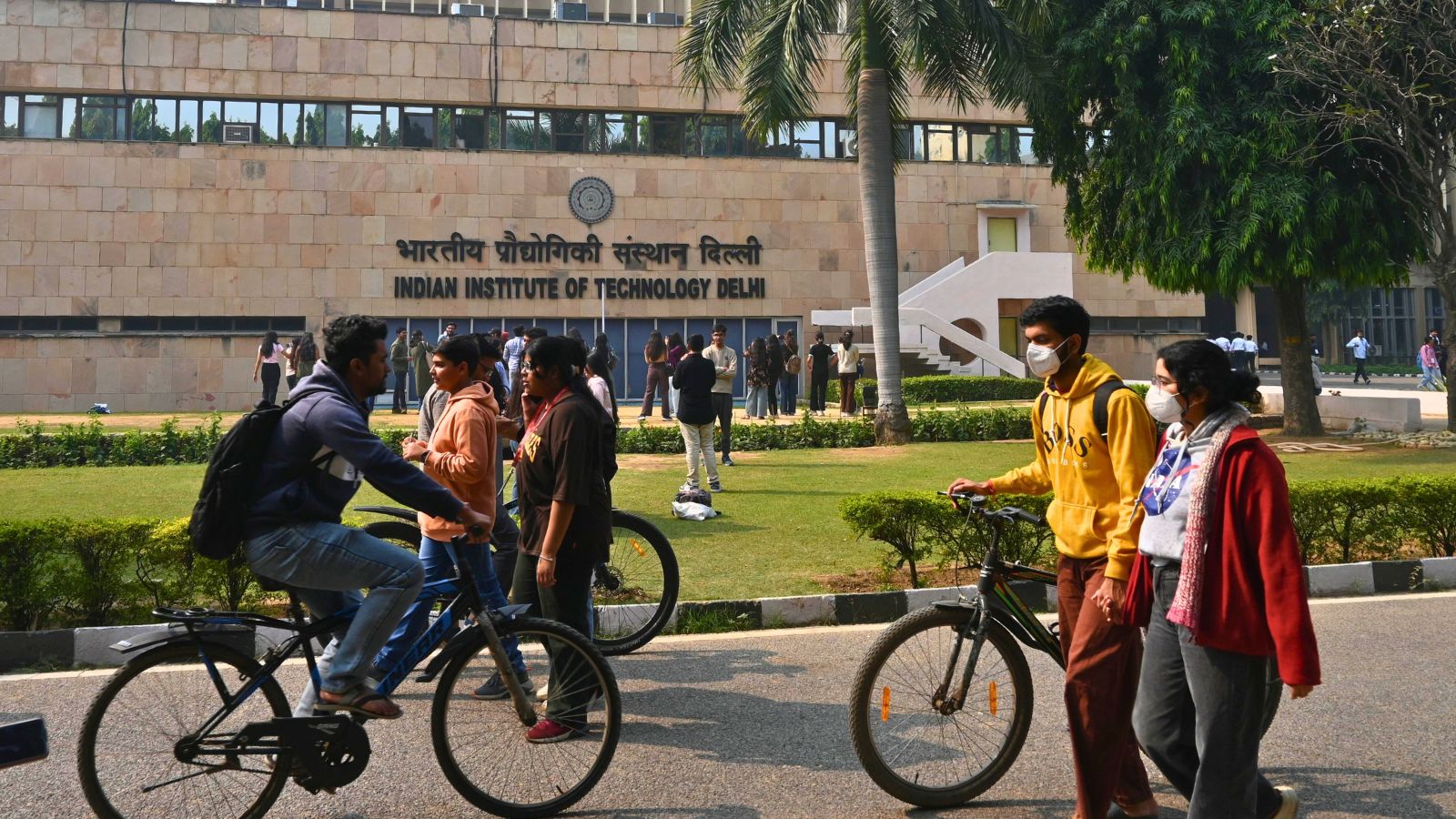
Engineers learn how to design and build things.
The author says they should also learn to think about how those things affect people.
For example, a computer can follow a rule, but people still need to decide whether the rule is fair.
Humanities subjects such as philosophy, history, and sociology help students examine these choices.
The author says the IITs were meant to offer a broad education, not only technical training.
Indian law and the National Education Policy also provide for arts and humanities in technical education.
Students should have a chance to study these subjects even if they did well on exams focused on science and maths.
The author wants teachers from different fields to work together.
He believes universities should let scholars investigate important questions, even when the answers have no immediate technical use.

A philosophy professor at IIT Gandhinagar argues that engineering education should include humanities and social sciences.
He says technical tools cannot by themselves settle questions about justice, social priorities, or the purposes behind a problem.
The article notes that the 1948 Sarkar Committee report envisioned humanities instruction alongside scientific training at the IITs.
It cites the Institutes of Technology Act, 1961, and National Education Policy 2020 as supporting arts and humanities in technical institutions.
The author calls for interdisciplinary teaching and independent humanities research, not merely courses justified by their usefulness to engineers.
- Who
- Jaison Manjaly, Professor of Philosophy and Cognitive Science at IIT Gandhinagar, argues for humanities in engineering education.
- What
- An opinion article makes the case for humanities and social sciences as part of a broad education at the IITs.
- Where
- The Indian Institutes of Technology, with examples from IIT Gandhinagar and IIT Madras.
- When
- The article refers to the 1948 Sarkar Committee report, the Institutes of Technology Act of 1961, and the National Education Policy 2020.
- Why
- The author argues that engineering involves assumptions and choices about knowledge, justice, social needs, and progress that technical methods alone cannot resolve.
The case for humanities
Concerns about humanities in engineering
Relevance to engineering education
The case for humanities
The author argues that engineers make decisions involving fairness, social priorities, and the definition of problems, so humanities and social sciences can help examine those decisions.
Concerns about humanities in engineering
The article describes a common question about why engineering students should study subjects outside their specialization, especially after intensive preparation focused on entrance-exam subjects.
How humanities should be justified
The case for humanities
The author says humanities deserve space even when they have no immediate technical application, and that their research should be intellectually independent.
Concerns about humanities in engineering
A common defense, as described in the article, is to show how humanities courses are useful to engineers; the author argues that this should not be the only basis for their place in the curriculum.
Key facts
- Author
- Jaison Manjaly
- Author's institution
- Indian Institute of Technology Gandhinagar
- Author's fields
- Philosophy and Cognitive Science
- Historical reference
- The 1948 Sarkar Committee report included humanities instruction in plans for higher technical institutions.
- Legal reference
- Section 6(1)(a) of the Institutes of Technology Act, 1961, provides for instruction and research in engineering, technology, sciences, and arts.
- Policy reference
- The National Education Policy 2020 envisages greater emphasis on arts and humanities in engineering institutions, including IITs.
- Example cited
- The author describes seeing engineering discussed alongside sociology and history at a Collaboratory at Olin College of Engineering.
Sources
Related news

Engineering Degrees Expand Beyond Traditional Branches in AI Era
Governor urges India’s young engineers to cross academic boundaries
AI Navier-Stokes Claim Challenges Universities to Raise Ambitions

Engineers’ Roles Shift as AI Elevates Human Judgement

Future Engineers Need Coding, Critical Thinking, and Adaptability
Viral 1954 Photo Claims To Show IIT Kharagpur Students

Higher Education Reimagines Learning for an AI-Integrated Workforce

Radhakrishnan Urges Wider Access to India’s Ancient Knowledge
Jadavpur University Convention Sparks Row Over Outside Political Speakers
Madhya Pradesh Teachers Told to Finish Syllabus Before Census Duty