

3 weeks ago
FMCG drives Kolkata warehousing growth in first half of 2026
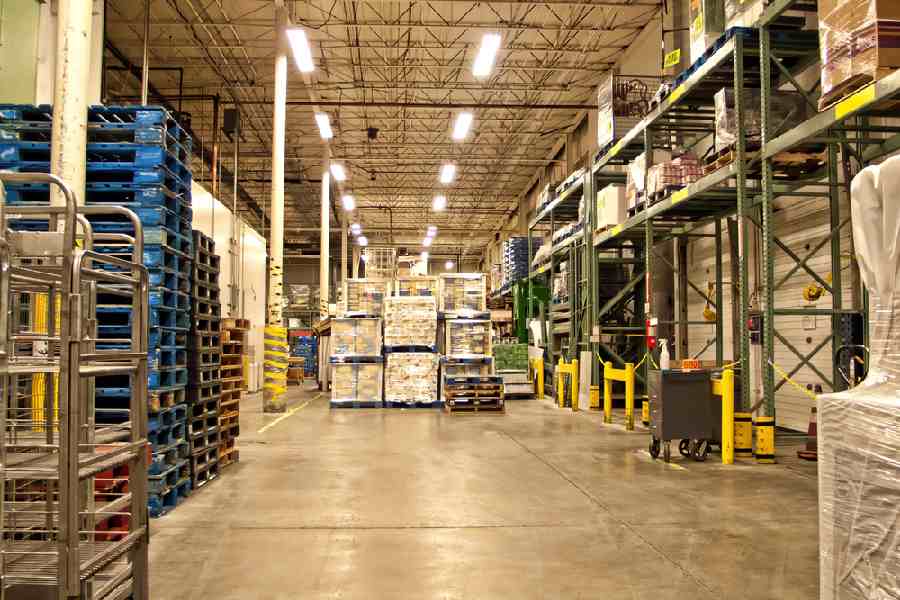
Kolkata is a big city in India where many goods are bought, sold, and delivered.
Companies that make everyday products like food and drinks need warehouses, which are big buildings where items wait before going to shops.
In the first half of 2026, companies rented much more warehouse space in and around Kolkata.
A property company called CBRE reported that the space taken up grew by 69 percent compared with the same time last year.
Makers of food and drinks rented four times more space than before.
Most of the warehouses are built along two highways near the towns of Dankuni and Hooghly.
Online shopping companies also want more space so they can deliver products quickly.
The state government, led by the newly elected BJP, has promised to fix land problems so bigger warehouses can be built.
Experts think lots of new warehouse space will be ready by 2027, which could help shops get their products faster.

Warehouse and logistics demand in and around Kolkata rose 69% year-on-year to 1.8 million square feet in the first half of 2026, according to a CBRE report.
FMCG absorption quadrupled to 471,000 square feet from 115,000 square feet in H1 2025, with food and beverage players contributing 70% of segment leasing.
Nearly all (94%) of the city's grade-A warehousing stock sits along the NH-6 and NH-2 corridors through Dankuni and Hooghly.
Third-party logistics players led absorption from 2020 onwards, while e-commerce and quick-commerce firms accounted for over 80% of sector take-up in 2024-2025.
The newly elected BJP government's Bengal Budget 2026-27 prioritised land acquisition for the Eastern Dedicated Freight Corridor linking Dankuni with Ludhiana.
- Who
- FMCG companies (especially food and beverage players), e-commerce and third-party logistics firms leasing space in Kolkata; CBRE compiled the data.
- What
- Warehouse absorption rose 69% year-on-year to 1.8 million square feet in H1 2026, with FMCG take-up quadrupling to 471,000 square feet.
- Where
- Kolkata (Calcutta) and its surroundings, mainly along the NH-6 and NH-2 corridors through Dankuni and Hooghly.
- When
- First half of 2026 (January-June).
- Why
- Post-pandemic supply chain resilience strategies, surging e-commerce activity, and state government moves to ease land acquisition and build logistics infrastructure.
Key facts
- Report source
- CBRE, US-based property consultancy
- Period
- January-June 2026 (H1)
- Total absorption
- 1.8 million sq ft (up 69% year-on-year)
- FMCG absorption
- 471,000 sq ft, up from 115,000 sq ft in H1 2025
- Food & beverage share
- 70% of FMCG leasing activity
- Grade-A stock location
- NH-6 (55%) and NH-2 (39%) corridors via Dankuni and Hooghly
- Upcoming supply
- About 3 million sq ft of grade-A space expected by H1 2027
- E-commerce take-up
- Over 80% of sector leasing in 2024-2025
Quotes
Anshuman Magazine
Chairman and CEO of India, South‑East Asia, Middle East & Africa division at CBRE.
“With a strong supply pipeline, Calcutta is well placed to capture the next phase of demand from FMCG, e-commerce and third‑party logistics players, further strengthening its role in eastern India’s supply chain ecosystem,”
 telegraphindia.com
“Unlike north, south and west, we are unable to build large master warehouses, which serve as a hub for the entire region, due to paucity of land,”
telegraphindia.com
Sources
Related news

Kolkata remains Eastern India's largest industrial and logistics market hub
Quick-commerce and FMCG drive 66% rise in Delhi NCR warehousing
Mumbai, Delhi-NCR, Bengaluru Lead APAC Logistics Rental Growth

India’s Flex Workspace Boom Spreads Beyond Traditional Major Markets
