2 hrs ago
India’s Power Networks Expose Tensions Within Institutions and Politics
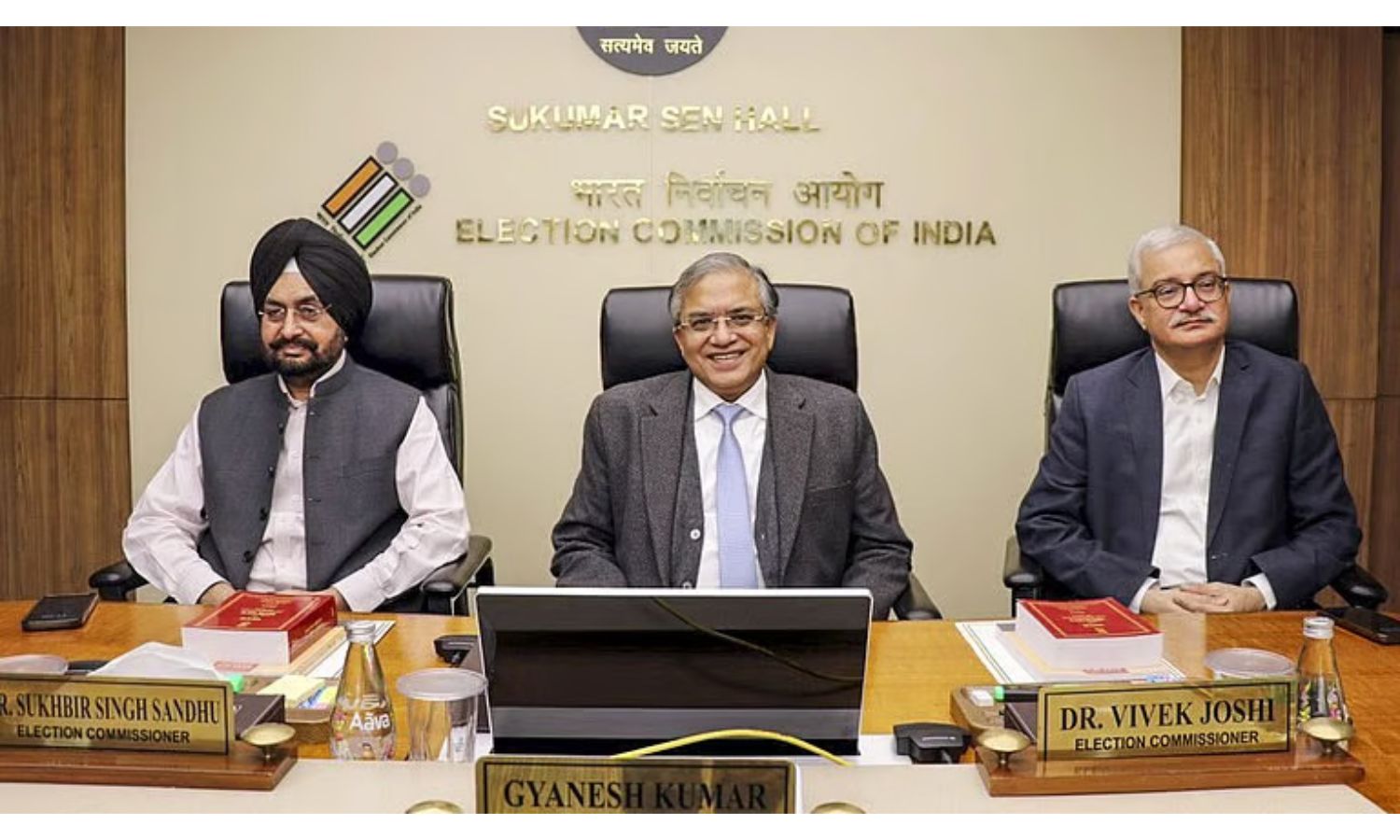
India’s Election Commission has three top members who help decide who can vote.
The article says two members disagreed with the chief commissioner over 97 voter registrations in Goa.
It also describes how political connections may have influenced some of their appointments, although some details are based on reports and beliefs.
In Gujarat, Prime Minister Narendra Modi and Home Minister Amit Shah are still very influential.
A small group of senior officials helps run the state government.
The article also says foreign diplomats are meeting Rahul Gandhi and other Opposition leaders more often.
Diplomats may be trying to maintain relationships with people who could become important later.
Overall, the article examines how institutions, politicians, civil servants, and diplomats navigate changing political power in India.

Election Commission members Gyanesh Kumar, Sukhbir Singh Sandhu, and Vivek Joshi reportedly clashed over the denial of 97 voter registrations in Goa.
The article portrays differing political associations behind the appointments of the three Election Commissioners, while noting these links are based partly on reports and perceptions.
Prime Minister Narendra Modi and Home Minister Amit Shah remain highly influential in Gujarat despite the BJP holding 162 of 182 Assembly seats.
A smaller group of senior bureaucrats, led by Chief Secretary Manoj Kumar Das, manages much of Gujarat’s administrative machinery.
Foreign diplomats have increased contacts with Rahul Gandhi and other Opposition figures amid political uncertainty, according to the article.
- Who
- Election Commission members Gyanesh Kumar, Sukhbir Singh Sandhu, and Vivek Joshi; Prime Minister Narendra Modi; Home Minister Amit Shah; Gujarat officials; Rahul Gandhi; and foreign diplomats.
- What
- The article examines disagreements within the Election Commission, political influence over appointments and Gujarat’s administration, and diplomats’ growing contacts with Opposition leaders.
- Where
- India, including the Election Commission, Goa, Gujarat, New Delhi, and diplomatic missions.
- When
- The Election Commission appointments and dispute are discussed in the context of events since March 2024; Rahul Gandhi’s reported diplomatic meetings occurred in May and September.
- Why
- The developments are presented as signs of institutional tension, competing political influence, and uncertainty about India’s future political landscape.
Institutional Autonomy
Political Influence
Election Commission disagreement
Institutional Autonomy
Sukhbir Singh Sandhu and Vivek Joshi reportedly believed that denying registrations to 97 voters in Goa crossed a constitutional boundary and challenged the commission’s autonomy.
Political Influence
Gyanesh Kumar supported the Election Commission’s decision, according to the article’s account of the dispute.
Commissioner appointments
Institutional Autonomy
The article presents the appointments as potentially reflecting political preferences, with Gyanesh Kumar reportedly associated with Amit Shah and Sandhu and Joshi viewed as possible choices of Narendra Modi.
Political Influence
The reported political associations suggest that appointments may be shaped by executive influence rather than solely by institutional considerations, though the article does not establish this as fact.
Diplomatic outreach
Institutional Autonomy
Meetings between diplomats and Rahul Gandhi may represent efforts to maintain alternate channels in case India’s political balance changes.
Political Influence
The outreach may simply reflect routine diplomatic engagement with the current Opposition leadership and does not necessarily indicate expectations of a change in government.
Key facts
- Election Commission members
- Gyanesh Kumar, Sukhbir Singh Sandhu, and Vivek Joshi
- Goa voter registrations
- The Election Commission denied registrations to 97 voters, prompting disagreement among its members.
- Gujarat Assembly
- The BJP controls 162 of Gujarat’s 182 Assembly seats.
- Gujarat administration
- Chief Secretary Manoj Kumar Das is described as working with a small group of senior officials around the state government.
- Kumar’s background
- Gyanesh Kumar is a 1988-batch Indian Administrative Service officer from the Kerala cadre.
- Diplomatic meeting
- Rahul Gandhi met the heads of mission of 27 European Union member states in May, according to the article.
- Other reported contacts
- The article mentions separate meetings involving Rahul Gandhi, Australian High Commissioner Philip Green, Russian Ambassador Denis Alipov, and reportedly United States Ambassador Sergio Gor.
Sources
Related news
Gyanesh Kumar Faces ECI Rift Over Voter Roll Decisions
Gyanesh Kumar’s Election Commission Tenure Faces Internal Dissent
Mukesh Sahani attacks CEC over electoral roll controversy

Digvijaya Singh Questions Election Commission’s Impartiality and Decisions
Venugopal Alleges Conspiracy Against Indian Democracy Over Electoral Rolls
Election Commission Rifts Reopen Debate Over Dissent and Voter Lists
Arunachal Chief Minister Frames Siang Project As National Security Initiative

Swiss President Guy Parmelin Likely to Visit India Next Week

India’s Deep-Tech Moment: 22 Projects Receive Backing Under RDI Fund
Rahul Gandhi Escalates Congress Fight Over Alleged Poll Match-Fixing