1 hr ago
Pharmacy CCTV Proposal Draws Cost and Practicality Objections

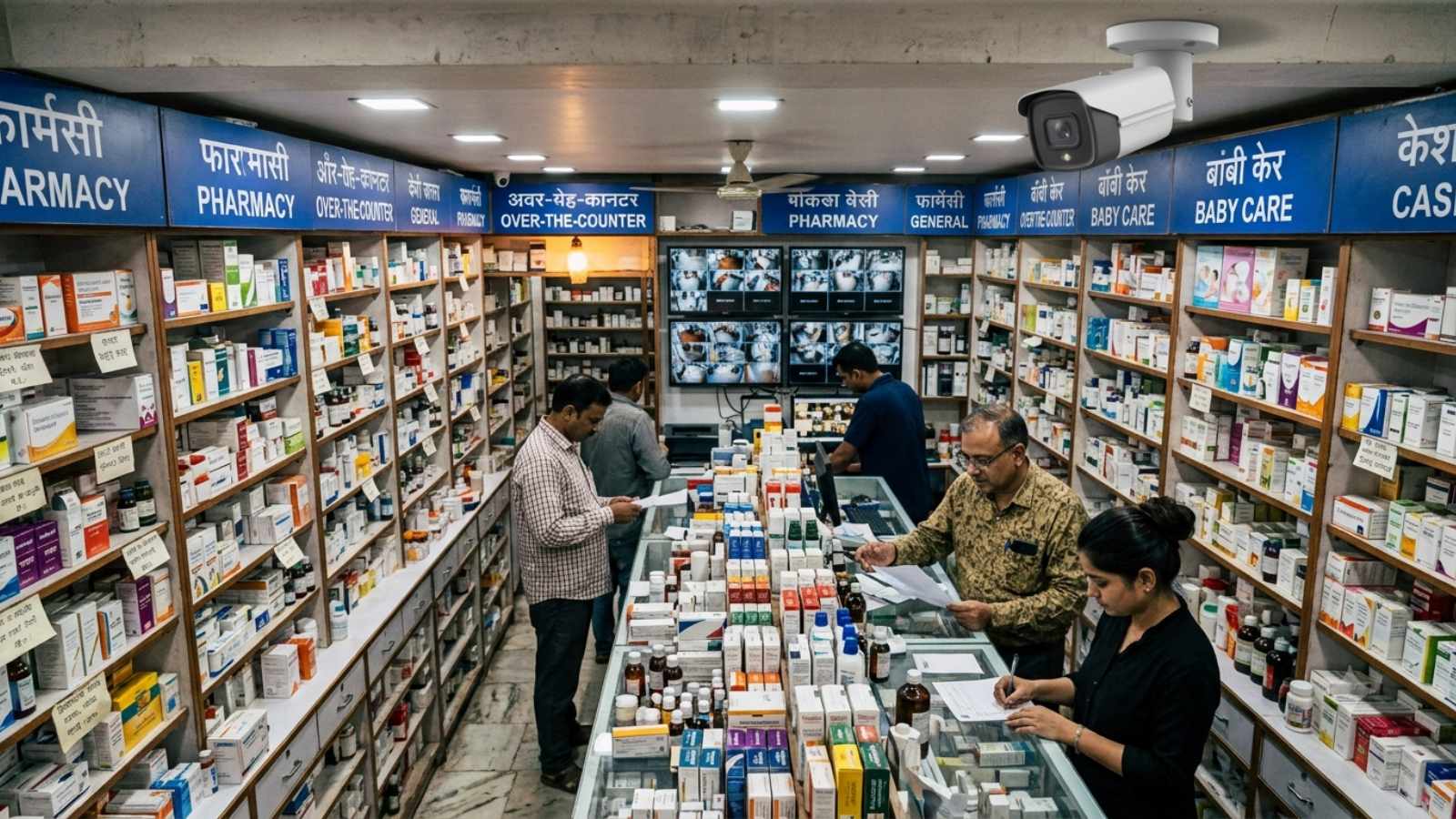
The Health Ministry wants pharmacies to use cameras when selling certain prescription medicines.
The cameras would record the sale and the recordings would be kept for at least three months.
The rule would apply to retail and licensed pharmacy premises, but not wholesalers.
It would cover medicines in Schedules H, H1 and X. Schedule X medicines have especially strict controls because they can be addictive or misused.
Chemists say the plan could be too expensive for small pharmacies.
They also say rural areas may lack reliable electricity, internet service and technicians.
The government is collecting suggestions before deciding whether to finalize the rule.

The Union Health Ministry proposed mandatory CCTV surveillance at retail pharmacies dispensing prescription medicines.
The proposal covers drugs in Schedules H, H1 and X, but excludes wholesalers.
Pharmacies would need to preserve CCTV recordings for at least three months.
The All India Organisation of Druggist and Chemist Association opposed the proposal as impractical and costly.
The association estimated installation and related equipment could cost small pharmacies ₹50,000 to ₹1 lakh.
- Who
- The Union Ministry of Health and Family Welfare proposed the amendment; the All India Organisation of Druggist and Chemist Association opposed it.
- What
- A draft amendment would require CCTV surveillance and three-month recording preservation at pharmacies dispensing certain prescription medicines.
- Where
- The proposal would apply across India at licensed retail pharmacy premises; wholesalers would be excluded.
- When
- The proposal was published on September 17, 2026; stakeholder objections and suggestions are being invited before finalization.
- Why
- The proposed surveillance is intended to track the supply of medicines dispensed against prescriptions and support regulatory monitoring.
Government Proposal
Chemists’ Objections
Need for CCTV monitoring
Government Proposal
The Health Ministry proposes surveillance to track prescription-based dispensing of regulated medicines and strengthen monitoring.
Chemists’ Objections
The All India Organisation of Druggist and Chemist Association argues that serious irregularities are limited relative to the large volume of pharmacy transactions.
Financial responsibility
Government Proposal
The draft would require CCTV systems at licensed pharmacy premises as a condition for dispensing covered medicines.
Chemists’ Objections
The association says individual chemists should not bear infrastructure costs and that the government should install or financially support the systems if they are considered essential.
Uniform national requirement
Government Proposal
The proposal would establish a common requirement for pharmacies covered by the rule, excluding wholesalers.
Chemists’ Objections
The association says a uniform requirement ignores rural and remote conditions, including power failures, weak internet connectivity and a shortage of trained technicians.
Key facts
- Proposed authority
- Union Ministry of Health and Family Welfare
- Relevant rules
- Rule 65 of the Drugs and Cosmetics Rules, 1945
- Covered medicines
- Prescription drugs in Schedules H, H1 and X
- Recording period
- At least three months
- Estimated cost
- ₹50,000 to ₹1 lakh for cameras, recording systems, storage, wiring, connectivity and maintenance
- Main objection
- The All India Organisation of Druggist and Chemist Association says the requirement would burden small and rural pharmacies.
Sources
Related news

India Proposes CCTV Surveillance for Prescription Drug Sales
Health Ministry Proposes Mandatory CCTV at Medical Stores

India Proposes CCTV Checks for Prescription Drug Stores
Survey Finds Prescription Gaps as India Proposes CCTV Rules

India Tightens Sale Rules for Four CNS Drugs

Uttar Pradesh Tightens Crackdown on Counterfeit Medicine Networks