2 hrs ago
Survey Finds Prescription Gaps as India Proposes CCTV Rules
A large survey asked people about buying medicines in India.
Many people said pharmacies did not regularly ask for a doctor’s prescription.
The government wants pharmacies to use CCTV when selling prescription medicines.
The cameras could create a record of these sales.
The survey also found that qualified pharmacists were not always available to answer questions.
Some people received medicines at home without being asked for prescriptions.
More than one-quarter of respondents said they did not receive a GST bill.
Some respondents said medicines they bought were fake or did not work.
The survey suggests that CCTV may help, but enforcing existing rules is also important.

A LocalCircles survey found 64% of consumers were never or rarely asked for prescriptions by chemists.
The survey collected more than 1.06 lakh responses across 327 Indian districts.
The Union Health Ministry has proposed CCTV surveillance for prescription-drug sales at medical stores.
Only 31% said a qualified pharmacist assisted them most of the time or always.
The survey also found gaps in home-delivery prescription checks, GST billing and medicine authenticity.
- Who
- The Union Health Ministry, LocalCircles and consumers surveyed nationwide.
- What
- The government proposed mandatory CCTV surveillance for retail sales of prescription medicines, alongside survey findings about compliance gaps.
- Where
- At medical stores and through medicine home-delivery services across India; the survey covered 327 districts.
- When
- The notification was issued on September 8; the draft remains open to objections and suggestions.
- Why
- The government says CCTV would strengthen oversight, transparency and accountability in the pharmaceutical supply chain.
Government Proposal
Compliance Concerns
Role of CCTV
Government Proposal
The Union Health Ministry says CCTV surveillance can strengthen oversight and improve transparency and accountability in prescription-medicine sales.
Compliance Concerns
The survey indicates that broader enforcement may be needed because gaps also involve prescription checks, pharmacist supervision, billing and medicine authenticity.
Prescription requirements
Government Proposal
The draft would require non-wholesale supplies of drugs sold on a Registered Medical Practitioner’s prescription to occur under CCTV surveillance.
Compliance Concerns
Consumers reported that prescriptions were often not requested, including during home delivery, suggesting that recording sales alone may not ensure compliance.
Retail safeguards
Government Proposal
The proposal seeks to create records of prescription-drug transactions at medical-store premises.
Compliance Concerns
The survey found that 26% received no GST bill and only 31% consistently received assistance from a qualified pharmacist, raising additional traceability and safety concerns.
Key facts
- Survey responses
- More than 1.06 lakh responses
- Survey coverage
- Consumers across 327 districts
- Prescription checks
- 64% said chemists never or rarely asked for a prescription
- Pharmacist assistance
- 31% said a qualified pharmacist helped most of the time or always
- Home delivery
- 41% said prescriptions were never or rarely requested
- GST billing
- 26% said they did not receive a GST bill
- Medicine concerns
- 15% reported buying medicines later found to be fake or counterfeit, while another 15% received medicines that were completely ineffective
Sources
Related news

India Proposes CCTV Surveillance for Prescription Drug Sales

India Proposes CCTV Checks for Prescription Drug Stores
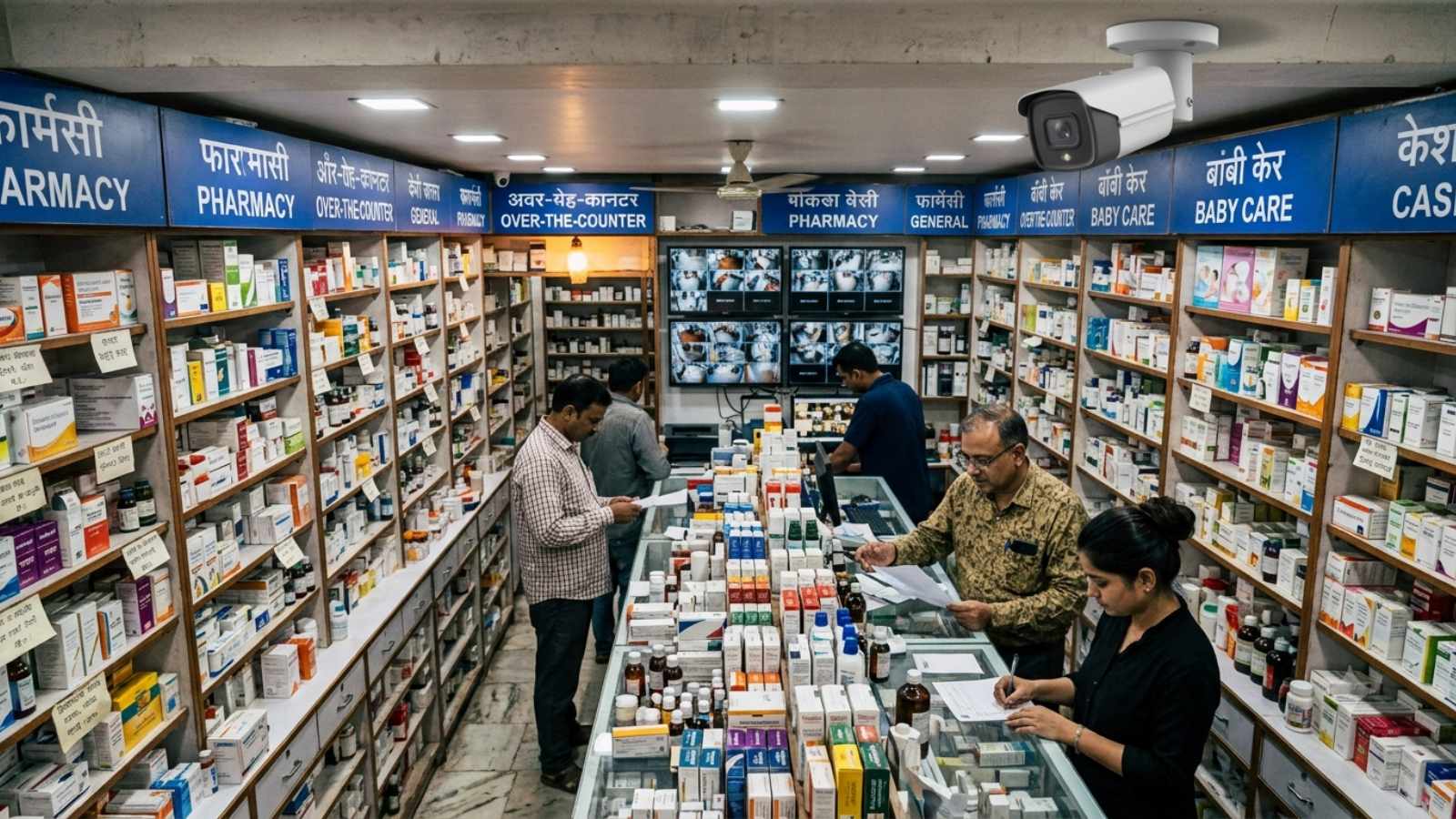
Health Ministry Proposes Mandatory CCTV at Medical Stores
Telangana Pharmacy Council Seeks Action Against Unqualified Prescribers

Delhi Warns Pharmacies Over Misleading Medicine Discount Advertisements

Uttar Pradesh Tightens Crackdown on Counterfeit Medicine Networks
India Restricts Autism Stem Cell Therapy To Approved Clinical Trials

Centre Says Queer Partners Can Make Medical Decisions