

7 months ago
Europa's Ocean May Lack Life-Supporting Conditions
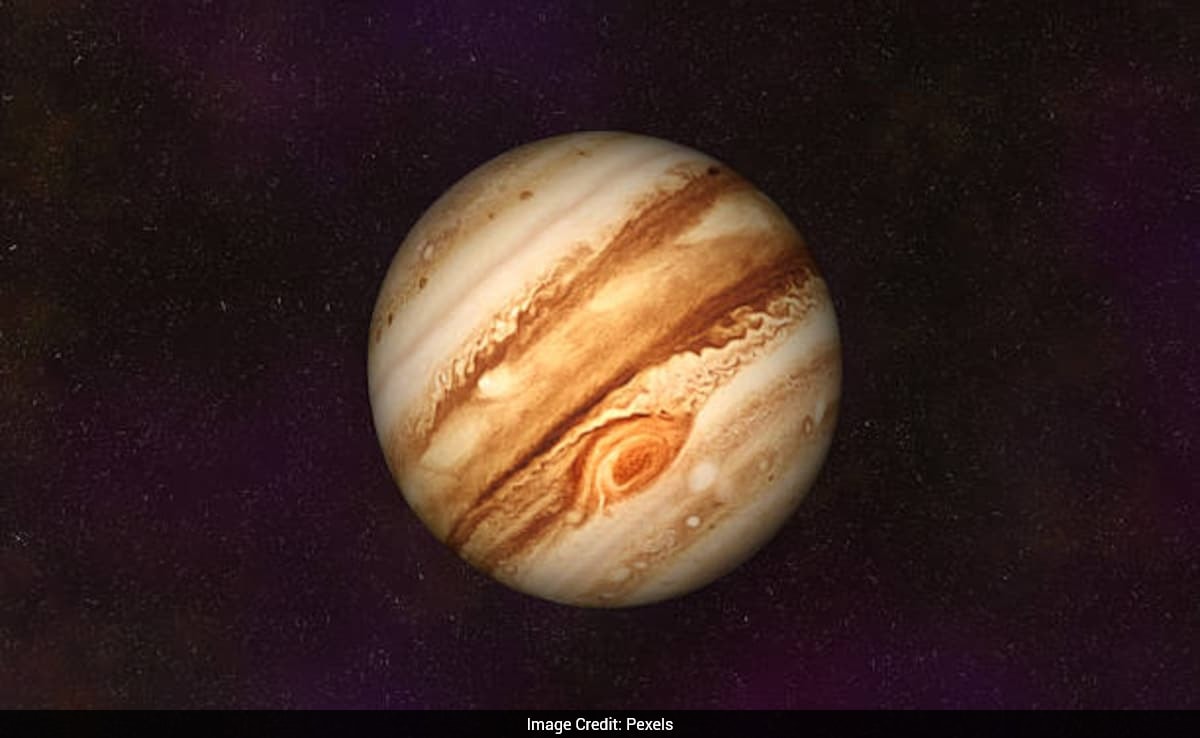
Europa, a moon of Jupiter, has a big ocean under its icy surface.
Scientists thought this ocean might have life because it has water, energy, and organic stuff.
But a new study says the ocean floor might be too hard for life.
On Earth, the ocean floor has cracks and volcanoes that help life.
Europa's floor might not have these, making it hard for life to exist.
Scientists are still hopeful and will study Europa more with a spacecraft called Europa Clipper, which will fly close to Europa in 2031.
Even if Europa doesn't have life, it's still the best place to look in our solar system.

Europa, one of Jupiter's moons, has a large ocean beneath its icy surface.
A new study suggests Europa's seafloor may be too rigid to support life.
Tectonic or volcanic activity on Earth's seafloor helps create conditions for life, which may be lacking on Europa.
Europa's icy crust is 15 to 25 kilometers thick, with an ocean 60 to 150 kilometers deep.
NASA's Europa Clipper spacecraft, launched in 2024, will study Europa starting in 2031.
- Who
- Scientists and researchers studying Europa
- What
- Europa's ocean may lack conditions to support life
- Where
- Europa, one of Jupiter's moons
- When
- Research conducted recently, Europa Clipper launch in 2024, flybys starting 2031
- Why
- Lack of tectonic or volcanic activity on Europa's seafloor
Key facts
- Diameter
- 3,100 kilometers
- Icy Crust Thickness
- 15 to 25 kilometers
- Ocean Depth
- 60 to 150 kilometers
- Water Volume
- Nearly twice Earth's oceans
- Launch Year of Europa Clipper
- 2024
- First Flyby Year
- 2031
- Rank Among Jupiter's Moons
- 4th
- Total Jupiter's Moons
- 95
Quotes

Paul Byrne
Planetary scientist at Washington University in St. Louis
“Tectonic activity on Earth, such as cracks and faults, exposes new rocks to water. This triggers chemical reactions that produce elements like methane, which can be used by microorganisms.”
 NDTV
NDTV
Christian Klimczak
Geologist at the University of Georgia and co-author of the study
“The presence of large-scale tectonic structures on the ocean floor is very unlikely. Hydrothermal activity, such as high mountain ranges, deep trenches, underwater volcanoes, seamounts, or black smokers, is unlikely to exist there.”
NDTV

