2 hrs ago
World Mental Health Day Highlights Small Daily Wellbeing Routines

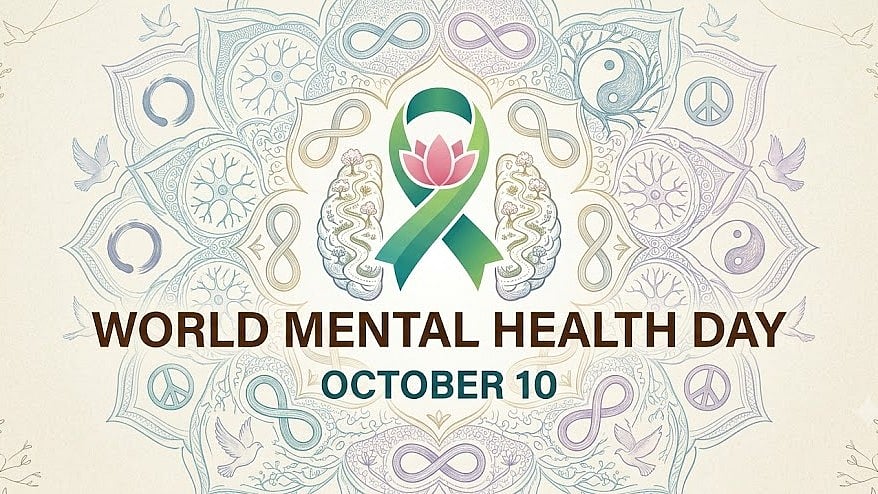
World Mental Health Day is observed on October 10.
Its 2026 theme asks people to listen to those with lived experience and include them in mental healthcare decisions.
Small routines may help people care for their emotional wellbeing.
These can include walking, keeping a steady sleep schedule and taking a few minutes to breathe mindfully.
Enjoyable hobbies and time with people you trust may also help.
The article says adults generally need at least seven hours of sleep each night.
These habits do not replace help from a qualified professional.
If distress continues or makes daily life difficult, consider speaking with a mental health professional.

World Mental Health Day is observed on October 10, and its 2026 theme is “Lived experiences heard: real voices, real change.”
The article recommends regular walks, consistent sleep schedules, mindful breathing, enjoyable activities and staying connected with trusted people.
It says physical activity may improve mood, ease short-term anxiety and support better sleep.
Adults generally need at least seven hours of sleep each night, according to the article.
Daily habits may support wellbeing but are not substitutes for professional care when distress persists or affects daily life.
- Who
- People seeking ways to support their mental wellbeing.
- What
- An article describes everyday routines that may support mental wellbeing and emphasizes that they do not replace professional care.
- Where
- When
- World Mental Health Day is observed on October 10; the article gives the 2026 theme.
- Why
- To share practical habits for managing everyday stress and highlight the value of listening to people with lived experience.
Key facts
- Observance
- World Mental Health Day
- Date
- October 10
- 2026 theme
- “Lived experiences heard: real voices, real change”
- Suggested habits
- Walking, regular sleep, mindful breathing, enjoyable activities and social connection
- Sleep guidance
- Adults generally need at least seven hours of sleep each night
- Professional care
- Consider speaking with a qualified mental health professional if distress persists or affects daily life
Sources
Related news

Expert Advice on Adapting Ayurveda to Modern Life
Indian Celebrities Share Mental Health Messages for World Mental Health Day

Simple Bedtime Habits Aim to Improve Sleep Quality

Kubbra Sait Shares Mental Health Advice on World Mental Health Day

Simple Ways to Cut Screen Time Before Bed

Five Signs Work May Be Affecting Your Mental Health

Trump Unveils More Than $6 Billion Science and Technology Push

Trump Makes $100 Million Push to Train American Scientists

Geeta Swamy Named Next Dean of Boston University Medical School

Nitin Gupta: From JEE 2000 Topper to Mosquito Brain Researcher